 By
By 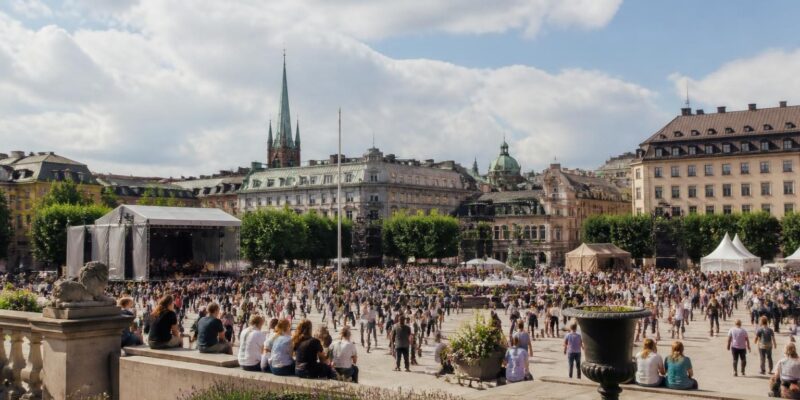
Stockholm’s annual Culture Festival opens on Wednesday, August 12, turning central squares, streets and waterfront areas into a five-day cultural meeting place. The event, organised by the City of Stockholm, runs through Sunday, August 16, with free admission across a programme spanning music, dance, theatre, film, literature, visual art and activities for children and young people.
The festival is one of the clearest examples of Stockholm’s approach to making culture part of everyday urban life. Rather than concentrating the programme inside a single venue, it distributes performances and workshops across the city centre, allowing visitors to move between stages, public spaces and temporary cultural areas. The organisers describe the festival as an annual event for all ages, with hundreds of programme items and international guests appearing alongside local cultural organisations and emerging voices.
A city-centre programme
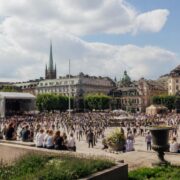
The 2026 programme lists 176 individual events. Main festival areas include Kungsträdgården, Gustav Adolfs torg, Skeppsbron, Strömgatan, Slottsbacken, Norrbro and Sergels torg. The variety of locations gives the festival a distinctly urban character: a visitor can encounter a concert in a formal square, a workshop near the waterfront or an outdoor performance while crossing the city centre.
The programme also reflects the organisers’ effort to combine established cultural forms with participatory activities. Alongside concerts and stage performances are dance sessions, family workshops, film screenings, public conversations and literary events. The festival’s youth strand, known as UNG, is integrated into the wider event and is intended to give younger participants space to meet, create and express themselves.
Music, movement and international exchange
Music remains central to the festival, but the schedule ranges well beyond a conventional concert series. Visitors can choose among performances on several stages, with Swedish artists appearing alongside international acts and projects. The programme also includes dance, circus, theatre and cross-disciplinary events designed for audiences who may not normally visit a cultural institution.
One example is the Southnord Block Party, which brings music, food and stories to Brunkebergstorg and the HOBO Hotel area on August 12. The event forms part of Southnord Artfest 2026, a Nordic cultural project involving a mobile Nigerian bus equipped with a sound system. The wider route connects Berlin, Copenhagen, Stockholm and Helsinki, giving the Stockholm stop a transnational dimension without making it dependent on a single formal venue.
Other programme items include literary activities, sing-along events, family-oriented performances and workshops connected to Stockholm’s cultural and historical landscape. The result is less a single festival audience than a series of overlapping audiences: families, music fans, tourists, local residents, young people and visitors looking for a free introduction to the city’s cultural scene.
Science becomes part of the festival
The Nobel Prize Museum is contributing an educational activity in Kungsträdgården from August 12 to 16. Its Waterflowers workshop invites participants to create small artworks while learning about chromatography and the separation of colours and molecules. The activity is aimed particularly at children aged four to ten, although the museum says that all ages are welcome.
The workshop illustrates one of the festival’s broader strengths: the programme does not treat culture as separate from learning. Scientific ideas are presented through a hands-on artistic activity, while the open setting makes the museum’s subject matter accessible to people who may not otherwise visit a science or cultural institution.
A public invitation to Stockholm
Stockholm Culture Festival first took place in 2005 and continues a tradition of city-wide summer events in the capital. Its five-day format is particularly suited to the city centre, where visitors can combine cultural activities with ordinary urban life rather than planning an entire day around one ticketed performance.
For Stockholm, the festival offers both a cultural programme and a form of public hospitality. Free entry lowers the barrier for spontaneous visits, while the spread of events across familiar urban spaces makes the city itself part of the experience. The 2026 edition therefore presents culture not as a closed circuit, but as something encountered in streets, parks, squares and waterfront settings.
With the festival beginning on August 12, Stockholm enters one of its busiest cultural weeks of the summer. The emphasis is constructive and open: a broad programme, accessible public spaces and opportunities for residents and visitors to participate rather than simply observe.











Comments