
 By
A shared song at the centre of Independence Day
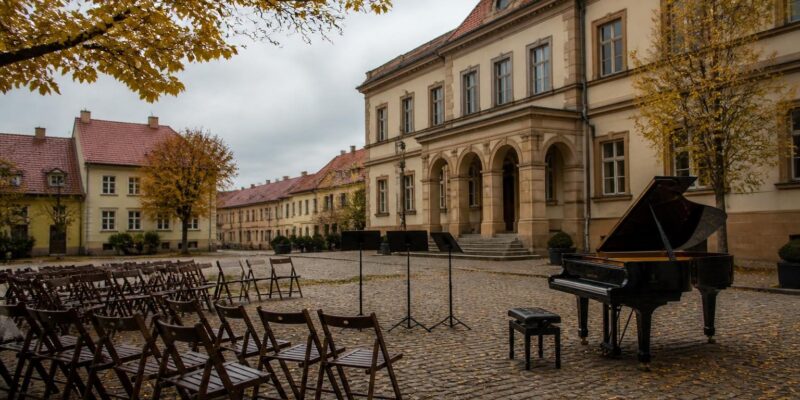
At noon on Wednesday, 11 November, people across Poland are being invited to sing the national anthem together as part of the ninth edition of the “Do Hymnu” initiative. The project, organised this year by the Museum of Polish History, is designed as a voluntary public activity rather than a single central ceremony: participants can gather in their own towns, on public squares, in cultural institutions or in other places that matter to local communities.
The main Warsaw gathering will take place in the entrance hall of the Museum of Polish History at the Warsaw Citadel. The museum has included the singing in its wider Independence Day programme, which also features family workshops, guided visits and performances. The same moment, however, is intended to connect events taking place far beyond the capital.
The initiative was announced on 10 November, one day before Poland’s National Independence Day. Its timing gives the project a straightforward civic focus: communities can mark the public holiday through a familiar cultural practice that requires neither specialist equipment nor formal membership of an organisation.
From schools to local meeting places
The project’s rules allow participation by institutions, organisations and private individuals. Local organisers can register their event on the project website, identify its location and provide a short description. The online map is open to events in Poland and abroad, making it possible for a school, library, municipal office, community centre, neighbourhood group or an informal circle of residents to take part.
That decentralised structure is one of the initiative’s defining features. The anthem will be performed at a single agreed time, but the setting is left to local organisers. A town hall, a village cultural centre or an open-air square can therefore become the meeting point. The organisers also provide downloadable promotional material and the text of the anthem, lowering the practical barrier for groups that want to organise a modest gathering.
The project rules state that participation is voluntary. They also ask participants to document their local event and share a short report or photograph through available media channels. In editorial terms, the emphasis is less on a spectacular central production than on creating a common reference point for many small public gatherings.
A tradition that began in 2018
“Do Hymnu” began in 2018, during the centenary year of Poland’s restoration of independence. According to information published by the Mazowieckie Voivodeship Office, the first edition involved nearly 1,000 participating entities and saw the anthem performed on six continents. The 2026 edition is the ninth continuation of that idea.
The project has a different format from the former school competition with the same name that was run by the National Cultural Centre. The current initiative is presented by the Museum of Polish History as a social project open to institutions, groups and individuals. Its central action is deliberately simple: a collective performance of “Mazurek Dąbrowskiego” at 12:00 on 11 November.
That simplicity also gives the event an educational dimension. Singing together can prompt conversations about the anthem’s history, the meaning of public symbols and the ways local communities remember important dates. In Warsaw, the museum’s programme places the anthem alongside exhibitions, family activities, folk dance and workshops, treating national history as something to be encountered through participation as well as observation.
Looking ahead to 2027
This year’s singing also points towards a forthcoming cultural anniversary. The Museum of Polish History has announced that 2027 will mark the centenary of the legal establishment of “Mazurek Dąbrowskiego” as Poland’s national anthem. The museum plans to develop further activities devoted to the history and significance of the song as part of its wider “Patriotism of Tomorrow” programme.
For local groups, the 2026 action offers an accessible starting point for that longer conversation. It does not require a large stage or a major budget. A shared time, a familiar melody and a public place are enough to create a common event.
In a country where Independence Day is observed through many different local traditions, “Do Hymnu” adds a single nationwide moment without prescribing one particular venue or format. On 11 November, the most visible part of the initiative will be heard not only in Warsaw, but wherever residents decide to gather and sing together.


















Comments