

 By
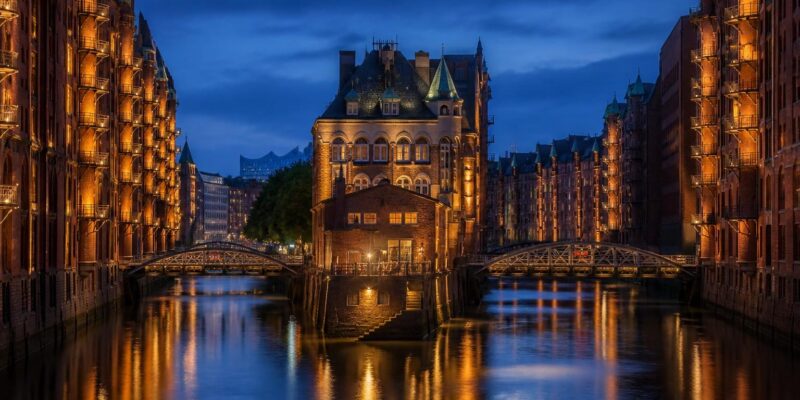
A new journey begins inside Hamburg’s Speicherstadt
Hamburg’s Miniatur Wunderland has opened a new South America section that gives visitors a compact journey through some of the continent’s most recognisable landscapes. The section, titled “Rainforest – Amazon, Andes and Atacama”, officially opened on Monday, 9 November 2026, after almost four years of construction.
The new attraction occupies about 175 square metres and links three very different environments: the Amazon rainforest, the high Andes and the Atacama Desert in northern Chile. For visitors, the result is less a single static display than a miniature travel route, with trains, figures, changing light and moving water creating a sense of continuity between the landscapes.
Four years of work and a cross-continental team
According to Miniatur Wunderland, the project involved around 180,000 working hours and construction costs of approximately six million euros. Parts of the rainforest were built in Argentina in cooperation with the Martínez family of model makers in Buenos Aires, while other elements were produced and assembled in Hamburg.
The collaboration reflects the international character of the attraction itself. Miniatur Wunderland is based in Hamburg’s historic Speicherstadt, but its exhibition is built around places and journeys far beyond northern Germany. The new section extends an existing South America presentation that already includes areas inspired by Brazil and Patagonia.
The display contains around 30,000 handcrafted trees and approximately 13,000 miniature figures. Visitors can spot animals including jaguars, capybaras, boas, flamingos and guanacos, as well as settlements and landmarks placed throughout the landscape. Machu Picchu appears in the Andes, while the Atacama area includes observatory buildings and the stark, dry terrain associated with northern Chile.
Water, light and changing perspectives
One of the section’s central features is a miniature version of the Iguazú Falls. The attraction says that around 20,000 litres of water pass through the model every hour. Artificial mist and lighting help create a changing view of the falls, while a day-and-night cycle transforms the rainforest after dark.
The Andes rise across two levels, allowing visitors to see the rainforest and mountain landscapes from different angles. More than 850 metres of track run through the wider South America world, with trains and other moving elements adding rhythm to the exhibition.
The designers have also included references to environmental pressures affecting tropical and mountain regions. The official description points to deforestation, illegal gold mining, road construction and forest fires. These details give the display an educational dimension without turning the attraction into a conventional natural-history museum. The emphasis remains on observation, craftsmanship and the way landscapes can be understood through scale.
A practical addition to Hamburg’s visitor calendar
The opening arrives as Hamburg moves into its quieter late-autumn travel season. Miniatur Wunderland is an indoor attraction, making the new section suitable for visitors looking for a weather-independent activity in November and beyond. The venue is located in Speicherstadt, close to the Elbphilharmonie, harbour promenades and several other central attractions.
Hamburg Tourism is already presenting the new section as part of the city’s visitor offer. Its listing advises travellers to consider advance booking because the attraction can become busy, particularly at popular times. Opening hours vary by date, and the museum’s own calendar should be checked before travelling.
For families, model-railway enthusiasts and visitors interested in design, the new display offers a way to experience a broad South American itinerary without leaving Hamburg. Its appeal also lies in the combination of familiar landmarks and small discoveries: a train disappearing into mountain scenery, a settlement hidden among trees or a desert observatory emerging under projected starlight.
Why the opening matters
Miniatur Wunderland’s new section adds a fresh reason to visit one of Hamburg’s established cultural attractions. It also demonstrates how model making can function as a form of travel storytelling. Rather than reproducing one city or monument, the installation connects climate zones, topography, architecture and everyday life in a single walk-through experience.
The result is a constructive tourism development for Hamburg at the start of the winter season: an expanded indoor attraction, an international creative collaboration and a new interpretation of South America that invites visitors to look closely, move slowly and return to the city’s Speicherstadt with a wider sense of the landscapes represented there.

















Comments