

 By
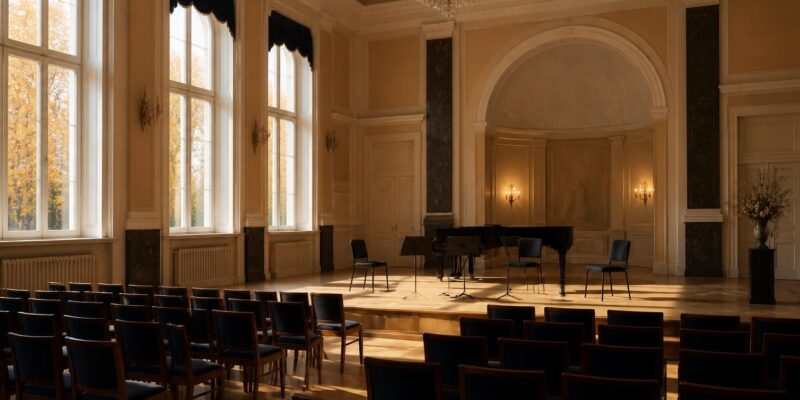
Estonia’s music calendar is entering a concentrated week of performances as Eesti Interpreetide Nädal, or Estonian Interpreters’ Week, begins on November 9. The festival will run through November 15 in Tallinn and Narva, presenting ten concerts and more than 50 musicians across a programme designed to show the range of Estonian interpretive music.
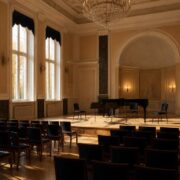
The event is organised by the Estonian Interpreters’ Union and the Estonian Academy of Music and Theatre, in cooperation with the foundation Eesti Interpreetide Kontserdid. Its programme brings together established performers, younger musicians and ensembles, with concerts taking place at the academy’s main hall, Niguliste Museum, Fotografiska Tallinn, Kadriorg Art Museum and Narva Town Hall.
A week built around performers
The festival’s central idea is not a single composer or musical period, but the work of the interpreter: the performer who gives a written score its particular sound, pace and character. The organisers describe the programme as a cross-section of Estonian interpretive art, connecting different generations, historical periods and musical styles.
That breadth is reflected in the repertoire. Works by Schubert, Vivaldi, Handel, Mozart, Stravinsky, Ligeti and Hindemith appear alongside music by Estonian composers. The programme therefore moves between familiar classical works and more recent or less frequently heard music, offering audiences several ways to encounter the country’s performers.
The opening concert on November 9 at the Estonian Academy of Music and Theatre focuses on Estonian wind-music artists. According to the Estonian Music Information Centre’s programme listing, the concert includes works by Jolivet, Poulenc, Sarasate, Boutry, Arvo Pärt, Stravinsky, Salonen, Hindemith and Broughton, as well as a new work by Märt-Matis Lille. The combination places local performers in dialogue with both twentieth-century repertoire and contemporary Estonian composition.
From contemporary sound worlds to Mozart
The following days extend the festival into several different formats. A November 10 concert at Fotografiska is titled “Light Born from Darkness”. On November 11, the programme includes a concert for school students as well as an evening devoted to contemporary sound worlds.
November 12 offers two contrasting events: an evening at Niguliste Museum devoted to improvised and composed music, and a free concert at the academy’s main hall presented from the perspective of young performers. The festival’s inclusion of a school programme and a free youth-oriented concert gives the week a wider social dimension beyond the conventional evening recital.
Later concerts include “Masterful Mozart” at Kadriorg Art Museum on November 13 and a programme of Baroque music titled “Light and Shadows in the Baroque” at the academy on November 14. The closing concert on November 15 returns to Schubert, with a programme described as “Schubert’s Resonant Poetry”.
Narva as part of the same musical map
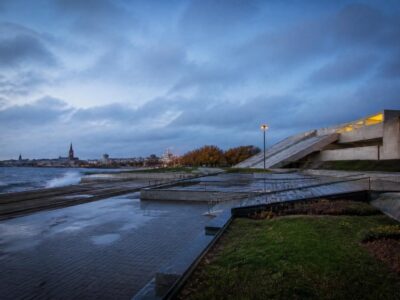
The festival is not limited to the capital. Its programme also reaches Narva, where a concert is scheduled at Narva Town Hall on November 14. The event will present leading Estonian wind players, with pianists Maksim Štšura and Maila Laidna named among the performers.
That Tallinn–Narva structure is significant for a festival concerned with access and national cultural life. Rather than treating Estonia’s artistic activity as concentrated in one city, the organisers are placing a major programme in two different urban settings. For audiences in Narva, the town-hall concert offers a local point of entry into the same week that is unfolding in Tallinn’s museums and concert halls.
A practical meeting point for audiences
The festival also illustrates how cultural organisations are using established institutions in complementary ways. The academy provides a traditional concert setting, museums create a closer relationship between music and visual culture, and Narva Town Hall adds a civic and regional venue. Together, the locations make the programme feel less like a single gala series and more like a city-wide cultural route.
For Estonia’s music public, the week offers a compact overview of the country’s performers and their current interests. For visitors, it provides a timely way to encounter Estonian musical life through live interpretation rather than through a single headline production. The festival’s emphasis on different generations, styles and venues also makes it a useful snapshot of how classical and contemporary performance are being presented to broader audiences in Estonia.
With its first concert on November 9 and performances continuing until November 15, Eesti Interpreetide Nädal is one of the country’s most concentrated cultural offerings of the week: a programme that connects repertoire, performers, education and regional participation without reducing Estonian music to one tradition or one stage.














Comments