 By
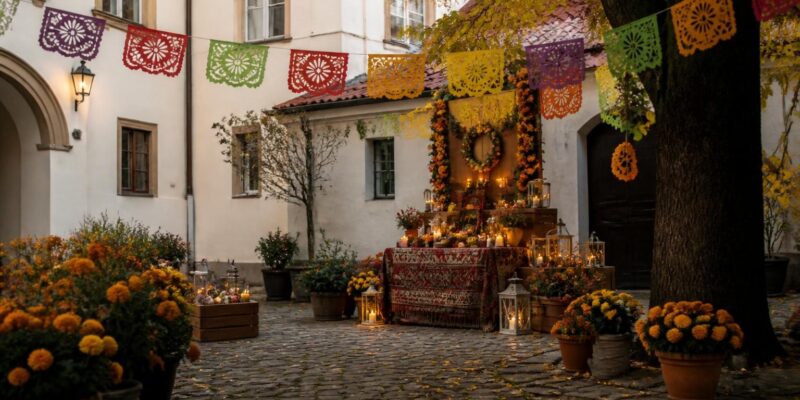
Vilnius is adding a distinctly Mexican note to its autumn cultural calendar on Saturday, October 31, when residents and visitors will be invited to take part in a public celebration of Día de Muertos, or Day of the Dead.
The programme is built around a procession of Catrina figures from Cathedral Square to the courtyard of the National Museum of Lithuania’s House of Histories. Organisers describe the event as an opportunity to encounter Mexican culture through music, dance, colour and shared remembrance, while stressing that costumes are welcome but not required.
A procession through the historic centre
The public programme is scheduled to begin at 16:00 at Cathedral Square. Participants will then move together towards the House of Histories at T. Kosciuškos Street 3, where the main celebration is due to begin at 17:00.
The Catrina procession is one of the most recognisable visual elements associated with Día de Muertos. In Mexico, the figure is commonly linked with artistic interpretations of remembrance and the idea that death can be approached through symbolism, creativity and community rather than silence alone. In Vilnius, the procession gives the tradition a visible route through the capital’s historic centre.
The event is open to the public and free of charge. Families and people encountering the tradition for the first time are being encouraged to attend. Visitors may wear clothing inspired by Mexican customs, although the organisers say participation does not depend on dressing up.
Culture beyond a single festival
The Vilnius programme reflects a wider pattern in the capital’s cultural life: international traditions are increasingly presented not only in specialist venues, but also in public spaces and museum courtyards. That approach allows cultural communities, local audiences and visitors to meet in a setting that is accessible and informal.
According to the event announcement, the afternoon programme will include live music, singing, dancing and other activities connected with Mexican heritage. A separate weekend guide published by Delfi also lists Día de Muertos activities at Paupio Market, including traditional altars, children’s face-painting workshops, live music and Mexican snacks. Taken together, the listings point to a broader citywide interest in presenting the tradition through both public performance and hands-on participation.
The House of Histories, operated by the National Museum of Lithuania, provides an appropriate setting for the main gathering. The museum focuses on historical collections and public interpretation, and its courtyard can function as a meeting place between the city’s heritage landscape and contemporary cultural programming.
Remembering through colour and participation
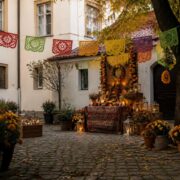
Día de Muertos is traditionally associated with remembrance, family memory, flowers, candles, music and specially prepared offerings. Its public expression is often visually rich, but the meaning is not limited to decoration. The tradition creates a social space in which memories of relatives and loved ones can be shared across generations.
That emphasis on memory and community gives the Vilnius event a character distinct from a conventional Halloween programme. While the date falls on Halloween weekend, the announced focus is on Mexican cultural heritage and on introducing audiences to a tradition whose central themes are love, remembrance and continuity.
For Vilnius, the event also offers a modest example of cultural exchange taking place at street level. It does not require specialist knowledge, advance travel or a formal institutional membership. People can simply join the procession, visit the courtyard and experience an unfamiliar tradition in the company of others.
Practical information
- Date: Saturday, October 31, 2026
- Procession: 16:00, Cathedral Square
- Main celebration: from 17:00, House of Histories courtyard, T. Kosciuškos Street 3
- Admission: free
- Costumes: welcome, but optional
With its combination of public space, museum setting and Mexican performance traditions, Vilnius’s Día de Muertos programme offers an accessible autumn event centred on curiosity, hospitality and shared cultural experience.











Comments