 By
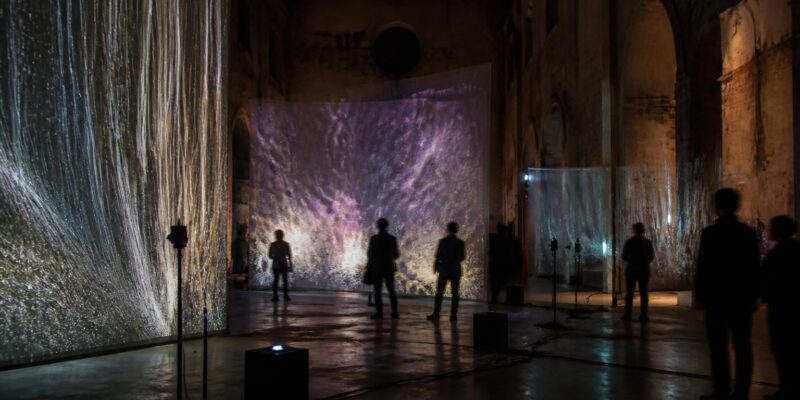
Augsburg’s long-running lab.30 media-art festival has opened its 25th edition with a programme that treats technology not as a distant spectacle, but as something to be explored collectively. From October 29 to November 1, the festival is bringing exhibitions, concerts, performances, workshops and artist discussions to the Kulturhaus abraxas, the neighbouring St. Thaddäus church and the temporary cultural venue MAX59.
The timing gives the event a particularly current role in the city’s cultural calendar. The opening was announced by the City of Augsburg on October 8, while a further municipal notice published on October 28 highlighted MAX59 as a new temporary space for culture, education, creativity and public participation. The festival is the first major programme at the venue, linking an established media-art event with a new civic place.
A quarter-century of experimental culture
Lab.30 describes itself as a meeting point for local, regional and international artists working across media art. Its 2026 edition is organised around the theme “Becoming”, asking how people and societies change, who influences that change and how technology affects the ways in which people live together.
The festival’s focus is broad rather than narrowly technical. The official programme includes works built with software, electronics, projection, robotics, sound and interactive systems. Visitors are invited not only to look at the works but also to test, hear and influence them. That approach is central to the festival’s stated aim of creating an open conversation about the digital world and the choices shaping its future.
More than 30 international artists are taking part, according to the city’s festival announcement. The main exhibition at Kulturhaus abraxas includes installations such as Let there be light, a sound-and-light work using radios and changing audio channels, and see this sound (go away), which translates sound into a visual and spatial experience. Other works examine algorithmic recommendation systems, human-machine relationships and the social meaning of communication.
From artificial intelligence to handmade machines
One of the programme’s strengths is the contrast between advanced digital systems and deliberately simple, playful forms of making. At the “Wiese der Medienkunst”, a new outdoor area behind the abraxas venue, children and young people can take part in activities organised with Augsburg’s KidsLab and partner organisations.
The workshops include building improvised robots from scrap materials, experimenting with light and constructing a smart flowerpot that can recognise when a plant needs water. Another workshop introduces participants to soldering, electricity and sound by helping them create a small electronic musical instrument.
These activities give the festival a practical educational dimension. Instead of presenting technology as an expert-only field, lab.30 places experimentation, failure and curiosity at the centre. The city’s announcement describes the programme as suitable for different age groups, with workshops beginning at six or ten years of age depending on the activity.
MAX59 adds a civic dimension
The partnership with MAX59 expands the festival beyond its traditional exhibition setting. The former building at Maximilianstraße 59 is being used temporarily from November 2026 until, according to the city, approximately May 2027, before planned construction work begins. During that period, the ground floor is intended to host cultural events, creative activities, educational offers and opportunities for people to meet and work together.
For lab.30, the temporary venue provides space for the exhibition MARS!, making activities and participatory formats. The city also lists a street-food market and open encounters among the programme elements. Such a setting supports the festival’s wider interest in technology as a social and cultural question rather than simply a collection of devices.
Recognition for artists and young participants
The festival will conclude its opening weekend with a public awards presentation on Saturday, October 31. A professional jury will present the lab award, while a children’s jury will select the kids’ choice award. The audience can also vote for a public prize, and 2026 introduces a U19 award for work by young media artists.
The awards structure reflects the event’s attempt to bring different forms of judgement into the same cultural space: professional assessment, children’s responses, audience opinion and youth participation. It also gives the festival a way to recognise experimentation that may not fit conventional categories of visual art or performance.
With its four-day programme, Augsburg’s lab.30 offers a constructive model for presenting emerging technologies through culture. Its central question is not whether the future will be digital, but how people might participate in shaping it. By combining installations with workshops, performances and informal exchange, the festival turns that question into a public experience.














Comments