
 By
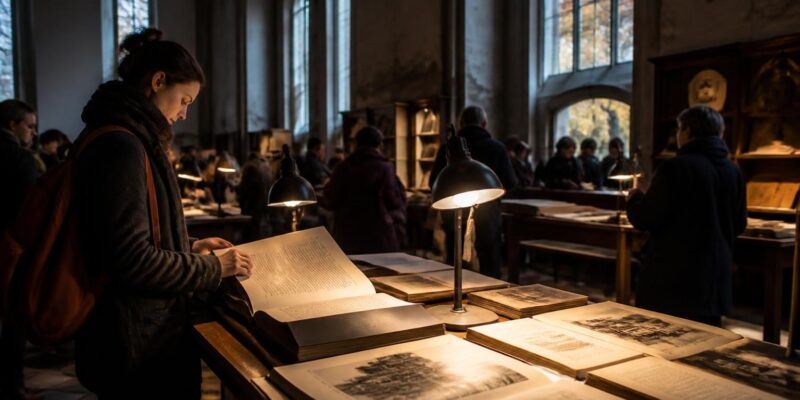
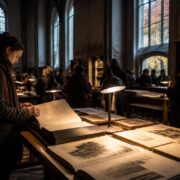
Kaliningrad’s new “Continuity” book festival is bringing publishers, writers, editors, translators, librarians and readers together for a three-day programme focused on the journey of a book. The festival opened on Friday, November 6, and continues through Sunday, November 8, giving the city a current cultural event with a strong public and visitor-facing dimension.
According to the Kaliningrad regional tourism information centre, the programme is being held with the support of the Institute of Applied Urbanism. Events are taking place at the Signal and Tower creative spaces, with participation from the publishing houses Nosorog, Gnozis, Ivan Limbakh and V–A–C Press. The programme is free to attend.
A book as a process, not just an object
The festival’s central idea is that a book has a longer life than the moment when it appears in a shop or library. It begins with an idea and passes through writing, editing, translation, design, printing, distribution and discussion. Each stage involves different professional skills and different forms of contact with readers.
That approach gives the event a broader focus than a conventional book fair. Visitors can encounter books as cultural objects, but also learn more about the people and decisions behind them. The organisers describe the programme as an exploration of the cultural, intellectual and physical layers that shape a publication.
The emphasis is particularly relevant to independent publishing, where editorial choices, visual design and direct relationships with readers are often central to a publisher’s identity. For Kaliningrad, the festival also offers a way to discuss how books circulate through a city: via specialist shops, libraries, reading groups, cultural centres, schools and informal communities.
From book fair to city conversation
The schedule combines a publishers’ fair with lectures, panel discussions, workshops, shared readings and walking routes through Kaliningrad. The mix connects literary activity with the city itself rather than confining it to a single exhibition hall.
One of the publicly listed discussions on November 8 examines the modern library and its relationship with readers, space and community. The conversation brings together representatives of Kaliningrad libraries, including the Mayakovsky and Chekhov libraries, to consider how libraries function in contemporary urban life.
Other sessions address independent book spaces, book promotion and the work of literary professionals. A discussion announced for November 7 is intended to bring together booksellers, publishers, librarians, cultural and educational institutions and organisers of literary projects to consider the conditions needed for independent book spaces to emerge and remain sustainable in Kaliningrad.
These conversations make the event relevant beyond literature. They touch on cultural infrastructure, the use of creative spaces and the question of how a city supports regular, accessible encounters between residents and ideas.
A late-autumn option for visitors
For travellers, the festival adds an indoor cultural route to Kaliningrad’s late-autumn calendar. The programme can be combined with the city’s museums, historic districts, cafés and other cultural venues, while the walking events offer a literary way to encounter the urban landscape.
The timing also gives the festival a practical seasonal role. November is a quieter period for many destinations, and events built around talks, workshops and small-scale encounters can encourage visitors to spend more time in the city rather than relying only on outdoor attractions.
Because admission is free, the festival is accessible both to regular readers and to people who may not normally attend literary events. The presence of publishers and cultural organisers also creates opportunities for direct conversation, browsing and discovery without the formality of a large commercial exhibition.
Why the event matters locally
Continuity presents Kaliningrad as a place where reading culture is not limited to established institutions. It highlights the role of independent publishers, local libraries, book clubs and creative venues in maintaining a public cultural life.
The festival does not depend on a single headline performance. Its value lies in the connections it creates: between readers and publishers, libraries and communities, books and the streets where people encounter them. By focusing on the complete path of a publication, the programme turns an everyday cultural object into a subject for public discussion.
With its final events taking place on Sunday, November 8, the festival offers a timely snapshot of Kaliningrad’s literary scene and an accessible reason to explore the city through books, conversation and shared spaces.










Comments