

 By
By 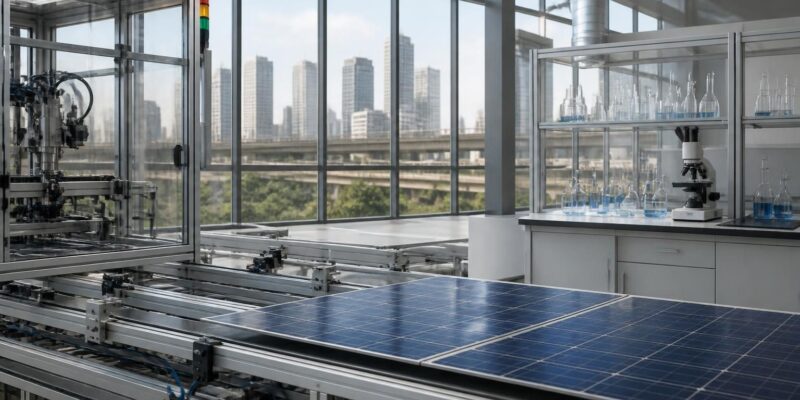
A deadline that puts clean technology in the spotlight
Polish companies working on clean and resource-efficient technologies have until Tuesday, 11 August 2026, to submit applications in two investment-oriented funding tracks operated by the Polish Agency for Enterprise Development, known by its Polish acronym PARP. The calls form part of the European Strategic Technologies for Europe Platform, or STEP, and are intended to support technologies considered important for Europe’s long-term industrial and environmental capacity.
The application window opened on 16 June and closes on 11 August 2026. PARP’s official timetable confirms the deadline for both the track supporting innovative critical technologies and the track focused on strategic independence. The detailed call documentation specifies that applications are submitted electronically, with the strategic-independence call accepting applications until 16:00 on the closing day. ([power.parp.gov.pl](https://power.parp.gov.pl/component/grants/grants/step—czyste-i-zasobooszczedne-technologie—strategiczna-niezaleznosc-ue?utm_source=openai))
What the programme is designed to support
The calls are aimed at investment projects in the clean and resource-efficient technology sector. The programme documentation refers to areas linked to the production of critical technologies or components of their value chains. The scope includes technologies that can contribute to lower emissions, improved resource efficiency, circular production and the resilience of industrial supply chains.
PARP’s published materials identify categories such as net-zero technologies, renewable energy, energy efficiency, circular-economy solutions, advanced materials and technologies connected with the recovery or recycling of critical raw materials. The list is not a general-purpose business grant: applicants must demonstrate that their projects fit the defined critical-technology areas and comply with the relevant eligibility and evaluation criteria. ([power.parp.gov.pl](https://power.parp.gov.pl/component/grants/grants/step—czyste-i-zasobooszczedne-technologie—strategiczna-niezaleznosc-ue?utm_source=openai))
Why the call matters beyond individual companies
The immediate beneficiaries will be businesses, but the potential effects extend into the way Polish cities and regions manage energy, buildings, transport and industrial land. Clean-technology investment can support more efficient production, electrification, energy management, low-carbon materials and better use of resources. Those areas are increasingly connected with urban development, particularly as municipalities and metropolitan regions seek to modernise infrastructure while limiting operating costs and environmental pressure.
The programme does not itself announce a new tram line, railway station or municipal construction project. Its significance is more structural: it creates a route for companies to develop and manufacture technologies that may later be used in public infrastructure, commercial buildings, logistics, energy systems and urban services. That makes the funding window relevant to Poland’s broader transition toward more efficient and less resource-intensive growth, while keeping the story centred on a concrete business deadline.
A two-track approach
The first track, described by PARP as supporting innovative critical technologies, is intended for investment projects bringing advanced solutions into the market. The second track focuses on projects contributing to strategic independence, including the development of production capacity and value chains in areas considered important for Europe’s technological and industrial position.
Both tracks are administered under the Fund for Modern Economy 2021–2027 framework. PARP has published separate application materials, including regulations, eligible technology lists, cost guidance, evaluation criteria and model forms. The agency also held an information webinar in June to explain the objectives, eligibility rules and common application issues associated with the programme. ([parp.gov.pl](https://www.parp.gov.pl/component/content/article/90660%3Astep-czyste-i-zasobooszczedne-technologie-sprawdz-jak-program-moze-wesprzec-twoj-projekt?utm_source=openai))
What happens after the deadline
Closing the call does not mean that projects receive support immediately. Applications must pass the formal and substantive assessment procedures described in the regulations. PARP’s grant pages provide information on the evaluation process, contracting and later payment applications. The final list of supported projects will show which technology areas and business models have attracted investment under this round.
For Poland, the outcome will offer an indication of how strongly domestic companies are positioning themselves in sectors such as renewable energy, efficiency, circular production and advanced materials. It will also show whether public funding can help connect industrial development with practical environmental gains.
The 11 August deadline therefore marks more than the end of an administrative window. It is a timely checkpoint for Poland’s clean-technology ecosystem: companies submit projects, public institutions begin evaluation, and the next stage of the country’s green industrial transition moves from programme design toward implementation.



















Comments