

 By
By 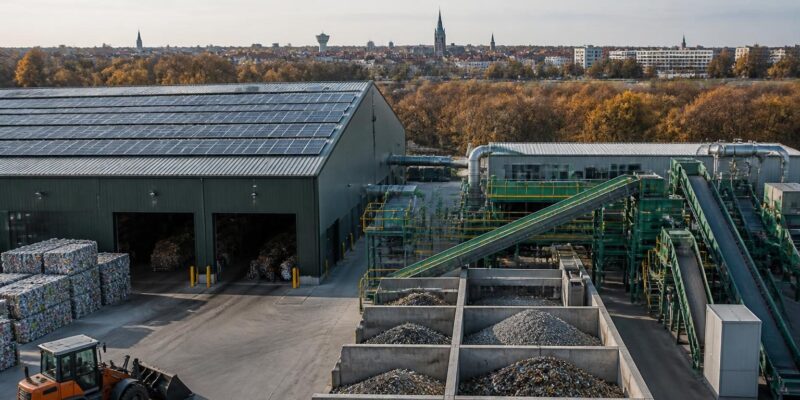
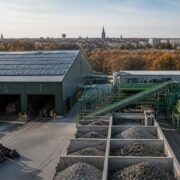
Tartu is set to become an important centre for Estonia’s emerging solar-panel recycling capacity. Waste-management company Epler & Lorenz is developing a facility that will handle end-of-life photovoltaic panels and separate their principal material fractions for further recycling.
The project became newly visible in Estonia’s public discussion on 9 October 2026, when national broadcaster ERR reported that the company had received nearly €500,000 in support for the planned facility. The funding decision itself was made earlier through Estonia’s Environmental Investment Centre, known by its Estonian abbreviation KIK. According to KIK, the specific solar-panel project received €439,299 in support. ([news.err.ee](https://news.err.ee/1610161180/plans-for-a-solar-panel-recycling-plant-in-tartu?utm_source=openai))
Building capacity before the waste peak
The timing reflects a familiar pattern in the clean-energy transition: equipment is being installed at a rapid pace today, while the largest volumes of waste will arrive later. Most solar panels currently operating in Estonia are expected to remain in service for years, but the country is already preparing for the point at which damaged, outdated or decommissioned panels need a domestic treatment route.
ERR reported that around 60,000 tonnes of solar panels were placed on the Estonian market between 2018 and 2025, based on figures from the national Register of Products of Concern. The current amount of panel waste is still considered modest, but the accumulated stock gives policymakers and companies a reason to plan ahead rather than wait until disposal volumes rise sharply. ([news.err.ee](https://news.err.ee/1610161180/plans-for-a-solar-panel-recycling-plant-in-tartu?utm_source=openai))
KIK says the planned unit will be capable of processing up to 1,600 tonnes of solar panels per year. The process is intended to separate glass, aluminium, copper and silicon-based fine fractions so that the materials can enter appropriate recycling streams. This is more specific than simply collecting panels: it creates a domestic preparation stage before recovered materials are sent for reuse or further processing. ([kik.ee](https://kik.ee/en/news/old-solar-panels-be-processed-estonia?utm_source=openai))
A practical circular-economy project
Solar panels are often presented as a straightforward renewable-energy technology, but their environmental performance also depends on what happens at the end of their useful life. Their frames, glass, wiring and semiconductor materials have different physical and economic properties, which means that recovery requires sorting and treatment rather than a single disposal solution.
For Estonia, local processing could bring several practical benefits. It may reduce the need to export collected panels before treatment, create additional expertise in specialised waste management and improve the recovery of materials that would otherwise be handled as a lower-value waste stream. KIK has described the project as a way to create more added value in Estonia while reducing pressure to extract new resources.
The Tartu project is being developed alongside a separate battery and accumulator sorting line at the company’s site. KIK awarded Epler & Lorenz €197,975 for that equipment, with a planned capacity of up to 600 tonnes per year. Together, the two investments point to a broader expansion of Estonia’s ability to manage waste connected with electrification and renewable energy. ([kik.ee](https://kik.ee/en/news/old-solar-panels-be-processed-estonia?utm_source=openai))
Producer responsibility remains part of the picture
The development also highlights a policy question that will become more important as solar power grows: who is responsible for panels when they reach the end of their service life, and how should the cost of collection and treatment be shared?
ERR reported that producer responsibility remains a concern in Estonia. The challenge is not only technical. Collection systems, information about ownership, transport arrangements and financing mechanisms all need to work together if panels are to reach certified treatment facilities rather than being stored indefinitely or handled through unsuitable channels.
That makes the Tartu facility a piece of wider infrastructure rather than a complete answer on its own. Its effectiveness will depend on reliable collection networks, clear rules for companies placing panels on the market and sufficient demand for the recovered materials. The project nevertheless offers Estonia a concrete way to prepare for a waste stream that is still relatively small but likely to become more visible over time.
From renewable generation to resource recovery
Estonia’s solar expansion is creating new questions beyond electricity production. The next phase of the industry will involve designing systems that account for the whole life cycle of equipment, including maintenance, reuse, dismantling and material recovery.
By investing in treatment capacity in Tartu before large-scale panel waste arrives, Epler & Lorenz and KIK are placing circular-economy infrastructure alongside renewable-energy development. The approach is gradual and practical: build the equipment, test the market and develop the expertise needed to keep more materials in productive use.
For Tartu, the project adds another example of how industrial services can support the clean-energy transition. For Estonia, it marks an early step toward ensuring that the benefits of solar power do not end when panels stop producing electricity.




















Comments