 By
By 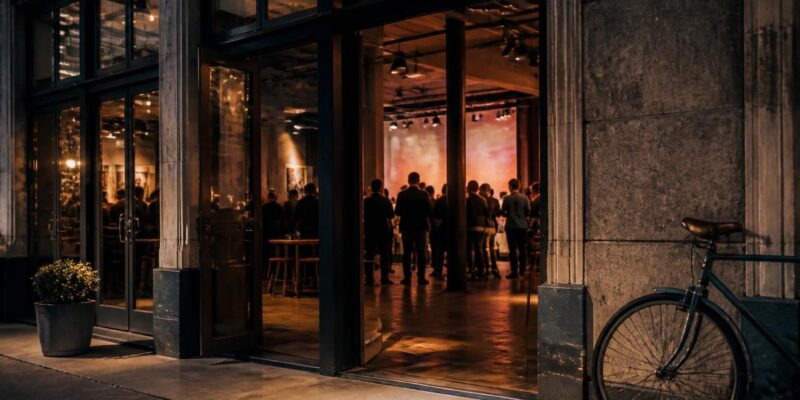
One festival, three cities and a different touring model
A new Scandinavian music format is reaching its final weekend with an idea that is as much about cultural cooperation as it is about concerts. Another Festival, running from 8 to 11 October 2026, is connecting three established independent venues in Denmark, Sweden and Norway: VoxHall in Aarhus, Pustervik in Gothenburg and Folken in Stavanger.
Rather than concentrating performances in a single festival area, the project moves through the cities over four days. Aarhus hosts the opening programme on 8 and 9 October, Gothenburg follows on 9 and 10 October, and Stavanger concludes the programme on 10 and 11 October. The arrangement gives the festival a distributed geography and places local venues, rather than temporary infrastructure, at the centre of the experience.
The organisers describe the event as a continuation of its 2025 debut and as a collaboration designed to make touring more workable for artists while giving audiences access to acts that may not otherwise reach their city. The shared programme is intended to let performers play several shows during one regional booking, reducing the need to build separate one-off tours for each market.
Independent venues as cultural infrastructure
The three host venues represent different parts of the Scandinavian live-music landscape. VoxHall is a long-established Aarhus venue for emerging and alternative music. Pustervik, in central Gothenburg, combines concerts and club programming in a compact setting. Folken operates from the historic Folkets Hus building in Stavanger and offers several stages for Norwegian and international artists.
That choice of venues is significant. Large festivals often depend on temporary stages, extensive travel and a single concentrated audience. Another Festival instead treats existing cultural buildings as a connected network. The approach keeps performances close to city centres and makes the participating venues visible as year-round community spaces, not merely as festival locations.
For audiences, the model offers two possibilities. Visitors can follow the event between cities, turning the programme into a short cultural journey, while residents can attend the part taking place locally without travelling to a major festival destination. The organisers say the format is intended to bring the festival to audiences rather than requiring everyone to travel to it.
A shared Nordic programme with local character
The programme brings together artists from different parts of the contemporary European music scene. The Stavanger schedule, for example, lists the British band Shame alongside Swedish act Fauna, Irish group Bricknasty and Norwegian band Daufødt. The combination reflects the festival’s effort to mix established international names with artists connected to the Nordic and wider European independent scene.
Because the same festival identity appears in three cities, the event also creates a point of comparison between local audiences. A performance that feels like a specialist booking in one city can become part of a wider regional conversation when it appears in Aarhus, Gothenburg and Stavanger within the same weekend. The arrangement encourages venues to share knowledge about programming, promotion and artist logistics.
In this sense, Another Festival is not presenting Scandinavian culture as a single uniform product. It is testing whether cooperation can make the region’s differences more visible. Each venue keeps its own atmosphere and audience, while the shared framework creates a practical connection between them.
Why the experiment matters beyond one weekend
The festival arrives at a time when many cultural organisations are looking for ways to sustain live programming while controlling travel and production costs. A multi-city booking can help artists make better use of a regional tour, while venues can cooperate on a programme that might be difficult to assemble independently.
The organisers also frame the initiative as a platform for contemporary music in the Nordic region. That ambition is modest but useful: instead of promising a new mega-event, the project focuses on relationships between existing institutions. If the model proves workable, similar partnerships could connect venues in other Nordic cities around different genres, from electronic music and jazz to theatre, literature or visual art.
Another Festival’s 2026 edition therefore offers a small-scale example of cultural integration in practice. Its main result may not be a single headline performance, but a stronger working relationship between three venues and a more flexible route for artists moving through Scandinavia.
As the programme reaches Folken in Stavanger on 10 and 11 October, the experiment remains close to the public: three cities, three venues and one shared cultural timetable. The format shows how cross-border cooperation can begin with practical arrangements that benefit artists, audiences and the local places already equipped to welcome them.















Comments