 By
By 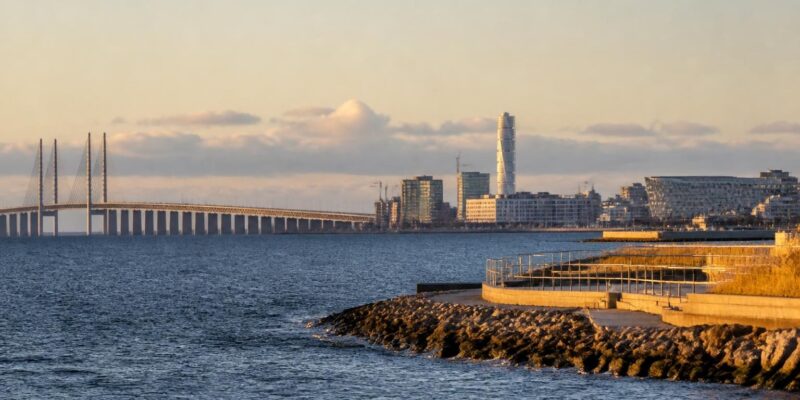
A new Denmark-Sweden summit announced on August 21 will place the Øresund region’s innovation economy at the centre of Copenhagen’s major TechBBQ technology gathering next week. The programme is designed to examine how research institutions, startups, municipalities and established companies can work more effectively across the waterway linking eastern Denmark with southern Sweden.
The Denmark-Sweden Summit will take place on August 27 at Bella Center Copenhagen, as part of TechBBQ 2026. It is being organised by the independent Danish-Swedish knowledge centre Øresundsinstituttet together with Greater Copenhagen, the cross-border political cooperation platform. Region Skåne and the cities of Malmö, Lund and Helsingborg are listed among the partners, alongside Grant Thornton.
A regional innovation story
The organisers are presenting the Øresund area not simply as a transport corridor, but as a connected research and business region. Their programme refers to 13 universities, research infrastructure, science parks, incubators and a growing startup community spread across the two countries.
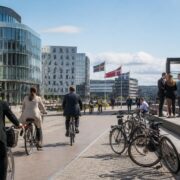
That framing reflects the region’s distinctive economic geography. Copenhagen and Malmö are close enough for regular business, research and study links, while the Øresund Bridge provides a physical connection between the two metropolitan areas. The region also includes Lund, home to a dense concentration of research and technology activity, and Helsingborg, which has developed its own business and innovation networks.
The summit’s emphasis is therefore practical: how can neighbouring ecosystems become more useful to one another? The answer may involve easier access to laboratories, stronger links between universities and companies, more visible investment opportunities and better coordination between local and regional authorities.
Research and commercialisation in focus
The announced speaker list includes representatives of the European Spallation Source, science parks and incubators in both countries, the life-science cluster Medicon Valley Alliance and the City of Malmö. Together, those participants point to the main themes of the meeting: advanced research, entrepreneurship, life sciences and the role of cities in supporting innovation.
The European Spallation Source is particularly relevant to the region’s research profile. The facility in Lund is intended to provide scientists with access to advanced neutron-based research, creating opportunities for work in materials science, engineering, medicine and other fields. Its presence also illustrates the long time horizons involved in turning public research infrastructure into commercial applications.
Life sciences are another established cross-border strength. Medicon Valley links companies, universities, hospitals and public actors in the Copenhagen area and Skåne. A summit that brings this cluster into the wider startup conversation could help connect specialist research with investors and entrepreneurs working in adjacent areas such as biotechnology, digital health and advanced materials.
Part of a larger technology week
The summit is scheduled during TechBBQ, which will run at Bella Center Copenhagen on August 26 and 27. TechBBQ describes itself as a major Scandinavian meeting point for founders, investors and the broader technology ecosystem. Its 2026 programme includes startup presentations, investor matchmaking, policy discussions, artificial-intelligence sessions, energy innovation and circular-economy events.
That wider setting matters because regional innovation depends on more than research alone. Startups need customers, capital and skilled employees; universities need routes for collaboration; and public authorities need mechanisms that make cross-border activity easier rather than more complicated.
Other TechBBQ sessions will examine institutional capital, European growth, energy startups and circular business models. The Denmark-Sweden Summit adds a geographical perspective to those discussions by asking how a specific cross-border region can create the conditions for companies to scale.
Why cross-border cooperation matters
For businesses in the Øresund region, cooperation can expand access to talent, specialist expertise and potential customers without requiring a move to a distant market. For researchers, collaboration across the strait can widen networks and improve access to facilities. For municipalities and regional authorities, joint promotion can make the area more visible to international investors.
Such cooperation is not automatic. Differences in regulation, taxation, labour-market rules and administrative systems can still make everyday cross-border activity more difficult than the short distance on the map suggests. The value of a summit like this lies partly in identifying those practical barriers and giving companies, researchers and policymakers a place to discuss them together.
The programme begins with a presentation on the Øresund region as a growing and innovative research region, followed by networking and a reception. It is a modest format, but its message is broader: Denmark and Sweden can strengthen their innovation position by treating the Øresund as a shared economic space while preserving the strengths of each national ecosystem.
With European technology markets becoming more competitive, the ability to connect existing research, capital and entrepreneurial communities may prove as important as building new facilities. The Copenhagen meeting will offer a timely public test of how far that cross-border ambition has developed.












Comments