

 By
By 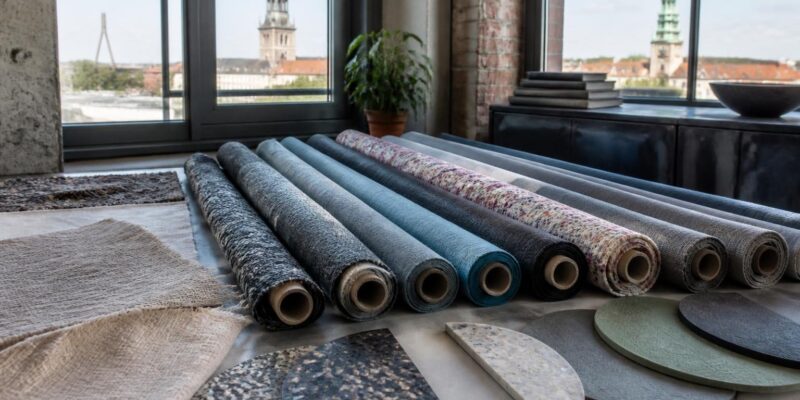
Riga is becoming a meeting point for a regional conversation about what happens to clothes, workwear and other textile products after their first use. The Nordic-Baltic Textile Circularity Forum, held on October 7 and 8, is bringing together researchers, innovators, public officials, businesses, non-governmental organisations and practitioners to discuss how textile waste can be reduced through longer product life, better collection and new recycling models.
The forum is taking place at H2O 6 in Riga and is free to attend with advance registration. It is organised through cooperation between the European Union-funded tExtended project and the Nordic-Baltic Textile Circularity initiative, which is supported by the Nordic Council of Ministers’ offices in Latvia, Estonia and Lithuania.
From research results to regional action
The timing gives the event a clear purpose. The Riga gathering serves as a closing forum for tExtended, a four-year Horizon Europe project that has worked on ways to combine textile recovery, reuse, waste valorisation, recycling and data-based tools. The project’s central ambition is to demonstrate how the textile system could move towards an 80% reduction in waste, while recognising that such a result would require changes across the entire value chain rather than a single new technology.
According to the project’s published findings, modelling work identified several possible routes towards that target. These include moderating consumption, extending the useful life of products, improving collection rates, expanding reuse and recycling capacity, and reducing material losses during sorting. The project has also examined how discarded textiles can be separated and directed towards different forms of reuse, remanufacturing or recycling.
The European Commission describes tExtended as a project designed to support textile circularity through recovery, valorisation, recycling and data-driven solutions. Its work addresses a basic structural problem: too little textile waste is currently returned to textile production as a secondary raw material, while collection, sorting and labelling systems remain uneven.
A programme built around usable examples
The first day of the Riga forum is focused on the tExtended project and its practical results. Speakers from research organisations and industry are presenting work on experimental collection and sorting methods, remanufacturing, mechanical recycling of workwear and the use of recycled post-consumer material in new home textiles.
The programme also includes demonstrations of digital tools, an exhibition and presentations on social-innovation projects. That combination is important because circularity depends not only on industrial equipment but also on information: what a product is made of, where it has been used, whether it can be repaired, and which recovery route is technically and economically realistic.
Several of the examples presented in Riga are intended to show how textile leftovers can become useful products or materials rather than being treated as an undifferentiated waste stream. The forum’s organisers say the event will connect European innovation with Nordic-Baltic regional priorities and market-ready solutions.
Why the Baltic-Nordic dimension matters
The second day turns towards regional cooperation. Discussions cover the current state of textile circularity in the Nordic and Baltic countries, the conditions needed to replicate successful approaches, and the role of extended producer responsibility. The latter refers to systems in which producers and brands take greater responsibility for the collection, treatment and recovery of products after consumers no longer need them.
Latvia is represented in the programme by public officials, circular-economy specialists, researchers and companies involved in collection, textile services and waste management. The agenda includes a policy discussion with representatives of brands, producer-responsibility organisations and industry operators, followed by presentations from companies working on automated collection, repair, reuse platforms, digital product passports and fibre-to-fibre recycling.
For Riga, the forum offers more than a two-day exchange of presentations. It creates a regional setting in which municipalities, companies and researchers can compare practical experience and identify where cooperation is still missing. Nordic and Baltic countries share many of the same challenges, including relatively small markets, cross-border supply chains and the need to build infrastructure that can handle different kinds of textile material.
A constructive environmental story with an economic angle
Textile circularity is often discussed as a waste issue, but the forum also presents it as a question of industrial competitiveness and innovation. Longer-lasting products, better sorting and new uses for recovered fibres can reduce material losses while creating opportunities for repair services, remanufacturing, specialised recycling and new business models.
The event does not promise an immediate transformation. Instead, it offers a practical view of how a more circular textile system might be assembled: through better data, better collection, more durable products, cooperation between research and business, and policy frameworks that make reuse and recycling easier to scale.
With its two-day programme in Riga, the Nordic-Baltic Textile Circularity Forum places Latvia at the centre of a constructive regional discussion about turning textile waste reduction from an environmental objective into a workable part of everyday production and consumption.
Sources
- Nordic-Baltic Textile Circularity Forum 2026: programme and organisers
- European Commission textile ecosystem platform: forum overview
- Nordic Council of Ministers’ Office in Latvia: forum announcement
- European Commission: tExtended project background
- tExtended: published findings on waste-reduction scenarios

















Comments