

 By
By 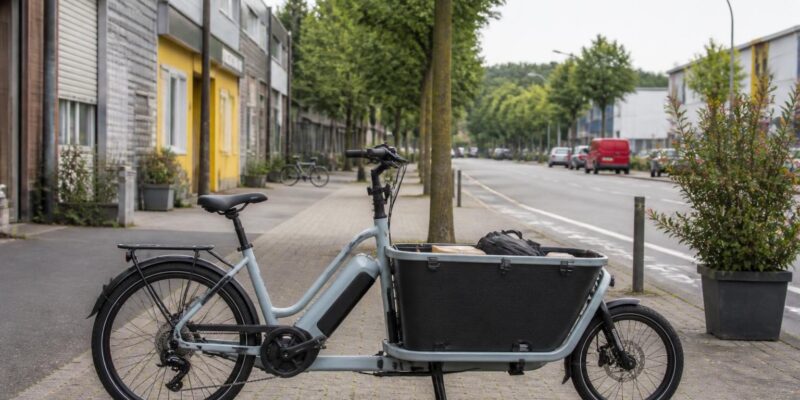
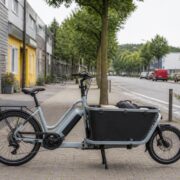
Bonn is using a practical demonstration day to examine how cargo bikes could become a more useful part of everyday urban logistics. The city’s economic development agency and the Nachhaltigkeits-Hub Region Bonn are inviting trades and service companies to the event “Heavily Loaded – Moving Quickly” at the Telekom Dome on Monday, October 12, 2026.
The programme is designed less as a general cycling promotion than as a working session for businesses that move tools, materials or goods around built-up areas. From 1 p.m., dealers and manufacturers will provide several cargo-bike models for test rides. Between 2 p.m. and 4 p.m., companies already using cargo bikes in their daily operations will describe how the vehicles fit into real work routines. Mobility advisers from the Cologne Chamber of Skilled Crafts and the Bonn “moveBonn” project will also explain workplace mobility and possible funding routes. ([bonn.de](https://www.bonn.de/pressemitteilungen/september-2026/lastenrad-aktionstag-schwer-beladen-flott-unterwegs.php?loc=de&utm_source=openai))
From showroom idea to working vehicle
The significance of the Bonn event lies in its emphasis on direct testing. Cargo bikes are often discussed as a broad alternative to cars and vans, but their usefulness depends on practical questions: how much equipment can they carry, how easily can employees load them, and how do they perform on routes involving frequent stops?
For tradespeople, maintenance teams, retailers and other service providers, the vehicle is not simply a means of getting from one address to another. It is part of a work system that includes tools, spare parts, delivery schedules, parking conditions and the need to reach customers efficiently. A test area where different models can be ridden and compared allows companies to assess those details before making an investment.
The city says cargo bikes can transport goods without the need to search for a conventional parking space. Their lower operating costs and ability to bypass some congestion may also help companies save time and money on short urban journeys. Because a driving licence is not required, businesses may gain greater flexibility when assigning local delivery and service tasks. ([bonn.de](https://www.bonn.de/pressemitteilungen/september-2026/lastenrad-aktionstag-schwer-beladen-flott-unterwegs.php?loc=de&utm_source=openai))
A business question as well as a climate question
Bonn’s organisers are presenting the event as a business mobility issue, which gives the discussion a wider practical foundation. Small and medium-sized companies frequently operate within a limited service radius, where the time spent finding parking can be as important as the distance travelled. In such circumstances, a compact electric-assisted vehicle can be considered alongside conventional vans rather than as a universal replacement for them.
The format also brings several parts of the regional economy into the same conversation. The event is supported by the Bonn/Rhein-Sieg Chamber of Industry and Commerce, the Bonn/Rhein-Sieg district association of skilled crafts and the Cologne Chamber of Skilled Crafts. Their involvement connects manufacturers and public-sector mobility advisers with firms that would ultimately have to organise charging, storage, insurance, route planning and staff training.
The Chamber of Industry and Commerce lists the October 12 event among its business programme, confirming the date and the planned combination of presentations, information stands and test rides. ([ihk-bonn.de](https://www.ihk-bonn.de/standortpolitik/brancheninformationen/verkehrspolitik/sperrung-der-bonner-nordbruecke?utm_source=openai))
Why urban freight is receiving more attention
Urban transport debates often focus on passengers, public transport and cycling infrastructure. Freight and service journeys are just as visible in daily city life, however: technicians arrive at homes, retailers receive small deliveries, and maintenance workers move equipment between sites. These trips are usually shorter than regional freight movements but can be repeated many times each day.
That makes them a possible field for gradual change. A company might use a cargo bike for dense central routes while retaining a van for heavier loads or longer distances. Such mixed fleets could allow businesses to match vehicles to specific tasks instead of treating every journey as if it required the capacity of a large commercial vehicle.
The Bonn event therefore offers a modest but concrete example of how cities can support experimentation. Rather than announcing a citywide transport rule or a single technology solution, it creates a setting in which companies can compare equipment, hear from early users and ask about support programmes.
A small-scale test with wider relevance
The event is free to attend, and spontaneous participation is possible, although advance registration is recommended. Its immediate audience is professional rather than recreational: firms that transport goods in urban areas and are considering another way to organise their mobility.
For Bonn, the value will not be measured only by the number of test rides. It will also depend on whether businesses leave with clearer information about operating costs, suitable vehicle types and the conditions needed to make cargo-bike use reliable. Those lessons can inform future decisions by companies, chambers and municipalities across the region.
In that sense, “Heavily Loaded – Moving Quickly” is a practical urban-development story. It links street design, local commerce and climate-conscious mobility through a simple question: which journeys can be served effectively with a smaller, cleaner vehicle?



















Comments