 By
By 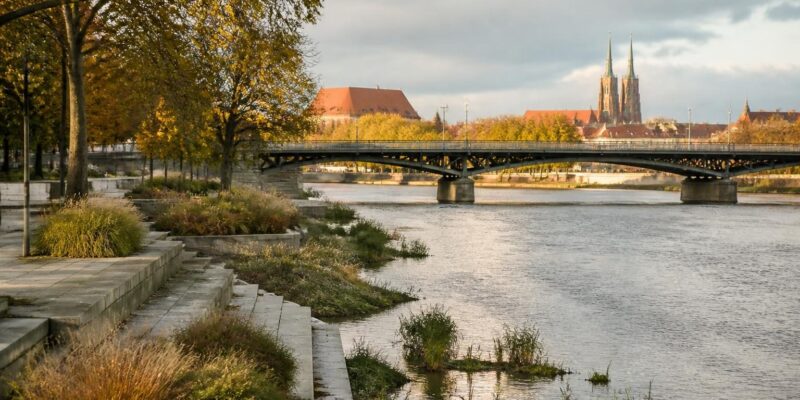
Wrocław will become a meeting point for Poland’s water, urban-planning and environmental communities next week, when the eighth City–Water–Quality of Life Congress takes place on 13–14 October 2026. The programme is built around a practical question: how can cities manage water and natural assets in ways that improve everyday life while preparing for a changing climate?
The announcement, published by the University of Łódź on 9 October, presents the congress as a forum for scientists, local-government representatives, policymakers, businesses and independent experts. Its three guiding themes are city, water and quality of life, linking technical infrastructure with public space, environmental policy and the social experience of urban life. ([uni.lodz.pl](https://www.uni.lodz.pl/en/news/details/8th-city-water-quality-of-life-congress-with-the-participation-of-a-unilodz-researcher?utm_source=openai))
From water infrastructure to natural capital
Among the subjects on the agenda are urban water retention, the modernisation of water-supply systems, critical infrastructure, hydrological management technologies and the role of nature in city planning. The programme also gives space to the idea of “natural capital”: the value provided by parks, wetlands, river valleys and other ecosystems that are often treated as background scenery rather than as part of a city’s essential infrastructure.
A dedicated discussion on 14 October will ask how Polish cities can account for nature when making planning and investment decisions. The session will be moderated by Iwona Wagner, an associate professor at the University of Łódź and co-organiser of the congress. Participants listed for the panel include representatives of Wrocław, Kraków, the University of Warsaw, the Institute of Urban and Regional Development and the Wrocław Technology Park. ([uni.lodz.pl](https://www.uni.lodz.pl/en/news/details/8th-city-water-quality-of-life-congress-with-the-participation-of-a-unilodz-researcher?utm_source=openai))
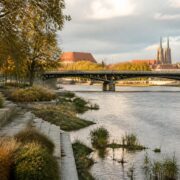
The subject is increasingly relevant to cities whose residents experience water in several ways at once: as a resource, a landscape feature, a transport and recreation corridor, and a source of planning challenges. A riverfront may support biodiversity and public life, but the same urban water system must also cope with intense rainfall, periods of scarcity, ageing infrastructure and competing demands from households, businesses and public services.
A Wrocław-based platform with a wider reach
The congress is being organised by the City of Wrocław, the municipal water company MPWiK Wrocław, the Foundation for Economy and Public Administration and Wrocław University of Science and Technology. The event is scheduled for the university’s Congress Centre and will also be available online, with participation offered free of charge subject to registration. ([uni.lodz.pl](https://www.uni.lodz.pl/en/news/details/8th-city-water-quality-of-life-congress-with-the-participation-of-a-unilodz-researcher?utm_source=openai))
Wrocław’s municipal water company describes the congress as a long-running platform focused on the relationship between aquatic and urban environments and their influence on quality of life. Its programme connects water policy with climate adaptation, urban heat, rapid flooding, water demand and the use of waterfront areas to support health and liveability. ([mpwik.wroc.pl](https://www.mpwik.wroc.pl/aktualnosci/?utm_source=openai))
That combination gives the event a distinctly applied character. Rather than treating climate resilience solely as an engineering issue, the congress places it alongside urban design, public administration, education and the protection of ecological functions. It also creates a setting in which municipal officials can compare approaches with researchers and infrastructure specialists.
Why the discussion matters for Polish cities
Polish cities differ greatly in geography and scale, but many face similar questions: where should rainwater be held, how can rivers and wetlands be protected, and how should green areas be included in long-term investment decisions? The answers affect housing, transport, public health, recreation and the cost of maintaining infrastructure.
The congress is also expected to present the Water City Index 2026, a ranking of Polish cities’ approaches to water management. Such comparisons can help turn a broad sustainability debate into a more concrete conversation about indicators, investment priorities and local performance. ([linkedin.com](https://www.linkedin.com/posts/tanja-iamwater_honoured-to-be-among-the-first-announced-activity-7491201576389275648-aPGB?utm_source=openai))
For Wrocław, the event continues a civic and institutional interest in the city’s relationship with water. For participants from other regions, it offers an opportunity to examine how river valleys, parks and wetlands can be treated not simply as constraints on development, but as assets that support healthier and more adaptable urban environments.
With the congress beginning on Tuesday, 13 October, the immediate focus will be on exchanging evidence and practical experience. Its broader message is straightforward: water management, nature protection and the quality of urban life are increasingly part of the same planning conversation.










Comments