 By
By 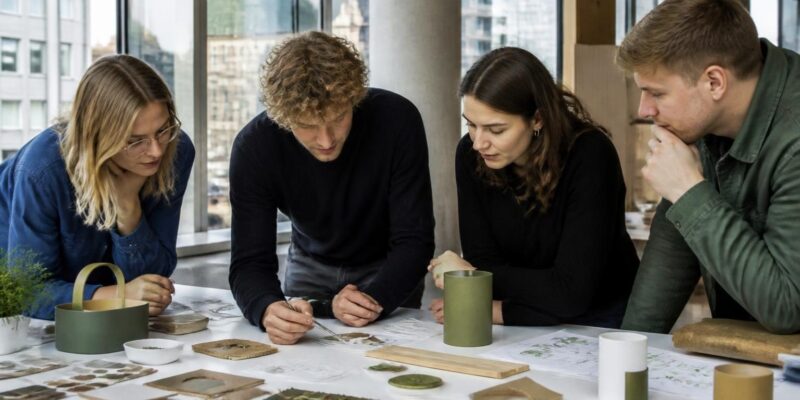
From sustainability language to business choices
Polish entrepreneurs are being offered a practical way to examine the circular economy: not as a distant environmental concept, but as a series of decisions about materials, products, costs and partnerships.
A workshop held on Wednesday, 30 September 2026, at the Warsaw University of Technology is bringing together business representatives to test circular strategies through a team-based simulation. The event is organised by the Polish Agency for Enterprise Development, known as PARP, in cooperation with the Institute of Innovation and Responsible Development, INNOWO.
The meeting is part of PARP’s Business Circular Transformation Academy, a programme designed to provide companies with knowledge, tools and examples for applying circular-economy principles in day-to-day operations. The current workshop is free to participants who register in advance.
A simulation rather than a lecture
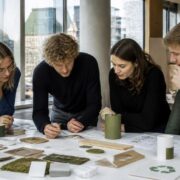
The format is intended to move beyond a conventional seminar. According to the organisers, participants are asked to guide a model company through a circular transformation, making decisions about business models, technology, ecodesign and cooperation with other organisations.
The exercise is structured to show how different choices can produce different commercial and environmental consequences. Teams examine material and financial flows, identify places where resource use could be reduced and consider how a company could measure its carbon footprint.
The programme also asks participants to design a set of circular actions for a business and assess how those actions could influence emissions, material intensity and potential financial savings. In this way, circularity is presented as a management question involving competitiveness and efficiency, rather than simply a matter of corporate messaging.
What the workshop covers
- the role of circular transformation as a business decision;
- ways of identifying opportunities to close material loops;
- basic approaches to measuring a company’s carbon footprint;
- ecodesign and technology choices;
- partnerships that can support more efficient use of resources;
- the possible relationship between lower material use and financial savings.
Support for companies beyond Warsaw
The organisers say the workshop is aimed particularly at entrepreneurs, company owners, managers and specialists responsible for innovation and business development. A particular focus is placed on firms connected with the bioeconomy and industrial processing, sectors where material flows and resource efficiency can have a direct effect on operating costs.
The programme is also linked to the development needs of eastern Poland and is co-financed through the European Regional Development Fund under the European Funds for Eastern Poland programme for 2021–2027. The wider academy has included workshops, study visits and practical sessions in several Polish cities during 2026.
PARP’s programme listing shows earlier academy activities devoted to ecodesign, digital tools, business transformation and visits to companies already working with circular solutions. The Warsaw session therefore forms part of a continuing educational offer rather than standing alone as a one-day campaign.
Why the approach matters for smaller firms
For smaller companies, the circular economy can appear difficult to translate into immediate action. Large sustainability strategies often depend on specialist staff, detailed data and long investment cycles. A simulation can lower that barrier by allowing managers to compare choices in a controlled setting before committing money or changing production processes.
The approach also reflects the practical character of circular business models. Reusing materials, extending product life, redesigning components or developing industrial partnerships may require changes across purchasing, production, sales and after-sales service. The workshop’s structure places those questions together, helping participants consider the company as a connected system.
It does not promise that every business can adopt the same solution. Instead, the organisers emphasise diagnosis: understanding where materials and money move through a company, then selecting measures that fit its products, capabilities and markets.
A constructive signal for innovation policy
The Warsaw workshop is a modest but concrete example of how Poland is trying to connect environmental objectives with enterprise support. Its emphasis is on skills, experimentation and cooperation between public institutions, specialists and businesses.
That combination is important because the success of circular production depends not only on regulation or technology. It also depends on whether companies can identify workable projects, calculate their effects and find partners capable of implementing them.
By placing those questions in a practical business exercise, PARP and INNOWO are presenting circular transformation as part of ordinary economic decision-making. For participating firms, the immediate result is training. For the wider economy, the longer-term objective is a stronger pipeline of businesses able to reduce resource use while developing new products, services and partnerships.
Sources
PARP: workshop programme and event details












Comments