

 By
By 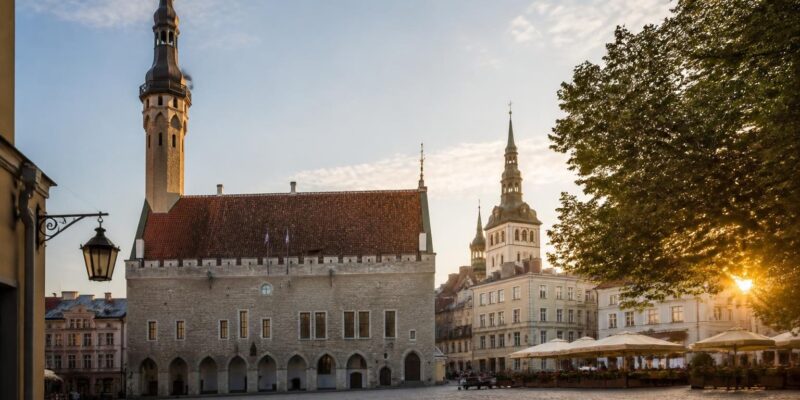
A festival built around connection
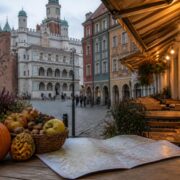
The 22nd Tallinn Chamber Music Festival begins on Saturday, August 22, opening a week-long programme under the title “Bridges of Folklore”. The festival runs through August 29 and brings concerts to several historic venues in Tallinn’s Old Town, including the Town Hall, Swedish St Michael’s Church and the House of the Blackheads.
The event is organised by the Pille Lill Music Fund, which established the festival tradition in 2003. Its compact format is designed to give audiences the opportunity to hear a broad selection of Estonian and international musicians over a short period. The organisers describe the festival as one of Estonia’s established classical-music events, with the Old Town providing an architectural setting for a varied concert series. ([tallinnkammerfest.ee](https://www.tallinnkammerfest.ee/tallinna-kammermuusika-festival/meist?utm_source=openai))
Opening night dedicated to Erkki-Sven Tüür’s contemporary
The opening concert at Tallinn Town Hall on August 22 is titled “Jürjendal 60”, marking composer Margo Jürjendal’s 60th birthday. The programme brings together violinists Anna-Liisa Bezrodny and Lasse Joamets, violist Sandra Klimaitė, cellist Silvia Ilves, double bassist Regina Udod, saxophonist Virgo Veldi and Finnish pianist Mika Rännäli.
Works by Jürjendal are presented alongside music by Miklós Rózsa, William Grant Still and Aulis Sallinen. The combination sets the tone for a festival that treats chamber music not as a single national tradition, but as a meeting place for different instrumental colours, generations and musical backgrounds. The opening concert begins at 7 p.m. ([piletilevi.ee](https://www.piletilevi.ee/series/UL3EQI23OF/xxii-?utm_source=openai))
From a new recording to percussion and sacred music
The programme continues on Sunday, August 23, with a concert devoted to Finnish composer Leevi Madetoja and the presentation of a new recording of his work “Melodia Intima”. Bezrodny, Ilves and Rännäli appear in the programme, which places a Nordic composer in conversation with the festival’s wider European perspective.
On August 24, the Estonian Percussion Group moves the series to Swedish St Michael’s Church for “Percussion Jugglers”. The ensemble’s programme includes music by Erkki-Sven Tüür, Philip Glass, Arvo Pärt and Toivo Tulev, among others. It is followed on August 25 by “Home Sweet Home”, a concert featuring French violinist Nicolas Dautricourt, Estonian musicians and American pianist Mackenzie Melemed.
The August 26 concert, “O Ecclesia”, places early and contemporary music side by side. Its programme includes Hildegard von Bingen as well as Estonian composers such as Helena Tulve, Tõnu Kõrvits and Ülo Vinter. The festival’s schedule therefore moves between instrumental combinations, national repertoires and historical periods rather than following one narrowly defined style. ([piletilevi.ee](https://www.piletilevi.ee/series/UL3EQI23OF/xxii-?utm_source=openai))
International guests in an Old Town setting
The final part of the festival continues with “Alla Zingarese” on August 27, featuring violinists Bezrodny and Joamets, violist Klimaitė, cellist Tuomas Ylinen and pianist Melemed. On August 28, Melemed presents “Keys Across America”, with music by composers including Aaron Copland, Amy Beach, Florence Price, Louis Moreau Gottschalk and Ned Rorem. A pre-concert discussion is scheduled for 6 p.m.
The closing concert, “Impressions and Expressions”, takes place on August 29 at the House of the Blackheads. Trumpeter Neeme Ots, violinist Bezrodny and the Estonian Sinfonietta perform a programme including works by Jürjendal, Valentyn Petrov and John Rutter. Tickets for individual concerts and a festival pass are listed through Piletilevi. ([piletilevi.ee](https://www.piletilevi.ee/series/UL3EQI23OF/xxii-?utm_source=openai))
Why the theme matters
“Bridges of Folklore” offers a timely frame for a city whose cultural life is shaped by local heritage and international exchange. Folklore is not presented only as a collection of traditional melodies. In the festival context, it becomes a way of thinking about musical memory, place and how composers transform inherited ideas into new concert works.
That approach also makes the programme accessible to listeners who may not normally attend a full chamber-music series. The concerts are concentrated in central Tallinn, the venues are close to one another, and the programme changes each evening. A visitor can therefore encounter Estonian contemporary music, Nordic repertoire, American composition, sacred traditions and unusual instrumental combinations within a single week.
The opening on August 22 gives the festival an immediate local anchor through its focus on Jürjendal, while the following concerts broaden the conversation across borders and musical eras. For Tallinn, the result is both a seasonal concert series and a cultural route through some of the Old Town’s most recognisable interiors.
















Comments