

 By
By 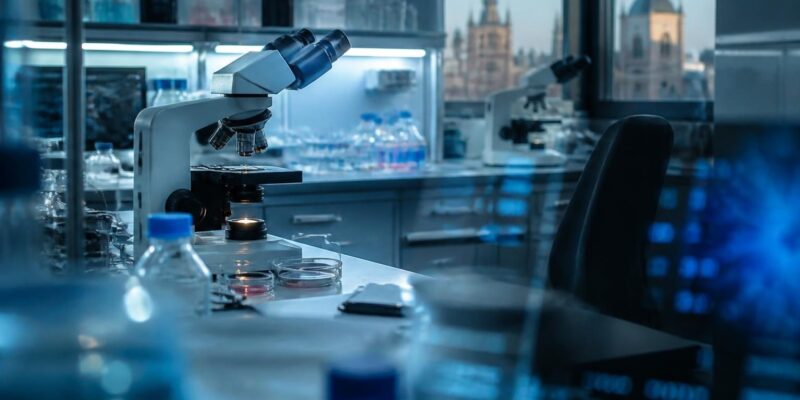
Kaunas is preparing to host one of the Baltic region’s specialised life-science meetings this week, as the Baltic Society of Extracellular Vesicles holds its annual conference at the Lithuanian University of Health Sciences on 7–8 October 2026. The event, titled “Translational EV Research: Advances and Challenges”, is focused on a field that links basic cell biology with possible applications in medicine and biotechnology.
The conference follows practical training sessions scheduled for 6 October and is expected to bring together researchers, clinicians, biotechnology professionals, innovators and students. According to the Lithuanian University of Health Sciences, the programme will examine recent work on extracellular vesicles and the challenges involved in turning laboratory findings into reliable clinical or industrial tools.
From cell biology to possible applications
Extracellular vesicles are small membrane-bound particles released by cells. They can carry biological material between cells, including proteins, lipids and genetic information. Scientists are studying them because their contents may provide clues about processes taking place in the body, while their natural ability to transport material has also prompted research into possible therapeutic uses.
The subject remains an active research area rather than a finished medical technology. Questions surrounding reliable isolation, measurement, standardisation, safety and reproducibility still need to be addressed before many proposed applications can be used routinely. That combination of opportunity and caution is reflected in the conference title, which places advances alongside challenges.
The organisers say discussions will cover fundamental biology, analytical technologies, diagnostics, therapeutics, regenerative medicine and personalised healthcare. The programme is also intended to encourage cooperation between academic laboratories and organisations working on practical development.
A Baltic platform for collaboration
The meeting is organised by the Baltic Society of Extracellular Vesicles, a regional scientific society that brings together researchers from Lithuania, Latvia and Estonia. The society describes its mission as supporting research, encouraging collaboration among Baltic experts and strengthening connections with the wider international research community.
Its annual conference gives early-career scientists and established specialists a common setting to present results, compare methods and discuss future projects. LSMU’s programme includes oral and poster presentations, sessions for young researchers and discussions about new directions in extracellular-vesicle research.
Several international speakers are listed by LSMU, including Antje Maria Zickler of Karolinska Institutet in Sweden, Marcin Jurga of EXO Biologics in Belgium, Tomás Dias of Mursla Bio in the United Kingdom and Alireza Fazeli of the Estonian University of Life Sciences. Their participation underlines the regional and European scope of the event, while the local setting connects the conference to Lithuania’s growing health-science and biotechnology community.
Training alongside the scientific programme
The pre-conference activities on 6 October are designed as practical training in extracellular-vesicle methods. Participants are expected to discuss contemporary approaches to vesicle isolation, characterisation and analysis, as well as how those methods can be applied in research projects.
Such training is important in a field where results can depend heavily on how samples are collected, processed and measured. Shared methods and clearer comparison between laboratories can help researchers assess which findings are robust and which require further investigation.
The organisers are also presenting the conference as a networking opportunity. Alongside formal sessions, participants will be introduced to Kaunas and to a virtual-reality presentation connected with the work of M. K. Čiurlionis, one of Lithuania’s best-known cultural figures. The addition gives the scientific meeting a local dimension without taking attention away from its research focus.
Why the meeting matters
For Lithuania, the conference offers a compact example of how higher-education institutions can support international research exchange. LSMU is hosting specialists from several countries while the Baltic society provides a regional framework for cooperation. The focus on translation—from discovery to practical use—also reflects a wider effort across life sciences to connect university research with healthcare and industry.
No single conference can resolve the scientific and regulatory questions surrounding extracellular vesicles. It can, however, help researchers compare evidence, identify shared standards and establish partnerships that support longer-term work. In that sense, the Kaunas meeting is less a showcase of finished solutions than a forum for improving the foundations on which future applications may be built.














Comments