

 By
By 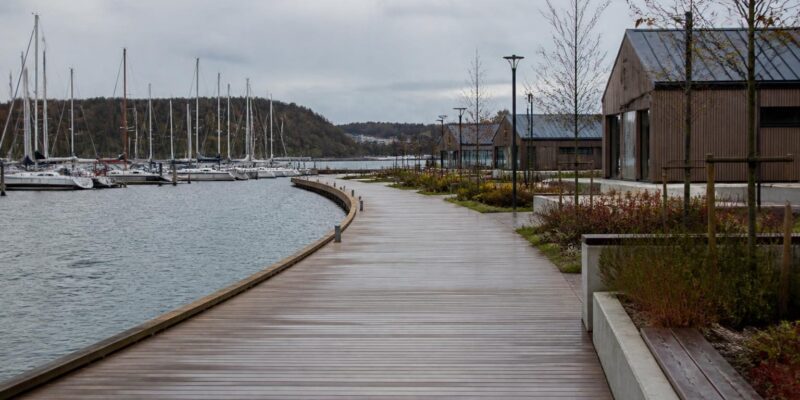
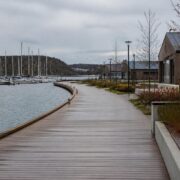
KOLDING, Denmark — The first completed phase of Kolding’s Marina City redevelopment is ready to open to the public, giving the Danish fjord city a new waterfront promenade, upgraded marina facilities and a safer approach road.
Kolding Municipality announced on 6 October that the promenade, service building, coastal protection works and an area for boat storage and public events had been completed at Marina Syd. The city plans a public inauguration on Tuesday, 13 October 2026.
The project is a constructive, highly visible step in a much larger urban transformation. Marina City is intended to gather Kolding’s recreational boating facilities on the southern side of the inner fjord while creating a more accessible waterfront for residents and visitors who may have no connection to sailing.
A waterfront designed for more than boat owners
The new promenade is intended to make the harbour edge easier to reach and more comfortable to use. The first phase includes places to walk and spend time beside the water, alongside practical infrastructure for local sailing clubs and other maritime activities.
The completed works also include a new slipway for trailer boats and dinghies, as well as a storage and event area with room for several hundred boats. These elements are designed to support the everyday operation of the marina while allowing the site to function as a civic waterfront rather than a closed technical area.
At the public opening, visitors are expected to be able to explore the new surroundings and take part in activities on the water. The municipality says the event will also present the next stages of Marina City’s development.
Road changes connect the harbour to the city
Transport improvements form an important part of the first phase. More than one kilometre of Skamlingvejen, the road beside the marina, has been rerouted. The speed limit has been reduced to 50 kilometres per hour, crossings have been revised and the layout has been prepared for future bus service.
That combination of public-realm and transport work matters because the marina is not being developed as an isolated leisure facility. The ambition is to create a stronger connection between Kolding’s urban area, its harbour and Kolding Fjord. Safer crossings and a calmer road environment can make the waterfront more practical for pedestrians, cyclists and visitors arriving by public transport, even before the larger district is built.
The first phase also includes new coastal protection. In a city where waterfront investment must respond to changing weather and water levels, the promenade is therefore both a public-space project and part of the area’s longer-term resilience planning.
A long-term district, subject to further approvals
The wider Marina City plan is expected to develop in stages into the early 2030s. Current plans include an expanded marina with capacity for about 1,000 wet berths and additional land storage, along with facilities for watersports, maritime clubs, workshops and visitor accommodation.
The urban element is planned to include approximately 325 to 350 homes and up to 15,000 square metres of maritime business and service space. The plans also envisage houseboats and further public areas around the marina.
Kolding’s planning material presents the scheme as a new mixed waterfront district combining housing, service businesses, tourism and recreational activity. The municipality has stressed, however, that later stages depend on additional regulatory approvals. Applications for the next parts of the development are expected to be submitted to the Danish Coastal Authority towards the end of 2026.
From project concept to visible place
Marina City has been planned for several years, and the city’s published timetable has always treated the project as a phased development rather than a single construction operation. The completion of the promenade and related infrastructure gives residents a tangible first section to use while the more complex harbour and urban works continue through the approval process.
For Kolding, the significance is therefore broader than the opening of a marina facility. The project offers a test of how a working waterfront can combine transport changes, flood protection, public access, maritime activity and future housing in one long-term framework.
The first phase will not by itself create the full Marina City district. It does, however, establish a finished public edge and a clearer route between the city and the fjord. That makes the next stage easier to understand in physical terms: the future neighbourhood will grow from an already usable waterfront rather than from an empty development site.














Comments