

 By
By 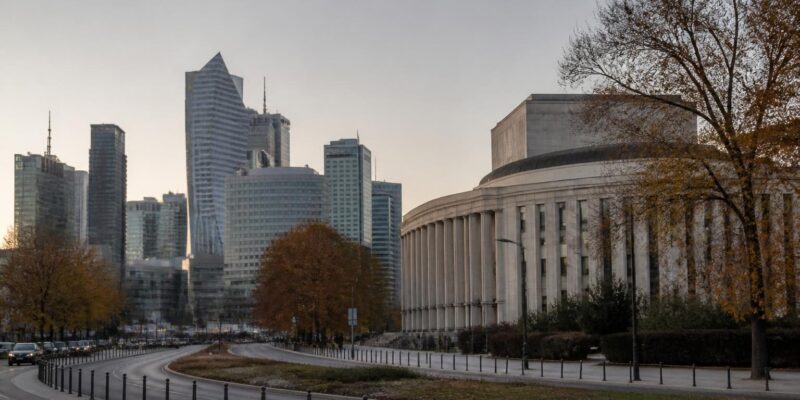
A citywide programme for contemporary music
Warsaw is preparing for the 69th edition of Warsaw Autumn, one of Poland’s longest-running international festivals devoted to contemporary music. The 2026 programme runs from 18 to 26 September under the theme “Signs”, inviting audiences to consider how music communicates through sound, language, images, gesture, movement and space.
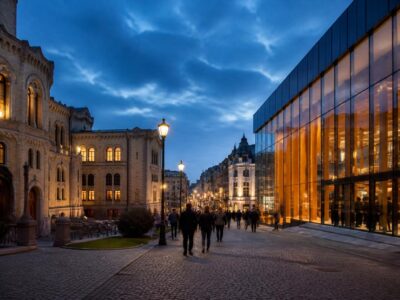
The festival is not limited to a single concert venue. Its programme reaches from the Warsaw Philharmonic and Polish Radio concert studios to museums, cultural centres, public squares and independent clubs. For visitors, that makes the festival as much an urban cultural route as a conventional series of evening performances.
The festival’s organisers have divided the programme into several strands, including the Main Stream, Warsaw Autumn Club, Little Warsaw Autumn, Warsaw Autumn – Contexts, an inter-festival strand and accompanying events. Together, they create a broad introduction to current musical practices in Poland and abroad.
Opening weekend links orchestral music with new commissions
The opening concert is scheduled for 18 September at the Warsaw Philharmonic Concert Hall. The Polish National Radio Symphony Orchestra in Katowice will perform under conductor Marzena Diakun, with a programme combining orchestral music, electronics, improvisation and spatial approaches to sound.
Several works presented during the festival are connected with the current edition or are being performed as new commissions. The opening programme includes music by Krzysztof Knittel, Mateusz Śmigasiewicz, Adam Porębski and Annesley Black. The concert therefore presents both established festival traditions and newer approaches to composition and performance.
The first evening also includes a later club event at Pardon, To Tu. Elsewhere in the city, the Warsaw Observatory of Culture will open “Goosanderopolis”, an audiovisual installation and audio drama by Dominik Strycharski and Alicja Tkaczyk. The project is part of Little Warsaw Autumn, a strand designed to make contemporary music more accessible to younger listeners and families.
Listening beyond the concert hall
One of the festival’s notable features is its use of locations that are not normally associated with contemporary music. The programme includes events at the State Ethnographic Museum, the Museum of Modern Art, the National Museum, the Royal Łazienki Museum and the Muranów Cinema. Other projects are planned for cultural centres, courtyards, terraces and public areas.
This approach gives visitors different ways to encounter the music. Some events are formal concerts, while others take the shape of workshops, sound walks, radio plays, video performances, discussions or site-specific projects. The festival programme also includes meetings with composers and opportunities for young creators to take part in composition workshops.
Among the recurring ideas is the relationship between sound, architecture and the natural environment of the city. The festival’s family-oriented programme treats Warsaw’s streets, parks and buildings as part of a living acoustic landscape rather than as neutral backdrops.
A family programme with nearly 500 young performers
Little Warsaw Autumn is scheduled across the same 18–26 September period. According to the programme information, nearly 500 young performers will participate as artists, co-creators and hosts of a series of projects described as “listening in motion”.
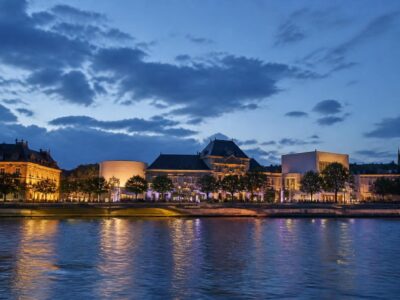
The strand includes participatory performances, outdoor activities, audio projects and hybrid formats that encourage audiences to move through the city. One of its motifs is the goosander, a waterbird associated with Warsaw’s urban ecosystem. The choice connects contemporary music with questions about coexistence between built-up areas, waterways and nature.
For families visiting Warsaw, the programme offers an alternative to the traditional concert format. Children and younger audiences can encounter new music through stories, games, visual elements and guided activities, while adults can explore the festival’s wider artistic themes at the same time.
Why the festival matters for city visitors
Warsaw Autumn offers a concentrated view of Warsaw’s cultural infrastructure. A visitor can combine a major orchestral concert with a museum visit, an installation, a public-space performance or a workshop without leaving the city. The dispersed format also highlights the capital’s mixture of historic institutions, post-industrial venues, independent clubs and newer cultural spaces.
The festival has been organised since 1956 by the Polish Composers’ Union and remains an important meeting point for composers, performers, researchers and audiences interested in new music. The 2026 edition continues that tradition while placing greater emphasis on participation, movement and connections between artistic disciplines.
With events taking place from Friday 18 September through Saturday 26 September, Warsaw Autumn gives the capital a distinctive cultural focus at the beginning of the autumn season. Its programme is particularly suited to visitors who want to experience Warsaw through performance, architecture and public life rather than through a single landmark alone.













Comments