

 By
A complex transport project enters its preparatory phase
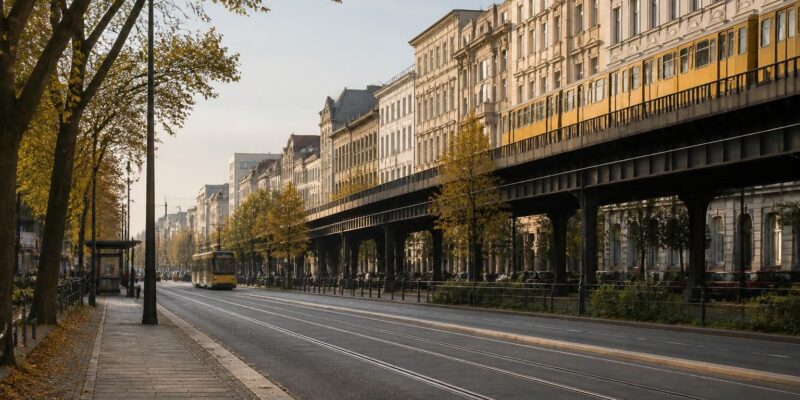
Berlin is moving into the next stage of planning for the replacement of the Schönhauser Allee bridge, a major transport structure in the Prenzlauer Berg district. The city’s Senate Department for Mobility, Transport, Climate Protection and the Environment announced on 29 October that preparatory works will begin in November 2026.
The first task is not the demolition of the bridge itself, but the relocation of gas, water and wastewater lines. These services currently run through or alongside the existing structure and must be moved before the main construction phases can begin. Traffic-safety installations are scheduled to start on 2 November, with utility works expected to begin on 13 November and continue until March 2027. ([berlin.de](https://www.berlin.de/sen/uvk/presse/pressemitteilungen/2026/pressemitteilung.1732545.php?utm_source=openai))
Keeping the corridor open during early works
The project is being prepared around one of Berlin’s most highly connected urban transport locations. Schönhauser Allee crosses railway infrastructure and links several modes of transport around the S- and U-Bahn station Schönhauser Allee. Tram lines, buses, cycle routes and pedestrian connections all converge in the surrounding area.
During the initial utility works, motor traffic will remain possible in both directions, although lanes will be narrowed or shifted and the speed limit in the work zone will be 30 kilometres per hour. Pedestrians will continue to be able to use the route in both directions, while cycling will remain possible with local changes to the temporary layout.
The northern entrance to the U-Bahn station will be temporarily closed, but other station entrances will remain available. The U-Bahn, Ringbahn and BVG bus services are expected to continue operating. A pedestrian crossing between Dänenstraße and the Schönhauser Allee Arcades will be moved slightly and protected by a temporary traffic signal. ([berlin.de](https://www.berlin.de/sen/uvk/presse/pressemitteilungen/2026/pressemitteilung.1732545.php?utm_source=openai))
Long-term reconstruction from 2027 onwards
The preparatory works are part of a much larger replacement project. Berlin currently expects the main construction programme to run from 2027 to 2032, subject to the detailed coordination of construction phases, railway access windows and work involving the elevated U-Bahn structure.
The bridge replacement is planned in several stages. The western section is expected to be rebuilt first, followed by work on the eastern section and the central promenade beneath the U-Bahn viaduct. The phased approach is designed to keep key connections functioning as far as possible while the existing structure is replaced.
Because the bridge sits above rail lines and beside the U-Bahn viaduct, the project requires coordination between the Berlin Senate, Deutsche Bahn, BVG and utility companies. The city describes the relocation of the supply lines as a prerequisite for maintaining services to neighbouring buildings throughout the later construction period. ([berlin.de](https://www.berlin.de/sen/uvk/mobilitaet-und-verkehr/infrastruktur/brueckenbau/schoenhauser-allee-bruecke/?utm_source=openai))
A chance to improve everyday interchange
The project is more than a structural renewal. The plans include barrier-free tram stops relocated into the central promenade beneath the elevated railway. The arrangement is intended to make transfers between tram, S-Bahn and U-Bahn clearer and easier to use.
The BVG says the tram stops at Milastraße, S+U Schönhauser Allee and Schönhauser Allee/Bornholmer Straße are to be reorganised and made accessible. The junction of Schönhauser Allee, Bornholmer Straße and Wisbyer Straße is also due to receive a new arrangement of stops for tram lines M1, M13 and 50. The protected cycle lane already partly present along Schönhauser Allee is planned to continue across the new bridge. ([bvg.de](https://www.bvg.de/de/unternehmen/herzensprojekte/schoenhauser-allee-bruecke?utm_source=openai))
Managing disruption over several years
The scale of the project means that residents, businesses and passengers will experience changing conditions rather than one single closure. The city has indicated that access to nearby buildings, shops, medical practices and the Schönhauser Allee Arcades should generally be maintained, with temporary crossings or entrances provided where necessary.
For the neighbourhood, the main benefit will come only after the long construction period: a renewed bridge, more accessible tram infrastructure and a more coherent interchange between Berlin’s surface and rail networks. In the immediate future, the priority is to move essential utilities safely and establish a construction layout that keeps the transport corridor working.


















Comments