 By
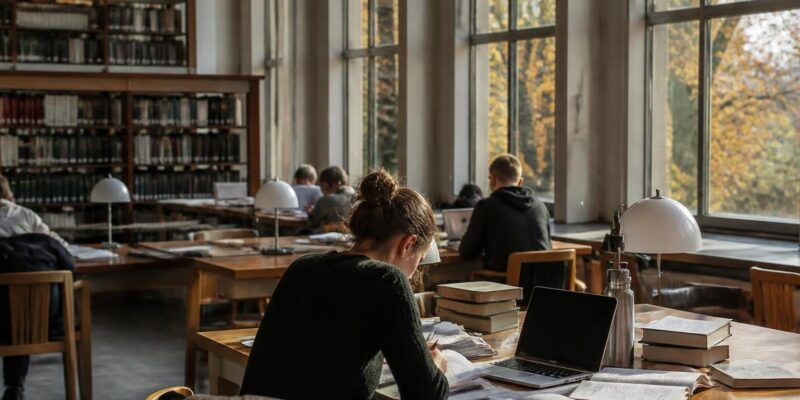
Universities and research libraries across Germany are using International Open Access Week to examine a question that reaches far beyond academic publishing: who can access knowledge, who pays for it and how should research be preserved for the future?
The week runs from October 19 to 25, 2026, under the theme “The Cost of Knowledge”. At Technische Universität Berlin, the University Library is marking the occasion with information, discussions and a poster exhibition focused on open science and scholarly communication. The Karlsruhe Institute of Technology is organising a parallel programme dealing with research data, data tracking and community-supported publishing infrastructure.
From specialist debate to public question
Open access generally refers to research findings being made available online without a reader having to pay for access. In practice, however, making research open involves a range of costs. These can include publishing, peer review, editing, digital storage, long-term preservation and the staff time needed to manage repositories and data.
The international organisers of Open Access Week say this year’s theme is intended to make those costs more visible. It asks institutions to consider the financial, human and environmental resources involved in creating, distributing and maintaining knowledge, while also examining the effects of growing commercial concentration in scholarly communication.
That framing gives the week a practical focus. The issue is not simply whether an article is free to read. It also concerns who controls the platforms on which research is published, whether authors retain meaningful rights to their work, and whether data can be reused responsibly by other researchers, teachers and members of the public.
Berlin programme links openness with infrastructure
TU Berlin’s programme runs throughout the official week. The University Library is presenting open access as part of a broader effort to build sustainable research and publishing structures rather than treating it as a single route to publication.
Among the listed activities is an online lunch meeting on October 19 about open and fair publishing platforms and tools for digital, non-commercial publishing. The university is also offering consultations and information for students, doctoral candidates, teachers, researchers and other members of the academic community. A poster exhibition in the Central Library and online materials are designed to make the subject accessible beyond specialist library departments.
The university’s approach reflects a wider change in academic practice. Researchers increasingly work with repositories, open datasets, preprints, open educational resources and new forms of digital publication. These tools can make findings easier to discover and reuse, but they also require reliable technical systems, clear licensing and institutional support.
KIT focuses on data and community-led publishing
The KIT Library in Karlsruhe is complementing the national discussion with three events. Its programme began on October 19 with an online “Open Paper Dialog” on data tracking in the academic system. The session considers the less visible information generated when researchers and students use scholarly resources.
On October 21, a round table titled “Open Science at KIT: Show Us Your Data” will bring researchers together to discuss experiences with research data and possible solutions to common challenges. A further online panel on October 22 will look at low-cost and no-cost services developed or supported by academic communities for institutional publishing.
These sessions underline that open science depends on more than goodwill from individual researchers. Data must be documented, stored and governed; publications must remain findable over time; and universities need policies that support responsible sharing without creating new financial barriers for authors.
A week with consequences beyond universities
For students and the wider public, the debate has a direct educational dimension. Freely available research can support independent learning, teaching and civic participation. Open course materials can also reduce the pressure created by expensive textbooks and restricted access to specialist literature.
At the same time, openness is not identical with the absence of cost. Libraries still need staff, servers, preservation systems and funding. Some publishing models shift charges from readers to authors or institutions, which can create difficulties for researchers without strong financial backing. The German events therefore place sustainability and fairness alongside accessibility.
Open Access Week offers a timely opportunity to discuss these trade-offs in public. In Berlin, Karlsruhe and many other academic centres, the focus is moving from a simple promise of “free access” towards a more complete question: how can societies build knowledge systems that remain open, trustworthy and durable?
















Comments