

 By
A former railway site moves into its next planning phase
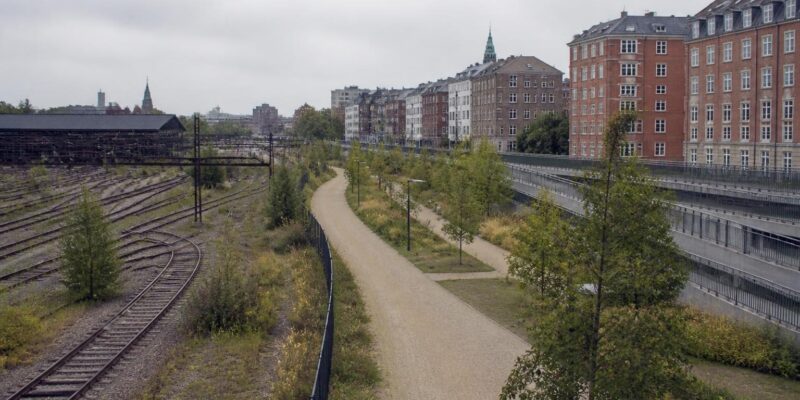
Copenhagen has opened a new public consultation on Jernbanebyen, one of the capital’s largest planned urban transformations. The revised local-plan proposal covers a former goods railway area on Vesterbro and combines housing, workplaces, public functions and new connections across a part of the city that has long been shaped by railway infrastructure.
The consultation began in early November 2026 and remains open until 15 December. The process gives residents, local organisations and other interested parties an opportunity to comment on the planning proposal and its environmental documentation before the city moves towards a final political decision.
The development is being handled together with a separate but closely related railway project: a new Central Infrastructure Base for Banedanmark, Denmark’s state railway infrastructure manager. The base would support maintenance and renewal work on the railway network and would be located next to the existing Kulgården work base.
A mixed district on 570,000 square metres
Copenhagen’s City Council approved the revised proposal for public consultation on 8 October. According to the municipal planning material, the planning area covers approximately 570,000 square metres between the railway yards, Enghavevej and Vasbygade. The proposal allows for approximately 520,000 square metres of new floor space, subject to the subsequent planning and approval process.
The intended neighbourhood is not presented as a single-purpose housing development. The planning framework includes homes, service businesses and municipal functions. The city’s political documents also refer to the importance of securing facilities that can support everyday life in the future district, including school capacity, cultural activities and opportunities for local community life.
That approach reflects a broader question for Copenhagen: how can former transport and industrial areas be converted into complete neighbourhoods without losing the infrastructure functions that continue to serve the wider city?
Transport infrastructure remains part of the plan
The Jernbanebyen proposal is being assessed through a combined environmental process covering both the urban development and the planned Banedanmark base. Copenhagen Municipality is responsible for the urban-planning element, while the Danish Transport Authority is the authority for the railway-related part of the project.
The infrastructure base is intended for smaller renewal projects in the Copenhagen area and to provide support for larger railway works. Its inclusion in the same consultation means that the public review concerns not only future buildings and public spaces but also the practical operation of the railway system.
For urban planners, that combination is significant. The site is close to Copenhagen Central Station and major roads, making it well placed for a dense, connected district. At the same time, the continuing presence of railway operations requires careful treatment of noise, traffic movements, construction logistics, environmental impacts and the relationship between work areas and public neighbourhood spaces.
Residents invited to discuss the proposal
A public meeting is scheduled for 10 November at SPOR 10 in Vasbygade. Copenhagen’s Climate, Environment and Technical Administration, the landowners and the Vesterbro Local Council are expected to present the proposal and answer questions from residents.
The meeting is part of a wider local dialogue during the eight-week consultation. A further thematic meeting on architecture is planned for 24 November, with discussion focusing on how the proposal’s architectural principles and development framework could shape the future district.
The consultation follows changes made after an earlier planning process. The revised proposal replaces the plan previously considered by the city and incorporates adjustments related to the railway base, environmental assessment and local infrastructure. The city has said that the responses received during the consultation will be assessed before the proposal is presented for final political treatment, expected in early 2027.
A long-term test for Copenhagen’s growth model
Jernbanebyen illustrates the increasingly complex character of major city-building projects in Scandinavia. The question is not simply where new homes can be built, but how housing, public services, railway maintenance, walking and cycling routes, green areas and employment can operate together on constrained urban land.
The public consultation does not constitute final approval, and the detailed form of the district may still change. It does, however, mark a concrete step from broad development ambitions towards a plan that can be examined by the public and the relevant authorities.
For Copenhagen, the next stage will be to balance the metropolitan value of a centrally located new district with the everyday needs of Vesterbro and the technical requirements of the railway system. The result could help define how the city approaches other former infrastructure areas as it continues to grow within its existing urban footprint.
















Comments