 By
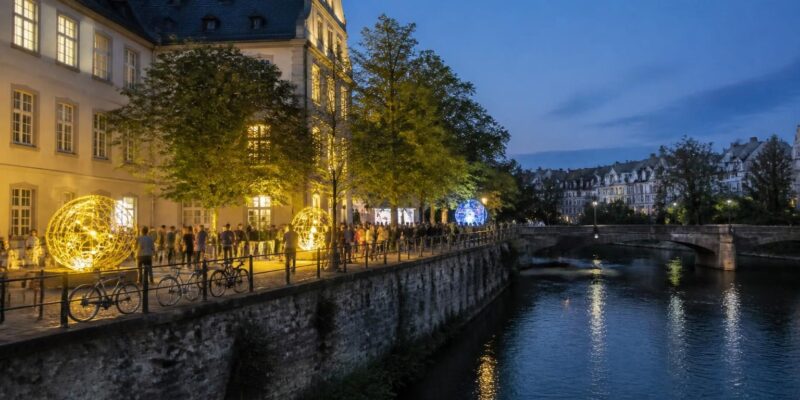
Tübingen is turning its university city into an open laboratory this weekend as the Science & Innovation Days bring researchers, students and residents together for two days of public events. The festival, taking place on November 6 and 7, is centred on the question “What is the value of science?” and presents research through demonstrations, workshops, discussions, exhibitions and performances.
The programme is a current, practical example of how a university can move scientific work beyond lecture halls and laboratories. Organised as part of the University of Tübingen’s 550th-anniversary year, the festival is being led by the university together with the Leibniz Institute for Knowledge Media and the Weltethos Institute. The organisers describe it as a forum in which science and the wider city can discuss how research contributes to social challenges and how its value can be understood.
Research spread across the city
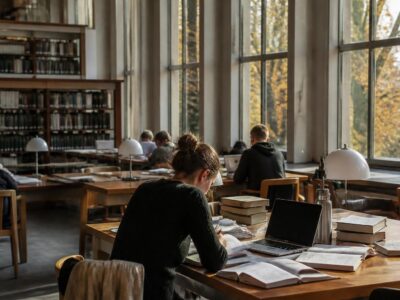
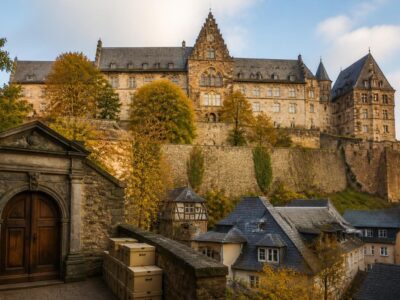
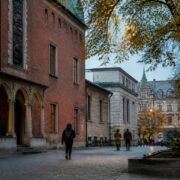
More than 30 events are being held at venues around Tübingen, including the central Neckawa festival centre, the Old Assembly Hall, the university library, the botanical garden, the cinema museum, the city museum, the AI Makerspace and Hohentübingen Castle. The distribution of events is deliberate: rather than asking the public to enter a single specialist venue, the festival places different forms of research in familiar urban and cultural settings.
The programme combines accessible demonstrations with opportunities for more sustained discussion. Visitors can attend a science fair, join workshops, listen to talks, take part in fishbowl debates or watch a student science slam. The organisers have also included formats for children and families, including activities involving DNA traces, biodiversity and historical worlds explored through virtual reality.
From mini-hearts to brain mapping
Several of the featured activities show how complex research can be translated into hands-on experiences. At the science fair, visitors can see how organ-on-chip technology is used to create miniature heart models and discuss its potential as an alternative to some forms of animal testing. Another interactive activity uses a board game to examine the design of a healthy city, linking urban planning with public health and everyday decisions.
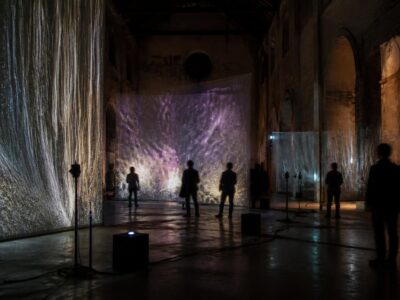
A separate “Brain Mapping City Walk” uses projections and visualisations based on real research data, including magnetic-resonance images, three-dimensional models and artificial-intelligence-supported representations. The route connects several locations in the city centre and is accompanied by researchers from the Hertie Institute for AI in Brain Health. Its aim is not to present a fictional technological spectacle, but to make methods of brain research visible and understandable to a general audience.
Other sessions address antibiotic resistance, mental health among informal carers, the role of chatbots in learning and the conditions under which artificial intelligence is being used in research. These subjects give the festival a broad educational scope, ranging from biology and medicine to social science, ethics and public policy.
Dialogue as part of the research process
The festival’s central theme reflects a wider change in the way many universities approach public engagement. Instead of treating communication as a final stage after research has been completed, the Tübingen programme presents discussion with residents as part of the process of asking what research should address and how its results should be used.
That approach is visible in the programme’s debate formats. One event brings citizens, local politicians and researchers together to discuss fair municipal budgeting, while another explores where AI is already used in research and what limits or safeguards should be considered. The purpose is not to manufacture agreement, but to create structured settings in which people can ask questions and challenge assumptions without the discussion becoming a contest of slogans.
The festival is free to attend, although some events with limited capacity require registration. The organisers are also planning a follow-up tour through municipalities in Baden-Württemberg from November 2026 to July 2027. Selected co-creation projects are expected to return to Tübingen for the university’s anniversary weekend in July 2027.
A regional model for open science
Tübingen’s event is significant because it links several strands of contemporary university life: research communication, science education, citizen participation and cooperation with cultural institutions. Its emphasis on experiments and demonstrations makes science approachable, while its discussions ask a more demanding question about how knowledge should serve society.
For visitors, the weekend offers a chance to encounter research without needing specialist training. For the university and its partners, it provides a public setting in which the value of science can be explained, questioned and refined through conversation. That combination of accessibility and debate gives the Science & Innovation Days a constructive role in the city’s anniversary year and creates a bridge between the university’s long history and its responsibilities in the present.









Comments