

 By
By 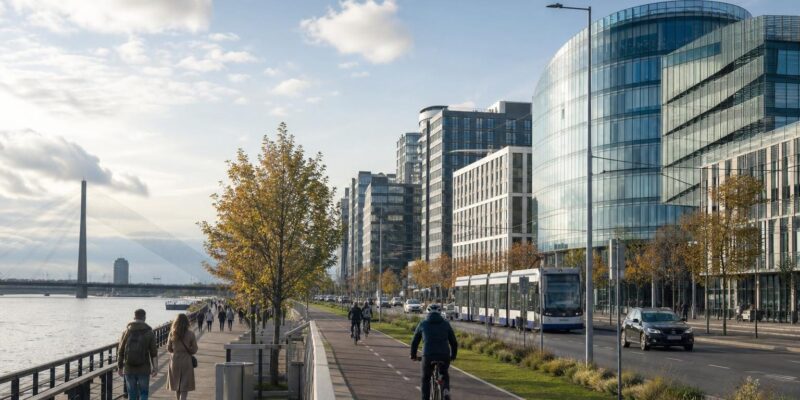
Riga is placing the practical side of urban innovation at the centre of European Mobility Week this week. The city is hosting the fifth Smart Cities Conference on Thursday, 17 September 2026, bringing together municipal representatives, researchers, businesses, start-ups and public-sector innovators from Latvia and other European countries.
The event is being held at Riga Technical University’s Domus Auditorialis in Ķīpsala. Organisers describe this year’s meeting as broader than a conventional technology conference: its central question is how cities can make promising innovations work in practice, rather than leaving them at the stage of strategies, demonstrations or short-term pilot projects. ([riga.lv](https://www.riga.lv/en/article/european-experts-discuss-innovation-urban-development-smart-cities-conference?utm_source=openai))
From pilot project to public service
The conference comes at a moment when many cities are experimenting with digital twins, data platforms, autonomous transport, drone applications and new ways of working with start-ups. Riga’s programme is focused less on presenting technology for its own sake and more on the institutional conditions needed to adopt it: clear urban challenges, suitable procurement models, cooperation between departments and a route from testing to wider implementation.
Sessions will examine governance and public-sector transformation, innovation ecosystems, data and digital transformation, future mobility and emerging technologies. The agenda also includes discussions on how cities can work with universities, investors and companies when a pilot project needs to become a repeatable solution.
That emphasis is reflected in the conference’s Baltic–Nordic format. Participants are expected from Latvia, Lithuania, Estonia and Finland, alongside representatives from other European countries. The organisers say the meeting is intended to create a platform for knowledge exchange between cities, public authorities, academia and industry. ([smartriga.lv](https://smartriga.lv/1smart-cities-conference-2026-riga-baltic-nordic/?utm_source=openai))
Mobility, data and the city’s changing toolkit
Urban mobility is one of the main connecting themes. The programme includes a session supported by EIT Urban Mobility, covering sustainable mobility transitions, innovation ecosystems and the role of European networks in helping cities finance and scale projects. Other sessions address mobility data, digital twins and autonomous transport.
Digital twins are increasingly being discussed as tools for understanding how streets, buildings and transport systems interact. In a city context, their value depends on the quality and accessibility of the underlying data, as well as on whether officials can use the information to make decisions about traffic, public space, maintenance or investment. Riga’s conference therefore links digital technology with questions of management and public value.
The programme also includes a block on urban air mobility and emerging technologies. Speakers from Riga, Tallinn and Vilnius are due to discuss drones, remote sensing and possible applications for cities. The subject is presented as part of a wider conversation about how municipalities assess new technologies, define responsible use and decide whether an experiment addresses a genuine urban need.
A meeting point for cities and innovators
An exhibition area will operate during the lunch period, giving municipalities an opportunity to meet companies, start-ups and innovation organisations presenting urban solutions. The conference website says the exhibition is intended to connect cities with providers and show how tested ideas can be adapted to local conditions.
This city–innovation relationship is also the focus of the afternoon programme. Speakers will consider innovation procurement, pre-commercial procurement and the role of universities in helping new companies emerge. A later discussion will ask what needs to happen before a city begins a pilot: whether the problem has been defined clearly, who should participate and who is responsible for deciding what happens if the test succeeds.
That is a constructive question for Riga and for other Baltic cities. A successful pilot does not automatically become a permanent service. It may require budget planning, legal review, technical integration, staff capacity and public communication. By placing these issues alongside mobility technologies and digital systems, the conference frames urban innovation as an organisational task as much as a technological one.
Part of a wider mobility week
The conference is taking place during Riga’s European Mobility Week programme, which also includes a public step challenge and guided cycle rides between 16 and 22 September. The municipality has been promoting walking, cycling and people-friendly public space as part of the week’s activities.
That wider context gives the conference a direct connection to everyday urban life. The long-term question is not only whether Riga can test advanced tools, but whether innovation can make streets easier to use, public transport more reliable, planning more transparent and city services more responsive.
Organisers include Riga Technical University, Riga City Municipality, the University of Latvia and the VEFRESH innovation movement, with support from EIT Urban Mobility. Participation is free, with prior registration required. The conference runs from the morning of 17 September at Domus Auditorialis, Zunda krastmala 8.













Comments