 By
By 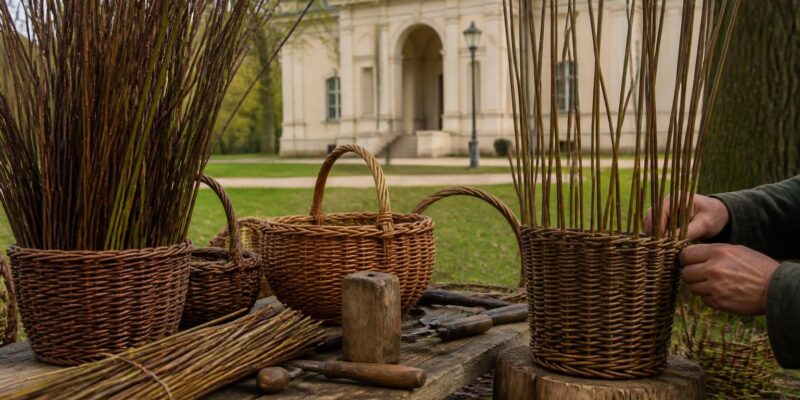
Nowy Tomyśl in Greater Poland is hosting the sixth World Wicker and Weaving Festival from 3 to 6 September 2026, turning a local craft tradition into a public programme of demonstrations, exhibitions, workshops and international exchange. The festival began on Thursday and continues through Sunday at the Museum of Basketry and Hop-Growing and surrounding public spaces.
The event is a timely cultural story because it treats craftsmanship not as a static museum display, but as a skill that can be watched, learned and adapted. Visitors can see professional makers at work, handle natural materials in open workshops and encounter both traditional forms and contemporary approaches to weaving.
A regional identity with an international audience
Nowy Tomyśl has long been associated with wicker cultivation and basketry. The town’s museum preserves that history, while the festival gives it a contemporary setting. Organisers describe the 2026 edition as a return to the event’s roots: the festival was born in Nowy Tomyśl, and this year’s programme is again centred on the town and its specialist museum.
The organisers say representatives from 66 countries are taking part in the current edition. That international presence matters for a craft that is often understood through local landscapes and family practice. It creates a meeting point where techniques, materials and design ideas can circulate between makers from different regions.
Rather than presenting heritage as something closed or nostalgic, the programme places knowledge-sharing at its centre. The schedule includes the seventh International Wicker-Weaving Competition, exhibitions devoted to the past and future of the craft, a master school for experienced makers and introductory sessions under the title “Anyone Can Weave”.
Competition, workshops and a public fair
The festival’s main competition is designed to make the process visible. Makers work with willow and other materials before their pieces are assessed across eight categories. On Sunday, 6 September, the completed works are due to be presented in a public exhibition, followed by the final gala and the announcement of the results.
Sunday’s programme also includes international demonstrations and workshops open to the public. Some works made during the sessions are intended for a charity auction supporting Occupational Therapy Workshops in Grońsko. That detail gives the event a practical community dimension: the craft is not only being shown, but also used to create a shared activity and support a local social institution.
Throughout the festival, visitors can explore exhibitions at the museum, attend demonstrations and browse the International Wicker Fair. The opening programme also includes the Hop and Wicker Fair, linking basketry with another part of the town’s agricultural and commercial heritage.
Why the format matters
Traditional crafts increasingly depend on opportunities for direct transmission. A finished basket can be displayed, but a festival can show the choices behind it: how material is selected, how tension is controlled and how a functional object becomes a work of design. That makes the event relevant to families, students, designers, tourists and specialist makers alike.
The festival also illustrates how smaller Polish towns can build cultural visibility around a distinctive local resource. In Nowy Tomyśl, the relationship between willow, museum collections, public space and skilled labour forms a coherent cultural route. The result is neither a purely commercial fair nor a formal academic conference, but a participatory event in which making itself becomes the attraction.
The Museum of Basketry and Hop-Growing is extending its opening hours during the festival, from 9:00 to 19:00, with free admission for visitors. That makes the programme accessible beyond registered participants and reinforces its role as a public celebration of living heritage.















Comments