 By
By 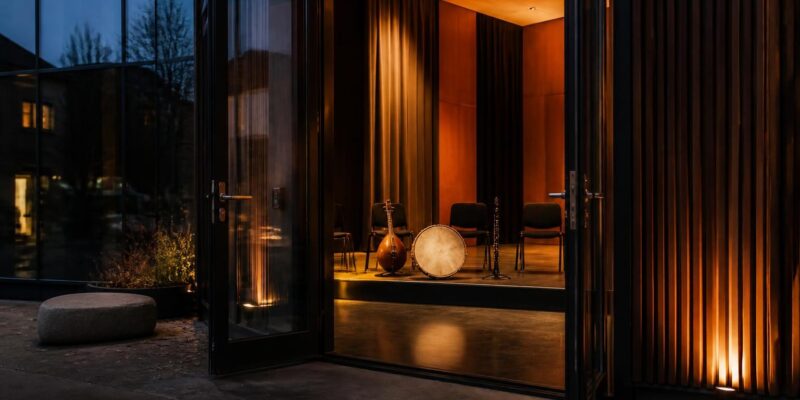
Copenhagen is hosting the third edition of the Copenhagen Maqam Festival from 11 to 13 September, giving audiences a concentrated introduction to musical traditions shaped across the Middle East, North Africa, Turkey, Iran and the Balkans. The programme is based at Valby Kulturhus, a municipal cultural centre in the western part of the city, and combines concerts with participatory workshops.
The festival is a small but notable example of how cultural life in Scandinavian cities is increasingly organised around exchange rather than a single national or institutional tradition. Its focus is the maqam tradition: a family of modal systems that guide melody, improvisation and musical expression across several regions. Rather than presenting maqam as a museum subject, the Copenhagen programme places it in a contemporary performance setting and invites visitors to encounter it through live music, movement and rhythm.
A festival built around musical encounters
According to Copenhagen’s municipal culture service, the 2026 edition features Egyptian singer Fatma Zidan and the Danish-based Balkan music performer Bjonko. Their presence reflects the festival’s effort to connect different musical backgrounds within one programme. Zidan is associated with Arabic vocal traditions, while Bjonko works with saxophone and clarinet and draws on Balkan musical influences.
The programme also includes workshops in Oriental dance and percussion. That format broadens the event beyond a sequence of stage performances. Visitors can listen, but they can also take part in the physical and rhythmic aspects of the traditions being presented. For a city audience that may not already be familiar with maqam music, the workshops offer a practical entry point and make the festival suitable for people approaching the subject for the first time.
The municipal description of the event presents the festival as a meeting place for musicians, music enthusiasts and curious listeners. It also highlights the relationship between tradition and renewal: established forms are presented alongside contemporary interpretations, while performers from different regional and artistic backgrounds share the same setting.
From a local initiative to a recurring event
The 2026 festival follows editions held in 2024 and 2025. A March decision by Copenhagen’s Music Committee records municipal support for the 2026 event and identifies Valby Kulturhus as its venue. The move to the cultural centre marks a new stage in the festival’s development and places the programme inside a public venue designed for theatre, music, workshops and community activity.
Valby Kulturhus is more than a conventional concert hall. It is a municipal cultural house with spaces for performance, creative production and informal participation. Hosting the festival there gives the music a neighbourhood setting and makes it part of the city’s everyday cultural infrastructure rather than an isolated specialist event.
That setting is important to the festival’s social dimension. The event’s stated ambition is to make a relatively underrepresented musical tradition more visible while creating opportunities for contact between cultures and generations. The combination of concerts, introductions and workshops supports that aim without requiring audiences to have prior knowledge of music theory or regional history.
Why the format matters
Cultural festivals often present diversity through food, language or visual art. The Copenhagen Maqam Festival demonstrates another route: building a shared public experience around musical structures that have travelled across borders for centuries. In this context, cultural exchange is not treated as a slogan but as something that happens through listening, performing and learning together.
The event also reflects the role of municipal cultural centres in supporting newer or smaller initiatives. By working with Valby Kulturhus, the festival gains an accessible public location, while the venue gains a programme that links local audiences with international and diaspora-based artistic traditions.
For Copenhagen, the festival offers a constructive cultural story at a time when many cities are looking for ways to make public life more open and representative. Its scale is modest, but its model is clear: a recurring local event can create space for artistic traditions that are global in origin and contemporary in expression.
The 2026 edition continues through 13 September. Concerts and workshops are ticketed separately, with programme information provided by the organisers and Copenhagen’s municipal culture listings.











Comments