 By
By 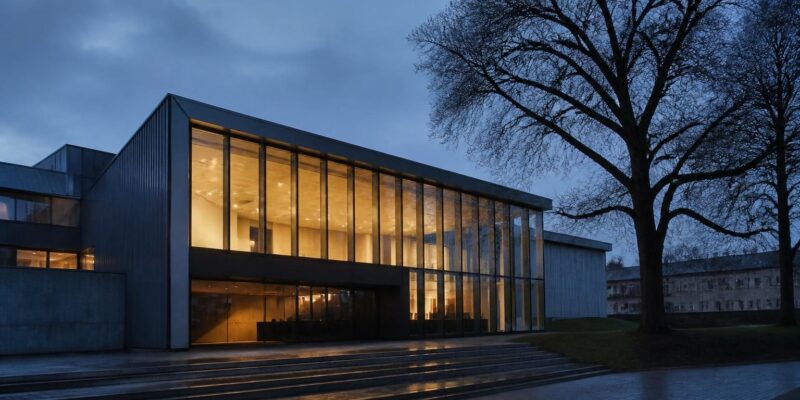
Riga’s National Film School Pavilion becomes a meeting point for Spanish cinema from Tuesday, 15 September, as the Latvian Academy of Culture opens the seventh Spanish Film Festival. The free programme runs until 29 September and invites audiences to experience Spanish-language films in the original version, accompanied by English subtitles.
The festival is a modest but meaningful addition to Riga’s autumn cultural calendar. Rather than presenting cinema as a specialised academic subject, it brings international film directly into a learning environment and makes the screenings accessible without an admission fee. The opening programme begins at 18:00 at the National Film School Pavilion on Miera Street 58A. ([lka.edu.lv](https://www.lka.edu.lv/en/featured/events/7th-spanish-film-festival/))
A compact programme with an international focus
This year’s festival is built around three films from different genres. The Latvian Academy of Culture describes all three as award-winning productions that have been recognised at prestigious film festivals, although the public announcement does not list the individual titles. That deliberately compact format gives the programme a clear focus: viewers can encounter a small cross-section of contemporary Spanish cinema rather than a long catalogue of screenings.
For Riga audiences, the original-language format is also part of the attraction. English subtitles make the films accessible to viewers who do not speak Spanish, while preserving the sound, rhythm and performance of the original dialogue. The result is a cultural event that can serve several audiences at once: film enthusiasts, language learners, students of intercultural communication and visitors looking for an evening of European cinema.
Culture as part of language education
The festival is organised by Ana León-Manzanero, an associate professor in the Latvian Academy of Culture’s Department of Intercultural Communication and Foreign Languages, together with Jānis Putniņš, creative director of the National Film School. Their cooperation links two sides of the academy’s work: the study of languages and cultures, and practical training in audiovisual production.
Students from the first year of the Latvia–Spain Intercultural Relations bachelor’s programme are also contributing to the festival’s preparation and delivery. Their involvement gives the event a practical dimension. Instead of encountering Spanish culture only through classroom materials, students can help shape a public programme, welcome audiences and take part in an exchange that connects academic work with the wider city.
Visiting lecturer Isabel Rodríguez Pisano is also involved. The organisers’ approach suggests that the festival is not only a series of screenings but also a form of cultural mediation: an opportunity to make a language and its cultural context more tangible through film.
A partnership extending beyond the campus
The festival is supported by the Embassy of Spain in Latvia and the Spanish Agency for International Development Cooperation, known as AECID. That partnership places the Riga programme within a wider network of cultural cooperation and helps sustain a recurring event at the Latvian Academy of Culture.
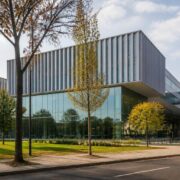
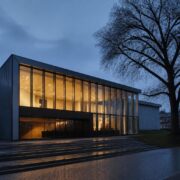
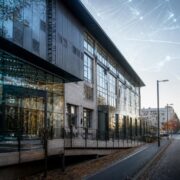
For the city, the location is significant. The National Film School Pavilion is part of Riga’s evolving cultural landscape, where education, film production and public presentation meet. Hosting an international film programme there allows the building to function not only as a place for students and professionals, but also as an accessible venue for residents and guests.
Why the festival matters this autumn
Film festivals often create their strongest value through concentration: a limited period in which a particular national cinema becomes more visible and easier to explore. In this case, the two-week timeframe offers audiences several chances to attend, while the free entry lowers one of the most common barriers to participation.
The programme also offers a simple alternative to the increasingly fragmented way many people watch films. At a cinema venue, the shared experience matters as much as the screen. Viewers hear another language, encounter stories shaped by a different cultural environment and occupy the same room with people who may have arrived for entirely different reasons.
That combination makes the seventh Spanish Film Festival a constructive cultural development for Riga: international in outlook, locally organised and connected to education. It gives Spanish cinema a temporary home in the city while giving students and the public a common cultural space.
The festival runs from 15 to 29 September 2026 at the Latvian Academy of Culture’s National Film School Pavilion, Miera Street 58A. Admission is free. The organisers advise audiences to consult the academy’s event information for screening details.













Comments