 By
By 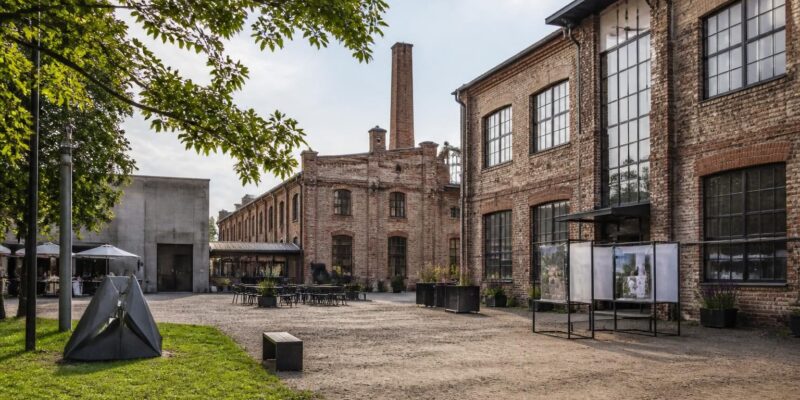
Tartu’s Aparaaditehas is moving into autumn with a programme that places emerging creative work at the centre of the city’s cultural calendar. In an announcement published on September 3, the former factory complex said its September schedule would bring together a site-specific installation, a performance project, a club night and the returning Tartu Illustration Festival.
The programme is notable less for a single headline event than for the range of formats it brings into one cultural setting. It also shows how Aparaaditehas continues to use its open Culture Platform as a practical route for young artists and early-career cultural organisers to test ideas in public. ([tartu.ee](https://www.tartu.ee/et/uudised/september-toob-aparaaditehasesse-installatsiooni-draagi-klubioo-ja-illustratsioonifestivali))
Installation turns attention to nightlife
The first new project opens on Friday, September 4, in the white greenhouse at Aparaaditehas. Artists Trevor Kinna and Silver Tsäko will present “äftekas”, a site-specific installation examining different aspects of nightlife culture. The work opens at 19:00 and is scheduled to remain available to visitors until September 24.
Rather than treating nightlife only as entertainment, the project uses the exhibition format to ask how night-time culture is experienced and understood. Presenting it in a greenhouse inside the creative complex also places the subject in a space that differs from a conventional gallery, allowing the building itself to become part of the work.
A summer learning project reaches its public finale
September 4 will also mark the final event of “Kuradisilla Kolledž”, a summer project organised by the drag collective House of Kuko. Participants have spent the summer developing drag characters and learning basic approaches to make-up, costume and stage presence. At the closing party in the Armastuse Saal, the participants will bring their newly developed performances before an audience.
The project illustrates one of the Culture Platform’s central functions: supporting a process, not simply presenting a finished product. Participants have had time to develop an artistic identity and practical stage skills before appearing in a public programme. For the audience, the event offers a direct view of that transition from workshop activity to performance.
Sound, space and movement meet on September 11
Aparaaditehas will next host “Signaal X Aparaaditehas” on September 11. The club night emerged from a new Culture Platform call aimed specifically at event organisers. Its concept links the sound programme with the architecture of the venue, using organic structures and the complex’s concrete and brick interiors to explore the boundary between the natural and the mechanical.
The musical programme will draw on different shades of dub and electro, with DJs from Estonia and abroad. The organisers describe the evening as an environment built around movement and continual change rather than strict genre divisions. That approach fits Aparaaditehas’s wider role as a place where exhibition, performance, music and social activity can overlap.
Illustration festival returns for two days
The month’s programme will conclude with the Tartu Illustration Festival, or TIF, on September 25 and 26. The festival is returning to Aparaaditehas for the third time and will occupy the complex for two days. Its programme includes workshops, discussions and an illustration market.
The festival’s return is also an example of how the Culture Platform can support projects beyond their first appearance. Aparaaditehas identifies TIF as a former platform participant, suggesting a model in which a new event can develop into a recurring part of the city’s cultural life.
A creative centre built around access
Aparaaditehas is a former factory complex on the corner of Riia and Kastani streets. Its cultural development began in 2014, and the site now combines event spaces with studios, creative businesses and other public-facing activities. The organisation behind the programme says its open Culture Platform is aimed especially at young and beginning artists and cultural organisers.
Applicants can propose one-off events, exhibitions, installations or longer series. The stated purpose is to provide space for new initiatives, experimentation and collaboration, while giving audiences access to formats that might otherwise struggle to find a venue.
That emphasis makes the September programme relevant beyond its individual dates. It presents cultural production as something that can be learned, tested and shared in stages: an installation can examine the city’s night culture, a summer course can lead to a public performance, a club format can become a spatial experiment, and an illustration event can return with a larger programme.
For Tartu, the result is a seasonal cultural offer that is varied without being disconnected. The events share a building, but they also share an approach: using an adaptable urban space to make room for new voices and new ways of meeting an audience.









Comments