 By
Berlin Science Week began on Sunday, November 1, bringing research, culture and public discussion together across the German capital for a ten-day programme. The 2026 edition runs until November 10 and is built around the theme “In Touch”, which focuses on how science influences ordinary life and how people connect with research.
The festival is one of Germany’s most visible public science formats. According to the organisers, this year’s programme includes roughly 350 events at more than 115 locations. Research institutes, museums, libraries, universities and cultural venues are taking part, offering activities that range from talks and workshops to performances, experiments and guided visits.
Science moves beyond the laboratory
The programme is designed to make scientific work more approachable rather than presenting it only through formal lectures. Visitors can take part in experiments, explore questions about technology and society, or encounter research through artistic and interactive formats.
Examples highlighted by Berlin’s official city information service include a quantum-physics escape room at the Einstein Center for Digital Future and an artificial-intelligence dance challenge connected with the Forschungszentrum Jülich. Other events invite participants to explore Berlin’s historic research district in Dahlem or consider how scientific ideas can be translated into art.
This broad approach reflects the festival’s central idea: research is not separate from daily life, but affects how people work, communicate, travel, make decisions and understand the world around them. The organisers describe “In Touch” as an invitation to look at the people behind research as well as at its results.
A new central meeting place
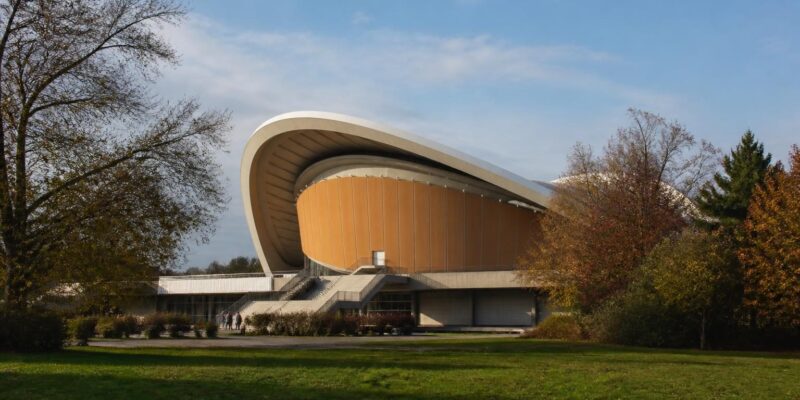
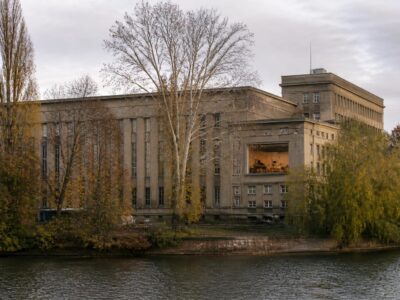
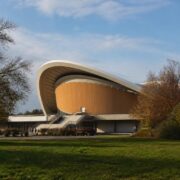
A major change for the 2026 edition is the use of the Haus der Kulturen der Welt as the festival centre. The building will host the main public programme from November 6 to 8, with live conversations, workshops, film screenings, performances and family activities.
The festival centre is intended to give the otherwise citywide programme a shared meeting point. Visitors can attend selected events free of charge, although some activities require advance registration or a festival pass. The official visitor information notes that the centre will be open from Friday, November 6, through Sunday, November 8.
The weekend programme also includes a dedicated offer for children and families. Activities are planned for younger visitors from the age of four, including demonstrations and hands-on formats that introduce scientific ideas through play and observation. One example allows children to experiment with thermal-imaging cameras and consider how technology can reveal things that are invisible to the naked eye.
Public access remains a central principle
Most events in the wider programme are free, while individual partner events may have their own booking arrangements or charges. The organisers encourage visitors to check the programme in advance because formats, locations and registration requirements vary.
Berlin Science Week is coordinated by the Falling Walls Foundation and supported by the Berlin Senate Department responsible for science, health and care. Its citywide structure means that visitors do not need to travel to one convention venue: they can encounter research in a library, museum, university building or cultural institution close to where they live.
For Berlin, the festival also serves as a public showcase for the city’s research landscape. Its combination of international guests, local institutions and cultural partners presents science as part of urban life rather than as a specialist activity reserved for professionals.
What visitors can expect through November 10
The programme continues across Berlin until Tuesday, November 10. Alongside the central weekend at the Haus der Kulturen der Welt, events are taking place in neighbourhood libraries and other partner locations. The format is particularly suited to visitors who want to explore a subject informally, ask questions directly or combine a cultural outing with an introduction to current research.
Berlin Science Week’s 2026 edition therefore offers a constructive public-facing story about how a major city is opening its knowledge institutions to wider audiences. Its emphasis is not on a single breakthrough, but on sustained contact between researchers, residents, families and cultural organisations.











Comments