

 By
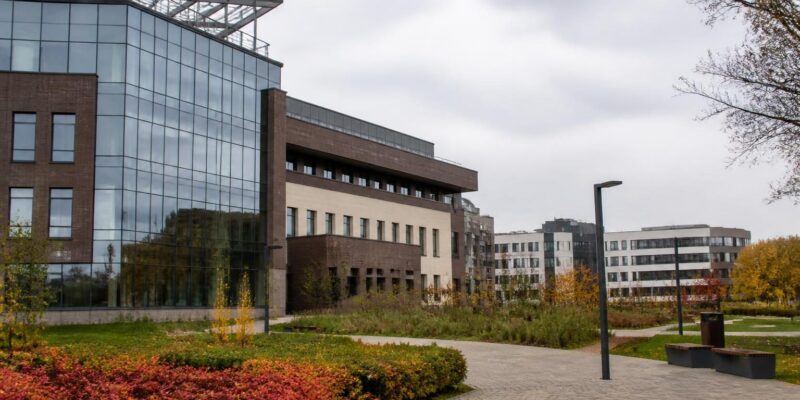
KALININGRAD, November 7, 2026 — The new Kantiana campus of Immanuel Kant Baltic Federal University has reached a decisive stage, with two further academic buildings now commissioned and the overall construction programme reported as 94% complete.
The latest additions are the Biomed building and the Institute of High Technologies. Their commissioning means that six of the campus’s eight principal facilities are now in operation or formally accepted, according to regional reporting published on November 5 and 6.
A large academic complex taking shape
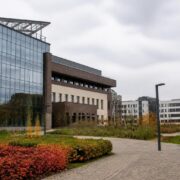
The campus is being developed on Alexander Nevsky Street as a consolidated educational and research environment for the university. The project comprises eight buildings with a combined area of approximately 114,000 square metres. In addition to academic facilities, the scheme includes student accommodation, a library and shared spaces for public events, meetings and university services.
Earlier phases brought the multifunctional university centre, the BFU Expo space, a shared lecture and library building and two residence halls into the project’s operating structure. The residence halls provide places for roughly 2,482 students, while the completed elements are intended to reduce the need for teaching and student services to be spread across separate parts of the city.
Regional media reported that construction is expected to be finished by the end of 2026. The ceremonial opening, however, is planned for April 2027, when the university marks its 80th anniversary. The timing would allow the university to begin the next stage with the principal buildings, equipment and campus services presented as one integrated complex rather than as separate construction milestones.
Biomed and high technologies at the centre
The newly commissioned buildings give the project a clear science and innovation dimension. The Biomed facilities are intended to support medical and life-science education, while the Institute of High Technologies is designed for programmes connected with engineering, technology and applied research.
In material published by the university, BFU has linked the campus with work in digital medicine, cognitive health, energy storage and the training of specialists for the regional economy. The university has also described plans for laboratory cooperation with industrial partners, including research connected with electrochemistry and battery technologies.
That orientation matters in Kaliningrad, where universities are expected to contribute not only graduates but also practical expertise for local employers. A concentrated campus can make it easier to share laboratories, organise interdisciplinary teaching and connect students with companies, public institutions and research teams.
More than a construction project
The campus is being built as a mixed-use educational environment rather than a collection of lecture buildings. The design includes accommodation, food and everyday services, spaces for open lectures and exhibitions, and facilities intended to support student life beyond the classroom.
For students, the practical benefit is proximity: housing, teaching, study areas and shared services are planned within one campus setting. For the university, the move offers an opportunity to reorganise programmes and bring a larger proportion of its academic community into a more coherent environment.
The project’s scale also gives it a wider urban role. A new university district can create regular demand for transport, cafés, local services and cultural programming, while the public-facing exhibition and lecture facilities may provide additional venues for events in the city.
Opening planned for spring 2027
The current timetable points to the end of construction in 2026, followed by preparation, fitting-out and coordination before the formal opening in April 2027. The remaining works include the final academic and conference-related facilities, with the university expected to continue equipping laboratories and shared spaces as the buildings are accepted.
The immediate news is therefore less about a single inauguration than about the campus moving from a long construction phase into operational readiness. With the Biomed and High Technologies buildings now added to the commissioned facilities, Kaliningrad’s principal university is approaching a new phase in which education, research and cooperation with employers can be organised around a single contemporary campus.













Comments