 By
By 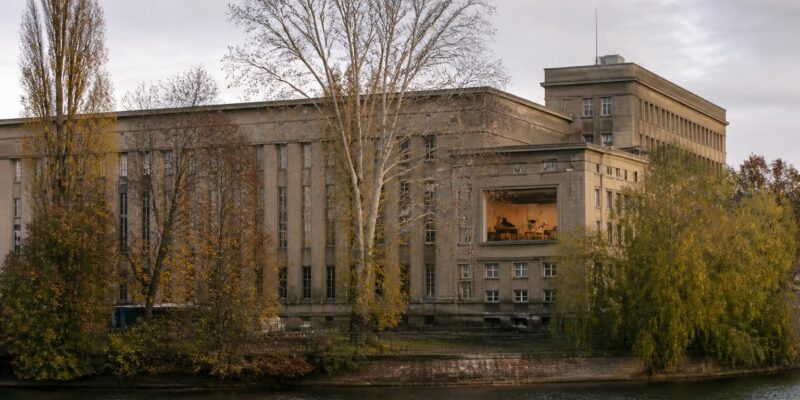
Berlin’s historic Funkhaus is being used as an unusually open musical laboratory this week, as the PEOPLE Festival brings around 180 musicians together to develop new collaborations before presenting the results to the public on Saturday and Sunday, 10 and 11 October 2026.
The festival is built around a simple but distinctive idea: artists meet without a conventional headliner structure, experiment in groups and allow the final performances to emerge from the process. Organisers describe the gathering as a temporary community devoted to shared music-making rather than a standard concert series.
A festival assembled in the studios
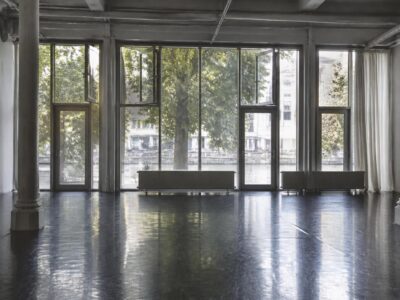
The participating musicians are working across approximately 40 studios and spaces at Funkhaus during the residency running from 4 to 9 October. According to the festival, the period is intended for musicians to meet, exchange ideas and create new work or rethink existing material in unfamiliar combinations.
The public programme begins on 10 October and continues through 11 October. Organisers expect around 200 performances across 12 stages, with music taking place for roughly 12 hours each day. The festival’s official description stresses that many of the performances will be premieres, and that some collaborations may only exist in that particular form for the weekend.
This makes the event different from a festival organised around a fixed timetable of named acts. Visitors know the participating artists, but not necessarily which musicians will share a stage or how a particular performance will develop. The format places discovery and listening at the centre of the experience.
From small rooms to concert halls
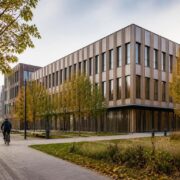
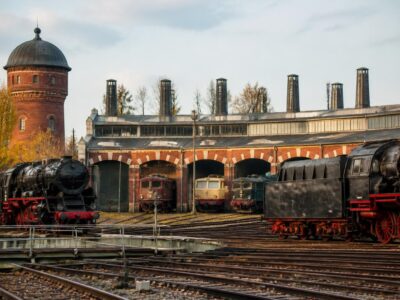
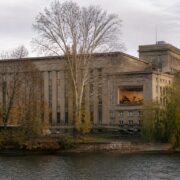
Funkhaus, the former broadcasting complex on Nalepastraße in south-east Berlin, provides the physical setting for the experiment. The venue’s range of spaces allows the programme to move between intimate rooms and larger halls. VisitBerlin describes settings ranging from spaces for about 50 people to concert halls accommodating up to 1,000.
The format also encourages visitors to move through the building rather than remain in front of a single stage. Audiences may encounter established performers, emerging artists and unexpected combinations during the same day. The organisers have announced a broad international group that includes Aaron and Bryce Dessner, Sharon Van Etten, Henning May, Erlend Øye, Colin Stetson, Ichiko Aoba and Nick Zinner, among many others.
The Nordic Embassies in Berlin have separately highlighted the participation of musicians from Denmark, Finland, Iceland, Norway and Sweden. Their presence reflects the festival’s wider international character and its interest in bringing artists from different musical backgrounds into the same working environment.
A non-commercial model
PEOPLE also presents itself as a different kind of cultural organisation. The festival says it operates without a conventional commercial line-up, artist fees or financial profit. Ticket income is intended to cover production costs, while the artistic structure is based on collaboration rather than competition for billing.
That approach does not remove the practical realities of staging a large event. The festival still requires tickets, venues, transport and extensive coordination. But it changes the relationship between those elements: the event is designed around the process of making music together, with the public invited to witness the results rather than simply consume a finished product.
The model is also intended to create space for artists who may not normally appear together. Instead of rehearsing one fixed set for one audience, musicians can perform several times in different groupings. The festival’s experience page describes the result as music that is immediate, collaborative and potentially unrepeatable.
Why the event matters for Berlin’s cultural landscape
For Berlin, the festival adds an international music gathering to a city already known for its clubs, concert halls and independent cultural spaces. Its use of Funkhaus places the event in a building associated with broadcasting history while giving visitors access to rooms that are rarely experienced as part of one continuous public programme.
The event also reflects a broader interest in artistic formats that value participation, experimentation and temporary communities. Rather than presenting collaboration as an educational side programme, PEOPLE makes it the main subject of the festival.
The public programme begins at 10:00 on both days according to the city’s tourism calendar, while the Nordic Embassies note that public festival operations begin at 13:00 on Saturday. Visitors are therefore advised to check the official timetable and ticket information before travelling.







Comments