

 By
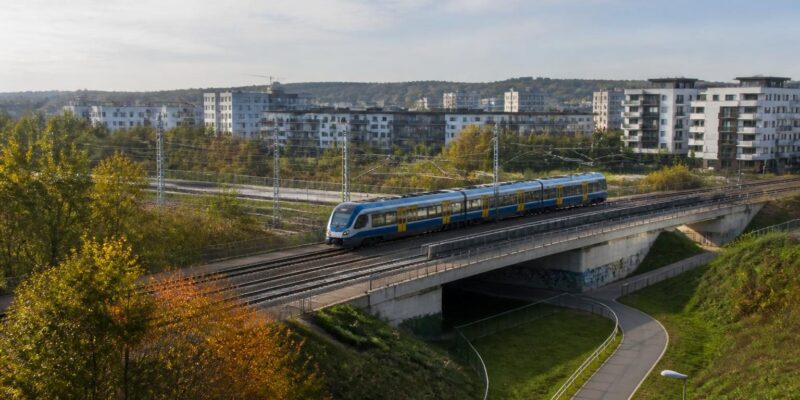
Gdańsk’s long-planned southern metropolitan railway project has moved into a more concrete phase, combining a newly published national investment programme with a local effort to plan the neighbourhoods that will grow around future stations.
The infrastructure ministry published details of the multi-year programme for the Tricity metropolitan railway on 20 October 2026. Its central project is the second stage of the Pomeranian Metropolitan Railway, known as PKM Południe, linking central Gdańsk with the city’s southern districts and the planned interchange at Kowale. The programme covers the years 2026 to 2029. ([gov.pl](https://www.gov.pl/web/infrastruktura/rozwoj-kolei-metropolitalnej-na-obszarze-aglomeracyjnym-trojmiasta))
A new rail spine for southern Gdańsk
The planned line would run for approximately 7.5 kilometres on two tracks and would be fully electrified. Six new stations are included in the programme: Gdańsk Oruńskie Przedmieście, Gdańsk Chełm, Gdańsk Orunia Górna, Gdańsk Maćkowy, Gdańsk Łostowice and Gdańsk Kowale.
The Kowale station is intended to become the project’s principal integration point. According to the ministry, the interchange is designed to connect rail services with urban public transport, regional buses and road access. The project is expected to improve access to rapid rail for more than 100,000 residents of southern Gdańsk and neighbouring areas of Kolbudy and Pruszcz Gdański. ([gov.pl](https://www.gov.pl/web/infrastruktura/rozwoj-kolei-metropolitalnej-na-obszarze-aglomeracyjnym-trojmiasta))
The project is therefore more than a short extension of the existing railway network. It is being planned as a new metropolitan corridor for districts that have expanded rapidly in recent years, where housing growth has often preceded high-capacity public transport. The intended benefit is a more predictable alternative to journeys made by car, particularly towards the city centre.
Planning the places around the stations
Gdańsk’s latest announcement adds an urban-development dimension to the rail programme. The city is inviting residents to participate in workshops on local centres planned around the future Orunia Górna and Kowale stations. The workshops will be organised as part of the “Gdańsk Nowe Południe” masterplan, developed by the city’s economic development agency investGDA and the Pomeranian Development Agency.
The announcement, published on 20 October, says residents will work with the design-thinking method. Participants will identify everyday needs, develop ideas and prepare simple prototypes or scenarios for how the future local centres could function. The organisers say the aim is to use the results in further work on the masterplan, rather than treating consultation as a one-off information meeting. ([gdansk.pl](https://www.gdansk.pl/wiadomosci/Jakie-centra-lokalne-wokol-przystankow-PKM-Poludnie-Warsztaty-dla-mieszkancow%2Ca%2C320804))
Two workshops are planned for each location. The Orunia Górna sessions are scheduled for 23 and 26 November, while the Kowale sessions will take place on 30 November and 3 December. Each group will include around 20 people, with applications open until 31 October. Participants who attend both sessions will receive a certificate confirming completion of an introductory design-thinking course. ([gdansk.pl](https://www.gdansk.pl/wiadomosci/Jakie-centra-lokalne-wokol-przystankow-PKM-Poludnie-Warsztaty-dla-mieszkancow%2Ca%2C320804))
Rail, tram and cycling investment in parallel
PKM Południe is part of a broader transport investment cycle in Gdańsk. The city has also begun preparations for a new tram connection between Gdańsk Południe and Wrzeszcz. That project includes 3.6 kilometres of tram route, 4.8 kilometres of cycle tracks, seven stops, the reconstruction of 2.8 kilometres of roads and work at 17 junctions. Completion and acceptance are planned for the end of 2029. ([gdansk.pl](https://www.gdansk.pl/gpw/Podpisano-umowe-na-budowe-trasy-Gdansk-Poludnie-Wrzeszcz%2Ca%2C320510))
The two projects serve different corridors, but together they illustrate the city’s attempt to connect transport investment with wider urban restructuring. The tram project is designed to link southern districts with Wrzeszcz, while PKM Południe would create a rail route towards the city centre and Kowale. Both include interchange infrastructure and are being presented as alternatives to relying exclusively on road traffic.
Earlier information from the Gdańsk municipal press office said the government had earmarked PLN 1.5 billion from the Railway Fund for PKM Południe. The same announcement set out an indicative timetable in which design work, permits and contractor selection would be completed by the end of 2027, construction would begin in early 2028 and the first trains could run in 2030. These are project assumptions rather than a guarantee of completed delivery, and the ministry’s newly published programme confirms the framework within which the project is to be financed and implemented. ([media.gdansk.pl](https://media.gdansk.pl/komunikaty/878061/pkm-poludnie-coraz-blizej-1-5-mld-zl-rzadowego-wsparcia))
Why the local-centre question matters
For fast-growing districts, the quality of the space around a station can determine whether new rail infrastructure becomes part of daily life or remains merely a point of arrival and departure. Shops, services, safe walking routes, cycle connections, public seating and community facilities can make interchange areas useful beyond commuting hours.
Gdańsk’s decision to invite residents into the early design process gives the project a practical civic component. The workshops will not decide the railway alignment or replace formal planning procedures. They can, however, help identify the small-scale services and connections that official transport plans often leave open until a later stage.
PKM Południe remains a future project, with substantial design, permitting and construction work still ahead. Its current significance lies in the way transport planning and neighbourhood planning are being brought together: a national rail programme defines the infrastructure, while local residents are being asked what should make the places around it work.
Sources
- Polish Ministry of Infrastructure: Metropolitan railway development in the Tricity agglomeration, 20 October 2026
- Gdańsk municipal portal: Resident workshops for local centres around PKM Południe stations, 20 October 2026
- Gdańsk municipal portal: Contract signed for the Gdańsk Południe–Wrzeszcz tram route
- Gdańsk municipal press office: PKM Południe receives government support















Comments