 By
By 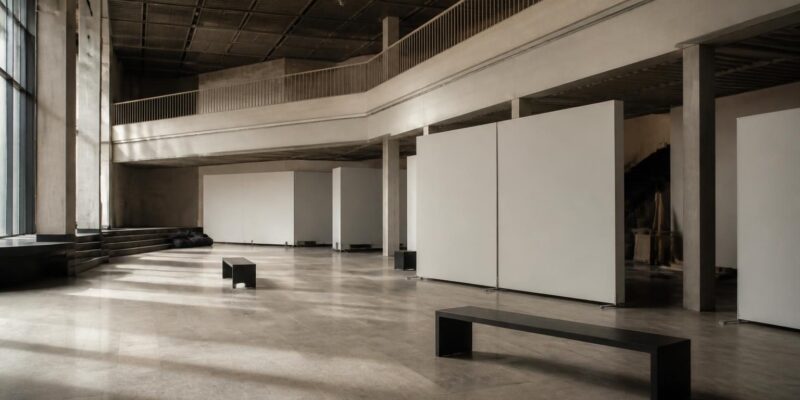
Riga’s Survival Kit contemporary art festival is preparing to open its seventeenth edition with a programme centred on care, healing and the ways people create knowledge together. The festival will run from 28 August to 27 September 2026 at Riga Congress Hall, with a preview programme beginning on 27 August.
The announcement gives Latvia’s late-summer cultural calendar a distinctly social emphasis. Rather than presenting contemporary art only as a collection of objects, Survival Kit 17 will combine an exhibition with performances, conversations, mediated walks and guided tours. Its organisers describe the central theme as “care”, while the full title — “Wind Arrow: On Art and Healing” — points towards art as a space for reflection, exchange and shared attention.
A festival built around participation
The edition is curated by Elena Sorokina and Simona Markela Dvorák in collaboration with the Initiative for Practices and Visions of Radical Care. According to the programme announcement published by Riga’s municipal culture department, the curatorial approach examines the overlapping territory between artistic work and healing practices.
That focus will be visible from the opening evening. On 27 August, three performances will be presented at Riga Congress Hall in cooperation with the Centre Pompidou in Paris. The programme is scheduled to include work by musician and composer Naima Nefertari, choreographer Zora Snake and artist Maya Minder. The projects connect performance with ritual, sensory experience, food, fermentation and the transmission of knowledge.
The opening will continue at Kaņepes Culture Centre with a “Healing Nightclub”, an interdisciplinary evening combining sound, music and dance. The programme is intended less as a conventional concert than as a shared experiment in how audiences experience art through the body and through collective presence.
From movement practices to public discussion
The festival’s public programme extends beyond the opening weekend. On 28 August, artist Zaiga Putrāma will lead a movement practice based on principles of tango communication. The event is presented as an invitation to explore interaction, listening and non-verbal exchange.
Survival Kit 17 will also take part in Riga’s White Night programme on 5 September. The evening will include T.I.E.’s performance “Veins of Daugava / Uterine Waters”, which treats water as a space of memory, transformation and continuity. The Daugava will serve as a symbolic and sonic axis, connecting local cultural references with diasporic practices.
Another White Night project, “Appendix — A Cut into the Side Layers”, will address questions of coexistence, belonging and inclusion in Latvia. The project will involve a movement performance by Latvian artists and women from third countries living in Latvia, followed by a public discussion led by artist Viktoria Fomenko.
Later in September, writer Agnese Krivade will lead a guided presence practice inspired by the publication “Entangled Landscapes: Navigation”. The event, titled “A Walk in an Ugly Landscape”, is planned for 12 September. On 17 September, a discussion moderated by associate professor and media theorist Ilva Skulte will examine art education as a form of care, including questions of value, sustainability and institutional change.
Making contemporary art more accessible
A notable part of the programme is the role assigned to art mediators. On Thursday and Friday evenings, specially trained mediators supported by the VV Foundation will be present in the exhibition to encourage conversation between visitors and works on display.
The organisers are also offering mediator-led individual and group tours, as well as visits for schools. This approach places interpretation and discussion at the centre of the visitor experience, potentially making the exhibition more welcoming to people who may not regularly attend contemporary art events.
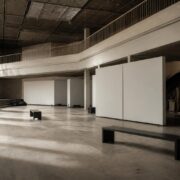
Survival Kit has been organised by the Latvian Centre for Contemporary Art since 2009. The festival is known for using vacant or underused buildings as exhibition venues, turning questions about urban space and public access into part of the artistic experience. This year’s main venue, Riga Congress Hall, will host the exhibition from 28 August through 27 September.
Practical information
The exhibition will be open from Tuesday to Saturday between 12:00 and 20:00, and on Sundays from 12:00 to 18:00. It will be closed on Mondays. Standard admission is €8, with a €5 ticket available to students and seniors. Admission is free for preschool children, school pupils, art-school students, people with disabilities and their accompanying persons. Families holding a 3+ Family Card can also purchase a €5 family ticket.
By linking exhibition visits with performances, guided encounters and public debate, Survival Kit 17 presents contemporary art as part of civic and social life in Riga. Its programme does not promise a single answer to the pressures of contemporary life. Instead, it offers a month-long setting in which visitors can consider how attention, knowledge, movement and hospitality might become shared forms of care.








Comments