

 By
By 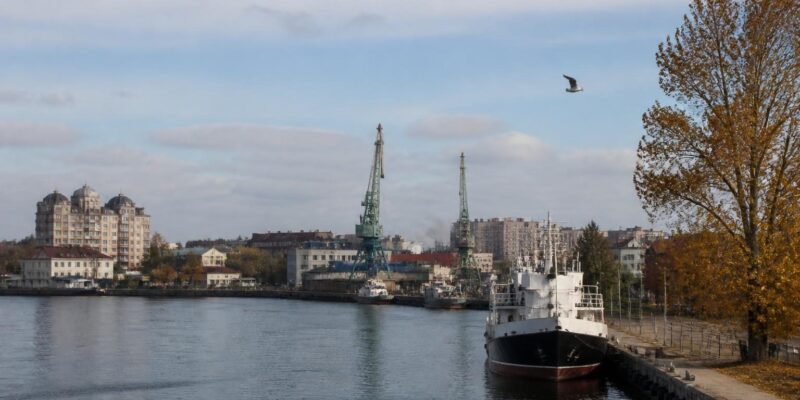
The Kaliningrad Region is preparing to host its first International Port Cities Forum on 1–2 October 2026. The event will take place at the Yantar-Hall congress centre in Svetlogorsk, with registration for participants closing on 20 September.
The announcement, published on 20 September by the Kaliningrad regional Chamber of Commerce and Industry, gives the forum a clear economic focus: how port cities can combine transport infrastructure, industrial development, urban planning and innovation. The Russian Transport Ministry had previously confirmed the dates and described the meeting as a platform for discussing maritime logistics, transport, energy, environmental issues, professional training and financial support.
A forum built around the port-city economy
Rather than treating a port as an isolated facility, the organisers present the port city as a wider economic system. That approach includes terminals, roads and railways, logistics companies, surrounding districts, investors, universities and public authorities. For Kaliningrad, a region with a long maritime history and a large coastal tourism sector, the model links business activity with questions of urban development and regional identity.
The programme is expected to include representatives of port authorities, transport companies, financial organisations, development institutions, research bodies and businesses from Russia, BRICS countries and partner states. The official forum website lists port infrastructure, logistics, transport corridors and the sustainable development of port cities among the central themes.
Innovation and digital logistics in focus
One of the more practical elements will be a presentation of innovative maritime-logistics solutions. The organisers have not yet published a complete list of projects, so it would be premature to describe the forum as a platform for specific commercial agreements. Its immediate value is more modest but still relevant: bringing different parts of the port economy into the same professional conversation.
Possible areas of discussion include digital coordination between cargo operators and transport providers, more efficient use of terminals, new approaches to mobile transshipment, environmental monitoring and the planning of port-adjacent urban territories. These issues affect not only cargo flows but also traffic, employment, land use and the everyday relationship between waterfronts and cities.
The Transport Ministry’s preview frames the event as a discussion of port cities through the combined lens of logistics, industrial development, energy, ecology, human resources and finance. That broad agenda gives the meeting a regional-development dimension rather than limiting it to shipping companies.
Students included in the programme
The forum will also feature a student business intensive titled “Port City — Youth at the Helm”. Its inclusion points to a long-term concern shared by transport and logistics employers: the need to attract and train specialists who understand both technical systems and the complex organisation of modern cities.
For students, such a format can provide contact with companies, public institutions and researchers. For the sector, it offers an opportunity to explain how logistics is changing through digital tools, environmental requirements and new forms of urban planning. The organisers have also announced an exhibition and thematic discussions alongside the business programme.
Why the announcement matters locally
The event is scheduled for October, but the current development is the opening of the final registration window. The Kaliningrad Chamber of Commerce and Industry has urged interested participants to submit applications by 20 September, while media accreditation remains open until 30 September according to the regional development corporation’s announcement.
That timing makes the forum a concrete upcoming business event rather than a general policy proposal. Its outcome will depend on the quality of the discussions and whether they lead to practical cooperation. At this stage, the confirmed facts are the dates, venue, organisers and broad agenda—not any completed investment deal or guaranteed infrastructure project.
For Kaliningrad and Svetlogorsk, the meeting offers a chance to present the region as a place where maritime logistics, research, education and urban development can be discussed together. The most useful result would be a clearer exchange of workable ideas: how port cities can modernise infrastructure, reduce environmental pressure, support local skills and make their waterfront economies more connected to the life of the city.






















Comments