

 By
By 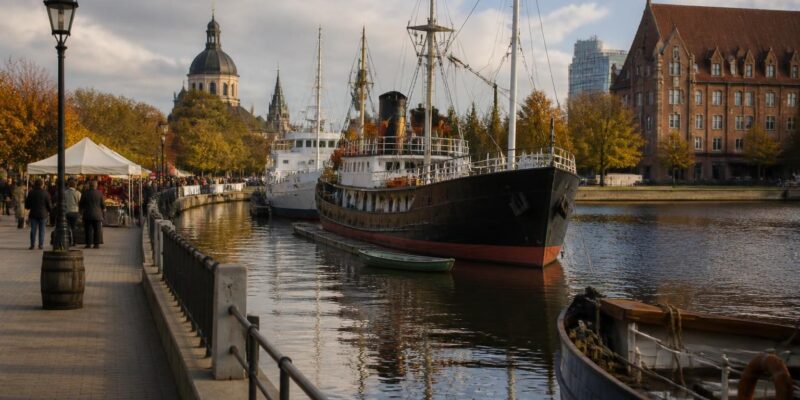
Kaliningrad’s Pregolya riverfront will become an open-air meeting place for maritime history, public culture and food on Saturday, 12 September, when the Museum of the World Ocean stages its annual Water Assembly. The programme is designed as a broad, family-friendly festival rather than a formal museum visit, bringing boats, sport, craft, exhibitions and local food together beside the museum’s historic fleet quay. ([visit-kaliningrad.ru](https://visit-kaliningrad.ru/events/festivali/Morskoy_festival_Vodnaya_assambleya/?utm_source=openai))
The event is a timely reminder that Kaliningrad’s waterfront is not only a transport landscape or a backdrop for sightseeing. For one day, the Pregolya becomes a public stage where the city’s relationship with the Baltic can be experienced through historic vessels, rowing traditions, visual art and shared meals. The festival begins at the Museum of the World Ocean, Peter the Great Embankment 1, with admission listed as free by the regional tourism centre.
A living museum beside the river
The Water Assembly has been organised by the Museum of the World Ocean since 2006. Its central idea is to present maritime heritage through direct encounters: visitors can see historic ships, learn about traditional watercraft and explore forms of practical culture associated with coastal communities. The museum’s programme also connects the riverfront with the wider history of shipbuilding and navigation, while keeping the format accessible to children and casual visitors. ([visit-kaliningrad.ru](https://visit-kaliningrad.ru/events/festivali/Morskoy_festival_Vodnaya_assambleya/?utm_source=openai))
The most visible part of the day will take place on the water. A rowing regatta titled the “Vityaz Mile” is scheduled alongside a water-theatre programme featuring a parade of historic vessels, kayak formations and sailing boats. The published schedule also includes demonstrations by flyboard pilots. These elements give the event a strong visual identity, but the festival’s wider offer is deliberately more varied than a show.
Food as part of the waterfront experience
Food is one of the practical ways in which the festival translates maritime culture into everyday urban life. Organisers are preparing a gastronomic zone with a fish market, alongside a fair selling maritime souvenirs. The offer is not presented as a standalone restaurant festival; instead, it forms part of a promenade experience in which visitors can move between the quay, exhibition areas, children’s activities and food stalls. ([visit-kaliningrad.ru](https://visit-kaliningrad.ru/events/festivali/Morskoy_festival_Vodnaya_assambleya/?utm_source=openai))
That combination suits the character of Kaliningrad particularly well. The city’s riverfront has long linked working waterfront functions with public recreation, and fish remains one of the most recognisable ingredients in the region’s coastal identity. A fish-market format also makes the festival legible to visitors who may know little about maritime history: food offers an immediate, informal entry point into the subject.
Exhibitions, games and activities for different ages
Alongside the programme on the Pregolya, the Water Assembly includes guided visits, sports games, themed quests and interactive stations for children and adults. The museum describes the event as an opportunity to encounter not only vessels and navigation, but also applied arts, customs and elements of intangible heritage connected with communities around the Baltic and across Russia. ([visit-kaliningrad.ru](https://visit-kaliningrad.ru/events/festivali/Morskoy_festival_Vodnaya_assambleya/?utm_source=openai))
A parallel programme is also planned at the Kaliningrad Regional Museum of Fine Arts on 12 and 13 September. The museum is joining the festival as a partner for the first time, presenting a display focused on the artistic record of Kaliningrad Region and offering workshops in which participants can draw ships and Baltic landscapes. The partnership broadens the festival from a waterfront spectacle into a citywide conversation between maritime history and visual culture. ([visit-kaliningrad.ru](https://visit-kaliningrad.ru/events/vystavki/Vodnaya_assambleya_v_Muzee_izobrazitelnykh_iskusstv//?utm_source=openai))
For residents, the event offers a compact way to spend a September day outdoors without leaving the city centre. For visitors, it creates a route through several aspects of Kaliningrad at once: a river landscape, working and historic vessels, museum interpretation, public art and regional food.
A seasonal city event with a clear local focus
The Water Assembly is scheduled for 12 September, with the museum’s tourism listing marking the event as suitable for all ages. The detailed programme begins with rowing activities and continues through the daytime water performances, exhibitions, food market and cultural programme near the research vessel Vityaz. ([visit-kaliningrad.ru](https://visit-kaliningrad.ru/events/festivali/Morskoy_festival_Vodnaya_assambleya/?utm_source=openai))
Its appeal lies less in novelty than in integration. Kaliningrad is using a familiar urban asset—the Pregolya waterfront—to connect heritage with leisure, food and participation. That makes the festival a constructive example of how museums can operate as public spaces: not simply preserving objects, but inviting people to encounter history through movement, taste, music and the changing atmosphere of the river.















Comments