

 By
By 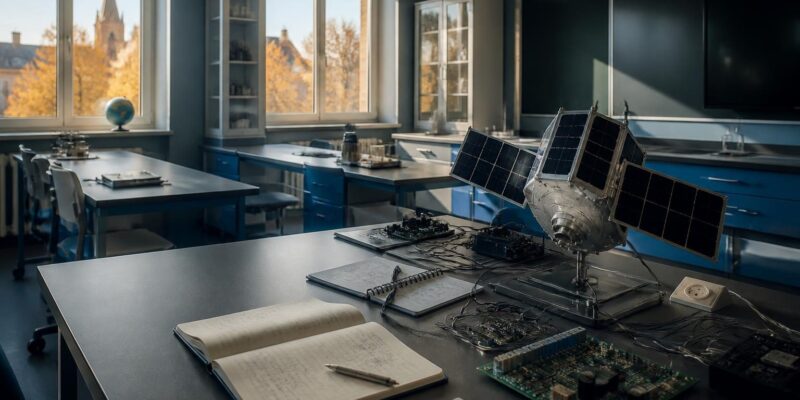
Kaliningrad Region is preparing a week-long youth festival designed to make space science and technology more accessible to young people. The festival, titled “Talents for Space: Kaliningrad Space,” will take place from 4 to 11 October 2026, with the central programme based at Gymnasium No. 40 named after Yuri Gagarin in Kaliningrad.
The announcement was published on 16 September, placing it within the current news cycle and ahead of the October programme. The event is part of a wider federal educational initiative being held in ten Russian regions. In Kaliningrad Region, the project is being organised through the children’s technopark Kvantorium, with participation from educational and technology partners.
A regional programme rather than a single venue
The festival is intended for school pupils, students, young specialists and teachers. Organisers describe it as a programme that will connect the region’s links to space exploration with present-day educational and professional opportunities. The organisers’ regional website presents space not only as a subject for engineers, but also as an area connected with information technology, environmental studies, medicine, design and management.
Alongside the central festival, activities are planned at 26 educational sites across the region. The programme is expected to include lectures by scientists and engineers, interactive installations, technological and project competitions, workshops, career meetings, science-popularisation sessions and thematic film screenings. Some activities will use satellite data as a way of showing how space-based information can support research and practical decision-making on Earth.
This format gives the announcement a broader educational significance. Rather than presenting space solely through historic achievements or specialist research, the programme is designed to show how different subjects connect within a modern scientific ecosystem. A pupil interested in physics, for example, may also encounter questions about data analysis, geography, ecological observation or communication.
From regional history to future study choices
The organisers also plan to use local history as an entry point. The programme refers to the legacy of cosmonaut Alexei Leonov, the Kaliningrad-based Fakel experimental design bureau and place names in the region associated with space. These references are intended to provide a local context for a subject that can otherwise seem distant from everyday life.
That local perspective may be particularly useful for career guidance. Young people often encounter science through isolated school subjects, while the space sector depends on cooperation between many disciplines. The festival’s stated aim is to introduce participants to universities, employers and educational routes, helping them see how interests in computing, design, environmental monitoring or medicine can lead towards space-related work.
The official festival platform lists a separate popular-science lecture programme and an engineering track for participants aged between 14 and 35. It also presents opportunities for younger participants, including knowledge-based activities covering space, nanotechnology, geography, physics and aerotechnologies. Registration and the detailed schedule are being published through the project website as the programme develops.
Engineering school planned for late October
The wider “Talents for Space” programme will continue after the main October festival. From 26 to 31 October, the organisers plan a Baltic Engineering and Space School in the region. According to the published programme, participants will study the principles behind rockets and satellites and attend popular-science lectures about the wider universe. Teaching is expected to involve lecturers from Immanuel Kant Baltic Federal University, specialists from the Moscow State University Nuclear Physics Research Institute and representatives of the Air-Engineering School association.
The combination of a public festival and a more focused educational intensive creates a progression from general interest to sustained learning. Public lectures and exhibitions can introduce the subject to a broad audience, while the later school offers participants a chance to explore technical questions in greater depth.
Why the announcement matters locally
For Kaliningrad, the initiative places science education in a visible regional setting at the beginning of the academic year. It offers schools, universities and technology organisations a shared programme through which to present study options and practical projects. It also gives families and teachers a clearer picture of how extracurricular learning can complement classroom education.
The event is not being presented as a one-off entertainment programme. Its structure combines public engagement, scientific communication, project work and professional orientation. If the planned activities are delivered as announced, the festival could help make space science a more tangible part of the region’s educational landscape while encouraging young people to consider technical and scientific pathways.












Comments