 By
By 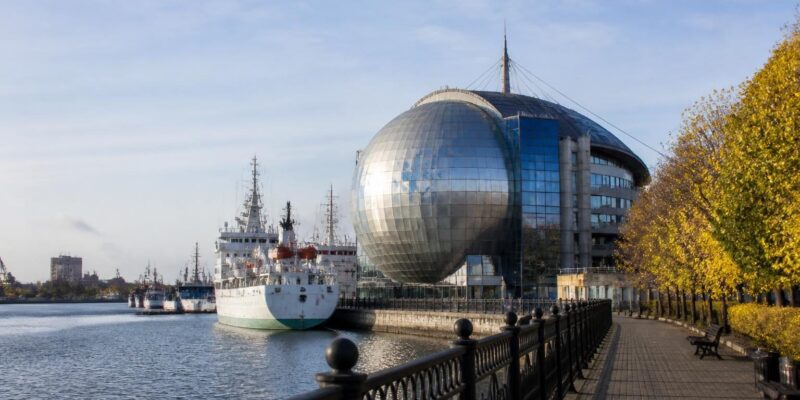
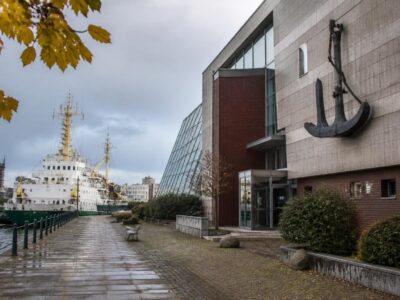
Kaliningrad is preparing to become a meeting point for researchers working on one of the less familiar subjects in Earth science: gas hydrates. The Second Russian Conference on Gas Hydrates will take place from 9 to 13 September 2026 at the Museum of the World Ocean, bringing together scientists, engineers, educators and museum specialists for five days of presentations, round tables and public-facing science activities.
The conference was announced by its organisers as a Russian event with international participation. Its programme covers natural, technogenic and synthetic gas hydrates, as well as related areas including geology, geophysics, ocean science and applied chemistry. The choice of Kaliningrad places the meeting in a city with a strong maritime and museum profile, while giving the Museum of the World Ocean a role as a venue for specialist exchange and science communication. ([rcgh.ru](https://rcgh.ru/?utm_source=openai))
A specialist subject with wider relevance
Gas hydrates are ice-like compounds in which gases, including methane, are trapped inside water structures under particular pressure and temperature conditions. They occur in marine sediments and in permafrost environments. For researchers, they are relevant to questions about the carbon cycle, seabed geology, climate processes and the behaviour of natural systems under changing conditions.
The Kaliningrad programme reflects that breadth. Alongside technical sessions, the organisers list discussions on methane seeps and their possible influence on the planet’s climate, methods for monitoring marine geological work, and modern approaches to studying hydrates and related geological systems. The conference is therefore not limited to a single laboratory discipline: it connects Earth science, marine research, chemistry, engineering and environmental observation.
That interdisciplinary format is one of the event’s constructive features. Research on gas hydrates depends on cooperation between field scientists, laboratory teams, instrument specialists and institutions that can communicate complex findings to wider audiences. The organisers say the conference is intended not only to exchange results, but also to develop professional connections and identify priorities for future research. ([rcgh.ru](https://rcgh.ru/main_page_2_eng?utm_source=openai))
From research papers to public science
Several elements of the programme are designed to make the subject more accessible beyond the specialist community. A round table titled “Understandable Science” is scheduled as part of the conference, and the English-language programme specifically invites teachers, museum staff and media representatives interested in science popularisation to join the discussion.
This public dimension fits the setting. The Museum of the World Ocean combines research, collections and educational work, and the conference site identifies its Planet Ocean exhibition and educational centre as one of the venues. For visitors, the event offers a chance to see how questions that may sound abstract—such as methane movement in seabed sediments or the structure of hydrate-bearing formations—are connected to observations made at sea, laboratory analysis and long-term environmental monitoring.
The organisers also plan a round table on building a professional gas-hydrate community, alongside scientific sessions and presentations. Such formats are especially useful for early-career researchers, who can meet colleagues from other institutions and compare approaches to fieldwork, data analysis and communication. The conference’s earlier edition included young scientists among its presenters, according to the organisers’ archive. ([rcgh.ru](https://rcgh.ru/main_page_2_eng?utm_source=openai))
A national event with international links
The conference is supported by the All-Russian Research Institute of Geology and Mineral Resources of the World Ocean, the Museum of the World Ocean and the Gas Hydrate Society. The Siberian Branch of the Russian Academy of Sciences’ 2026 conference list also records the event, identifying Kaliningrad as its location and listing the participating scientific organisations.
The organisers’ committee includes representatives of Russian research institutes and universities as well as specialists from institutions in India and China. That composition gives the meeting an international dimension while keeping its main focus on scientific collaboration and the exchange of methods and results.
For Kaliningrad, the conference adds a research-focused event to the city’s September calendar. It links the Baltic setting with questions that reach far beyond the region: how gases are stored in geological formations, how marine sediments respond to environmental change, and how scientists can explain complex processes clearly to the public.
The Second Russian Conference on Gas Hydrates runs from 9 to 13 September 2026 at the Museum of the World Ocean. The programme and participation details are available from the organisers.


















Comments