

 By
By 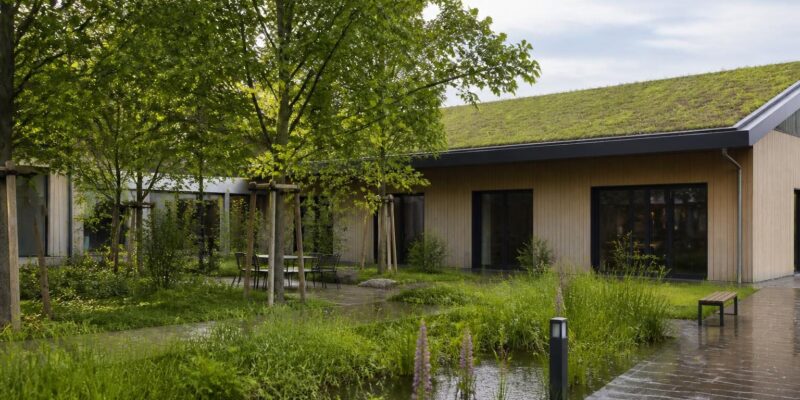
Support for places caring for people most exposed to heat
Germany’s Federal Ministry for the Environment, Climate Action, Nature Conservation and Nuclear Safety has announced a new funding window for climate-adaptation projects in social facilities. Applications under the AnpaSo programme can be submitted from 1 October to 30 November 2026, giving eligible organisations an opportunity to turn earlier planning work into practical improvements.
The announcement, issued on 3 September, is aimed at facilities that care for people who may be particularly vulnerable to heat and other effects of a changing climate. The ministry names care homes, hospitals, childcare centres and facilities for people with disabilities among the potential beneficiaries. The programme is designed to support model projects whose solutions can be repeated elsewhere in Germany. ([bundesumweltministerium.de](https://www.bundesumweltministerium.de/pressemitteilung/bmukn-foerdert-ab-oktober-weitere-projekte-zur-klimaanpassung-in-sozialen-einrichtungen?utm_source=openai))
From climate plans to physical improvements
The new call is not an open invitation to begin planning from scratch. Applicants must already have received support through an earlier AnpaSo funding window for either a climate-adaptation concept or an initial orientation and advisory process. The condition is intended to allow projects to move more quickly from assessment to implementation.
According to the ministry, eligible applicants include municipalities, non-profit associations and organisations or companies working in the health, care and social sectors. Applications will be handled by Zukunft – Umwelt – Gesellschaft, known as ZUG, the project agency responsible for the programme. ZUG has published the details of the autumn call and confirms that applications will be accepted between 1 October and 30 November. ([bundesumweltministerium.de](https://www.bundesumweltministerium.de/pressemitteilung/bmukn-foerdert-ab-oktober-weitere-projekte-zur-klimaanpassung-in-sozialen-einrichtungen?utm_source=openai))
Nature-based measures at the centre
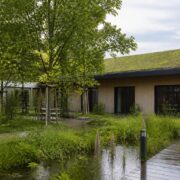
The funding is intended for concept-based and exemplary investment projects. The ministry highlights measures such as green roofs, new planting, the removal of sealed surfaces and the creation of water areas. Such interventions can provide shade and cooling, hold rainwater, improve air quality and support biodiversity while also making the surrounding site more pleasant for residents, patients, children and staff.
This combination is significant for social facilities, where adaptation often has to serve several purposes at once. A shaded outdoor area can offer relief during hot periods; planted surfaces can reduce heat stored by asphalt and concrete; and rainwater retention can help a site cope with intense rainfall. The ministry presents these measures as examples of nature-based adaptation rather than as a single standard design to be imposed on every facility. ([bundesumweltministerium.de](https://www.bundesumweltministerium.de/pressemitteilung/bmukn-foerdert-ab-oktober-weitere-projekte-zur-klimaanpassung-in-sozialen-einrichtungen?utm_source=openai))
A programme built around practical examples
The federal government’s climate-adaptation programme places particular emphasis on demonstration projects. The ministry’s own overview says that investment measures can directly improve protection for vulnerable people and infrastructure, while earlier support for advice, concepts and training helps institutions identify their needs and prepare responses. This gives the new call a clear sequence: understand local risks, plan suitable interventions and then implement them.
The approach also reflects the practical reality that climate risks differ from one location to another. An urban childcare centre may need shade and cooler play areas, while a residential care facility could prioritise protected outdoor space, building vegetation or better management of heavy rain. The programme does not prescribe one universal solution; instead, it seeks projects that are well-founded, visible and suitable for wider learning. ([bundesumweltministerium.de](https://www.bundesumweltministerium.de/programm?cHash=f804d29576e61362e121236b2172461d&tx_bmubfundingdb_programs%5Bprogram%5D=29&utm_source=openai))
Information sessions scheduled for October and November
To help potential applicants prepare, ZUG plans digital information sessions on 6 October and 5 November 2026. The sessions are intended to explain the new call, the application process and the supporting documents required. The dates give organisations a chance to clarify practical questions close to the opening and during the application period.
The programme is also expected to continue beyond this autumn’s call. The ministry says that future support is planned under a revised funding guideline and a new budget heading. Any longer-term funding figures remain subject to the relevant federal budget process, so the current call should be understood as a defined autumn opportunity rather than a guarantee of future allocations. ([bundesumweltministerium.de](https://www.bundesumweltministerium.de/pressemitteilung/bmukn-foerdert-ab-oktober-weitere-projekte-zur-klimaanpassung-in-sozialen-einrichtungen?utm_source=openai))
Why the announcement matters
Germany has increasingly treated climate adaptation as a matter of public health and everyday infrastructure, not only as an environmental policy issue. Social facilities are central to that effort because they combine buildings, outdoor spaces and direct responsibility for people whose ability to cope with heat may be limited.
The new funding window offers a constructive example of how adaptation policy can be translated into visible local projects. Its focus on existing plans, practical investment and solutions that can be copied elsewhere may help bridge the gap between recognising climate risks and changing the places where care, learning and support take place.









Comments