

 By
By 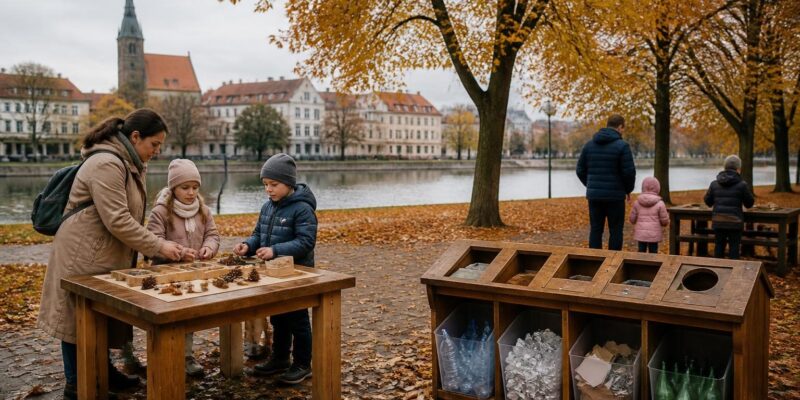
Kaliningrad’s regional youth ecology centre is hosting an Autumn EcoYard on Saturday, October 17, bringing together waste-sorting practice, environmental education and community activities in the centre’s landscape park. The programme is designed as an accessible meeting point for residents who want to learn more about recycling while taking part in practical collection and reuse initiatives.
The event is organised by the Kaliningrad Regional Children and Youth Centre for Ecology, Local History and Tourism together with the EcoYard Kaliningrad community. According to the centre’s announcement, the programme will run from 12:00 to 15:00 at the landscape park on Botanicheskaya Street 2, with access from the corner of Botanicheskaya and Galitskogo streets.
A practical entry point into waste sorting
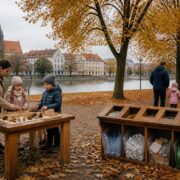
The event’s central feature is a collection point for selected materials. Organisers say visitors will be able to bring plastic bottle caps, foam plastic and expanded polystyrene for further processing, as well as hard and soft organic material for composting. The organic fraction is intended to become compost and, later, an organic fertiliser.
Paper is not being collected at this particular event. The ecology centre directs residents who want to recycle waste paper to the separate regional BumBattle campaign instead. The distinction reflects the practical focus of the EcoYard: participants are asked to arrive with materials prepared and compactly packed, so that collection and sorting can take place efficiently.
The organisers are presenting the contribution of recyclable material as the festival’s informal admission ticket. That approach turns a routine environmental action into a visible social activity: visitors do not simply hear about separate collection, but arrive with a material that can be sorted, reused or processed.
Science communication in the park
The programme also gives the event an educational dimension. The centre lists ten interactive areas, including recycling workshops, art and textile activities, natural-science laboratories and family-oriented practical sessions. Several local organisations and volunteer groups are expected to contribute to these stations.
Short talks in the park’s amphitheatre will connect everyday waste practices with broader environmental questions. The scheduled programme begins at 12:30 with a talk on the practical experience of separate collection in Kaliningrad. A popular-science lecture on winter birdlife is planned for 13:00, followed at 13:30 by an explanatory session on how waste collection is organised in the city.
The combination of subjects is deliberately broad. It places household decisions, urban services and local biodiversity within the same educational setting, allowing visitors to move from a practical question—what can be collected—to a wider discussion of how people observe and care for the environment around them.
Reuse, exchange and local participation
Beyond collection and lectures, the programme includes a charity flea market, a school swap and a book exchange. These activities promote reuse without requiring visitors to buy new goods. The organisers also plan an environmental lottery and creative workshops using recycled or repurposed materials.
Guided walks through the arboretum are scheduled for 13:30, 14:15 and 15:00. The walks add a place-based element to the event, making use of the ecology centre’s own landscape park as an outdoor classroom. Rather than treating environmental education as a presentation alone, the programme links it to observation, movement and direct contact with plants and the park environment.
For Kaliningrad, the event offers a modest but concrete model of public environmental education. It combines municipal information, community-led collection and activities for children and families, while keeping the focus on actions that residents can repeat at home: sorting materials, composting suitable organic waste, exchanging usable items and learning to recognise local wildlife.
The Autumn EcoYard is scheduled for October 17 from 12:00 to 15:00. Visitors are asked to bring clean, compactly packed accepted materials. Registration details and the full programme are available through the regional ecology centre.










Comments