 By
By 
A meeting point for art and scientific thinking
The Tretyakov Gallery’s Kaliningrad branch has announced a two-day public programme that will bring science and contemporary art education together on 10 and 11 October 2026. The event, titled “The Energy of Science and Art”, is being organised jointly with the Kaliningrad Information Centre for Atomic Energy.
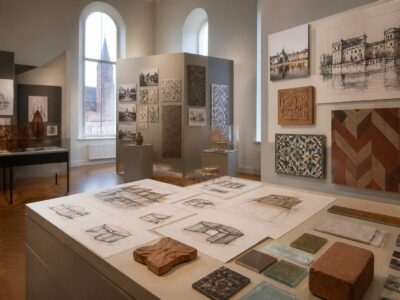
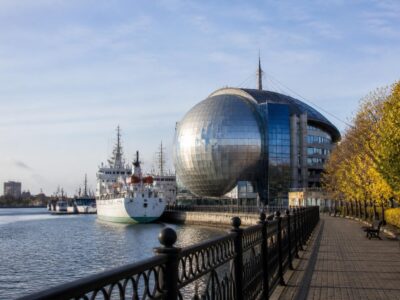
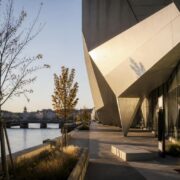
The announcement, published on 29 September, gives Kaliningrad residents and visitors a current cultural and educational event to look forward to in the coming days. The programme will take place at the gallery on Paradnaya Embankment and is built around the exhibition “Point and Line”, which examines geometric abstraction and related approaches to form, space and movement. ([kaliningrad.tretyakovgallery.ru](https://kaliningrad.tretyakovgallery.ru/news/796/?utm_source=openai))
Rather than treating science as a decorative theme, the organisers present the weekend as an opportunity to explore how scientific ideas have influenced artists and how museum specialists use scientific methods to understand works of art. That makes the programme relevant both to families looking for accessible activities and to older visitors interested in the history of ideas.
From kinetic art to waves and the Earth’s interior
The Saturday programme begins with an animated film selection for younger audiences, followed by several guided and practical sessions. Visitors can join tours devoted to kinetic art, where movement, light and mechanics become part of the artistic experience. The programme also includes a screening of the film “Cosmos as Premonition” and a cyanotype workshop, introducing participants to a photographic process based on light.
A separate workshop called “ProColour” will approach colour from several perspectives, including physics, chemistry, biology and visual art. The day will close with the popular-science talk show “Let’s Break It Down to Atoms: Wave”. Its subject is the variety of waves found in nature and everyday life, from sound and light to gravitational waves. The organisers say examples from the “Point and Line” exhibition will help connect abstract scientific concepts with visible artistic forms. ([kaliningrad.tretyakovgallery.ru](https://kaliningrad.tretyakovgallery.ru/news/796/?utm_source=openai))
Sunday’s programme continues the same cross-disciplinary approach. A film selection on discoveries will be followed by an intellectual game linking mathematics, science and art history. Participants will be invited to consider how geometric patterns function in artworks and how scientific knowledge can become an artistic method.
The practical programme includes “Physics of Lines”, a ceramics workshop about the behaviour of clay during drying and firing, including shrinkage and compatibility with glazes. Another session, “ProLight”, will explore the colour spectrum and the way colours mix before participants create their own visual experiments.
Museum research becomes part of the public programme
One of the Sunday lectures, “Science in the Service of Art, or the Secrets of Old Paintings”, will focus on the work of museum professionals. Curators, restorers, art historians and specialists in the technology of artworks use material evidence and technical examination to learn more about paintings, their making and their condition.
The final lecture, “The Sound of the Earth’s Interior”, will be delivered by Alexander Butorin, a geophysicist and candidate of geological and mineralogical sciences. According to the published programme, he will discuss how seismic and acoustic data can be used to study the Earth’s interior. The lecture will also introduce the idea of turning complex scientific data into sound, a method known as sonification. ([kaliningrad.tretyakovgallery.ru](https://kaliningrad.tretyakovgallery.ru/news/796/?utm_source=openai))
This combination of public lectures, guided viewing, experiments, cinema and workshops reflects a broader trend in cultural institutions: presenting museums not only as places to see finished objects, but also as places to ask questions and test ideas. In Kaliningrad, the gallery’s programme uses geometric abstraction as a practical bridge between visual culture and scientific literacy.
Why the announcement matters locally
The event is also notable because it offers several entry points for different audiences. Children can begin with animation and simple experiments; teenagers can take part in a quiz or workshop; adults can attend lectures on geology, conservation and the history of modern art. The programme is therefore designed less as a single exhibition visit than as a compact weekend of informal learning.
The organisers list the Tretyakov Gallery branch at 3 Paradnaya Embankment as the venue. Some sessions require tickets, while the city tourism information service identifies the scientific game and selected lectures as free activities. Visitors should check the gallery’s current event pages for availability and access conditions before travelling. ([visit-kaliningrad.ru](https://visit-kaliningrad.ru/events/creative_meetings/Art_vykhodnye_Energiya_nauki_i_iskusstva//?utm_source=openai))









Comments