

 By
By 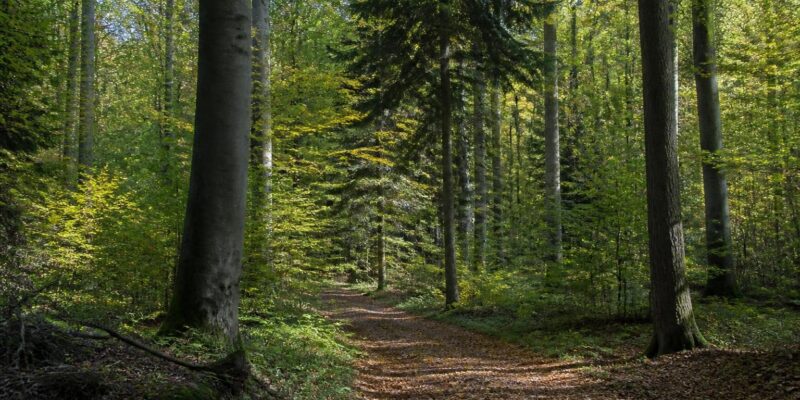
More support for forests facing a changing climate
Germany is increasing federal support for climate-adapted forest management, with annual funding for the programme rising to €200 million from January 2027. New applications from private and municipal forest owners will reopen on 1 October 2026, with approved support beginning on 1 January 2027. The announcement was made jointly by the Federal Ministry for the Environment, Climate Action, Nature Conservation and Nuclear Safety and the Federal Ministry of Agriculture, Food and Homeland on 17 September. ([bundesumweltministerium.de](https://www.bundesumweltministerium.de/pressemitteilung/200-millionen-euro-fuer-den-klimaangepassten-waldumbau?utm_source=openai))
The programme, known in German as Klimaangepasstes Waldmanagement, is intended to support long-term changes in the way forests are managed. Its objectives include maintaining resilient woodland, protecting biodiversity and preserving ecosystem services such as carbon storage, water retention and soil protection.
A programme aimed at private and municipal woodland
The additional funding is designed to extend the reach of an existing scheme rather than create a short-term emergency measure. According to the ministries, the programme has so far covered nearly 1.7 million hectares of eligible private and municipal forest. That represents more than one-fifth of the country’s private and municipal woodland, with around 60 per cent of the supported area belonging to local or other public corporations and 40 per cent to private owners. ([bundesumweltministerium.de](https://www.bundesumweltministerium.de/pressemitteilung/200-millionen-euro-fuer-den-klimaangepassten-waldumbau?utm_source=openai))
The government’s stated target is to bring at least two million hectares into climate-adapted management. The programme is administered through the Agency for Renewable Resources, or FNR, which will accept applications online from 09:00 on 1 October. The application portal confirms that the funding period for new approvals starts at the beginning of 2027. ([kwm.fnr.de](https://kwm.fnr.de/online-antrag?utm_source=openai))
What participating forests must provide
Support is linked to management commitments that go beyond basic legal requirements. Depending on the type and size of the holding, owners commit themselves for ten or 20 years to a set of criteria intended to strengthen the ecological function of the forest.
- encouraging a mixture and regeneration of locally suitable tree species;
- retaining habitat trees and deadwood;
- protecting forest soils and reducing damaging interventions;
- improving water retention within forest ecosystems;
- avoiding clear-cutting and certain forms of drainage.
The approach reflects the idea that climate resilience depends not only on planting trees, but also on the structure and condition of the wider forest ecosystem. More varied stands can provide greater flexibility as temperature, rainfall patterns and pest pressures change, although the results will depend on local conditions and how consistently the criteria are applied.
Why forest adaptation has become a policy priority
German forests have been under sustained pressure from drought, heat, storms, insects and wildfire risk. The environment ministry said the programme was being expanded because demand from forest owners had been strong and existing funds had been fully committed. The new funding is therefore intended to give additional owners access to a scheme that combines financial support with defined management standards. ([bundesumweltministerium.de](https://www.bundesumweltministerium.de/pressemitteilung/200-millionen-euro-fuer-den-klimaangepassten-waldumbau?utm_source=openai))
Forests are important to climate policy for several reasons. They store carbon in living biomass and soils, provide habitats, moderate local temperatures and help regulate water. At the same time, forest carbon storage is vulnerable when trees are weakened by prolonged drought, pests or extreme weather. This makes adaptation a practical requirement alongside emissions reduction.
Research from the Thünen Institute has examined the costs and potential carbon effects of the programme over long time periods. Its analysis describes the initiative as a measure aimed at strengthening climate adaptation, biodiversity and resilience in German forest enterprises, while also highlighting the need to consider management trade-offs over time. ([thuenen.de](https://www.thuenen.de/en/institutes/forestry/news-and-service/detail-news/neue-veroeffentlichung-kosten-und-co2-wirkungen-des-klimaangepassten-waldmanagements?utm_source=openai))
A measure with a long time horizon
The renewed application window gives forest owners an immediate opportunity to enter the scheme, but the underlying commitments are designed to last for decades. That time horizon is significant because forest management decisions made today will shape habitats, water flows and carbon storage long after the current funding cycle has ended.
The expanded programme will not remove the risks facing German forests, and it does not replace broader action on climate change. It does, however, provide a national framework for rewarding specific management practices across a large and diverse ownership structure. If the two-million-hectare target is reached, the programme will cover a substantial additional area of woodland while giving municipalities and private owners a clearer financial basis for long-term adaptation.
Sources
Federal Environment Ministry: €200 million for climate-adapted forest management
FNR application portal for the programme
Government of Mecklenburg-Western Pomerania: additional funding announcement
Thünen Institute: costs and carbon effects of climate-adapted forest management

















Comments