
 By
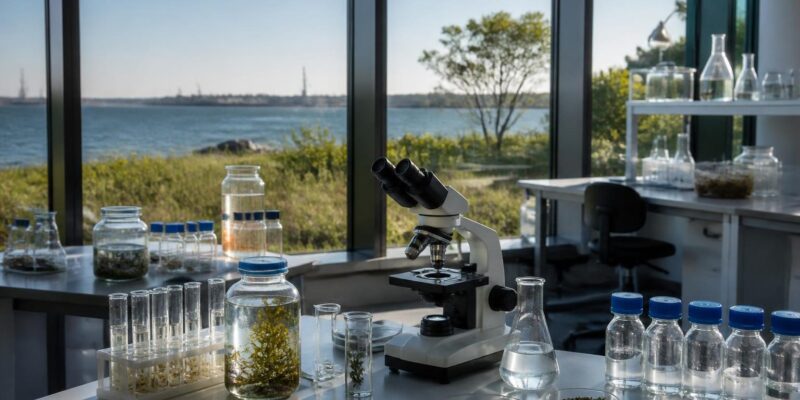
Klaipėda is preparing to place environmental chemistry at the centre of an international scientific meeting next week. From 24 to 27 November, Klaipėda University will host the 26th European Meeting on Environmental Chemistry, or EMEC26, bringing researchers from more than 30 countries to Lithuania’s port city.
The announcement, published by the university on 19 November, presents the conference as a forum for examining how chemical analysis can help understand pollution and support practical environmental decisions. The programme covers air and water quality, food safety, emerging contaminants, the effects of chemicals on people and ecosystems, and technologies that can reduce or reuse waste. ([jti.ku.lt](https://jti.ku.lt/en/news/from-food-packaging-to-the-seabed-klaipeda-university-to-host-discussions-on-environmental-pollution-research?utm_source=openai))
From everyday products to environmental monitoring
Several of the subjects on the programme connect laboratory research with familiar parts of daily life. Presentations will examine the migration of metals from food packaging, the behaviour of pharmaceutical residues in rivers and the possible effects of nanomaterials on aquatic organisms. Other sessions will consider pesticides, micro-pollutants and methods for improving the monitoring of air and water.
The conference schedule also includes work on more sustainable analytical methods. One keynote asks whether “green” analytical chemistry can support environmental monitoring while reducing the resources required for testing. Other presentations explore mobile air-monitoring laboratories, field screening of waste materials and computer-assisted methods for identifying substances that may affect biological systems. ([emec26.eu](https://emec26.eu/programme/full))
Research with a practical direction
A notable feature of EMEC26 is the attention given to turning waste streams into useful materials. The opening programme includes a Lithuanian project on a paper-based sorbent designed for aquatic oil-spill remediation. Later sessions list research into upgrading bio-oil using spent coffee waste and plastics, the use of cellulose fibres to capture heavy metals, and the recovery of valuable materials from contaminated water.
The university’s preview also points to research involving coffee grounds, plastic waste and brewing residues. These projects do not present recycling as a single solution to pollution; rather, they show how environmental chemistry can help determine whether a material is safe, effective and suitable for a particular application. That link between measurement and implementation is especially important when new materials are proposed for water treatment, manufacturing or resource recovery.
A Baltic setting for international cooperation
Klaipėda gives the meeting a natural connection to marine and coastal research. The conference programme includes a visit to the university’s Marine Research Institute, while sessions address aquatic environments, coastal sediments, wastewater treatment and the movement of contaminants through water and soil.
Lithuanian participation is visible across the programme. Researchers from Klaipėda University, Vilnius University, Vytautas Magnus University, the Nature Research Centre and the State Research Institute Center for Physical Sciences and Technology are listed among the contributors. Topics include pharmaceuticals in Lithuanian rivers, mobile monitoring of traffic-related air pollution and the behaviour of engineered materials in river water.
The gathering is also designed to support early-career researchers. EMEC26 includes several dedicated forums, poster sessions and a Chem2Change event intended to encourage open discussion among younger scientists. The programme combines formal presentations with networking, a marine institute meeting and a field trip, giving participants opportunities to compare methods as well as results.
Why the meeting matters locally
For Klaipėda, the conference offers more than a temporary increase in international visitors. It highlights the city’s role as a place where marine science, environmental monitoring and applied research meet. Questions discussed at the university—how to track contaminants, how to reduce laboratory waste, and how to recover resources from difficult materials—are relevant to coastal communities, wastewater operators, industry and public authorities.
The meeting will not by itself resolve those challenges. Its value lies in bringing different strands of research into the same room and making it easier to compare evidence, identify promising methods and build partnerships. In that sense, EMEC26 presents environmental science as a practical process: measure carefully, understand risks, test alternatives and move useful ideas closer to application.














Comments