
 By
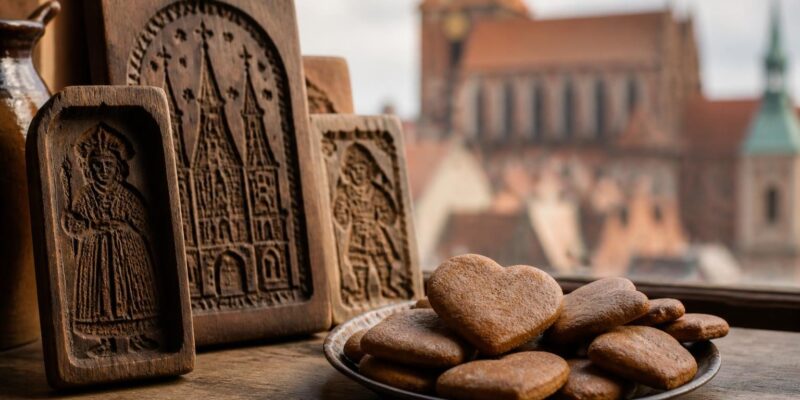
Toruń is putting one of Poland’s best-known culinary traditions at the centre of its late-November cultural calendar. The Christmas Festival of Toruń Katarzynka gingerbread is running from 21 to 25 November 2026, combining baking workshops, craft demonstrations, talks, guided activities and food-related tourism around the city’s historic gingerbread culture.
The festival is based primarily at the Museum of Toruń Gingerbread, where visitors can explore the history of the product while taking part in hands-on activities. The programme is designed to connect the city’s past with contemporary cultural participation rather than present gingerbread simply as a souvenir. It offers residents and visitors a way to encounter recipes, tools, spices and craftsmanship in one shared setting.
A living tradition rather than a museum display
Toruń’s gingerbread is closely associated with the city’s identity, and the festival uses that association as a starting point for a broader conversation about culinary heritage. The museum programme includes workshops in baking and decorating gingerbread, demonstrations of wood carving, talks about spices and historical recipes, and guided visits focusing on the development of the local craft.
On 23 November, the festival is continuing with activities at partner venues while the Museum of Toruń Gingerbread is closed for the day. The regional tourism organisation lists stained-glass workshops at the Intek-Art studio and a gingerbread-themed storytelling and baking session at Torunianka Café. The programme gives the festival a city-wide character, linking food heritage with other forms of local creative practice.
The Katarzynka as a seasonal marker
A central feature of the 2026 edition is the premiere of “Katarzynka A.D. 2026”, a limited series made from matured dough and supplied by the Kopernik confectionery factory. The release draws attention to a particular feature of Toruń’s gingerbread tradition: the use of dough that is prepared in advance and allowed to develop before baking.
The Katarzynka is one of the most recognisable forms of Toruń gingerbread. The festival’s organisers describe the product as a long-established local speciality made with a blend of aromatic spices. Its seasonal significance is also reflected in the traditional association between 25 November, Saint Catherine’s Day, and the beginning of the annual baking cycle for Katarzynka gingerbread.
Rather than separating production from public culture, the festival makes the food itself an object of explanation. Visitors can learn about the role of spices, the work of gingerbread makers and the tools used to shape decorative biscuits. This approach gives the event an educational dimension while retaining its appeal as a seasonal food experience.
Food tourism with a local route
The festival is also being accompanied by “Katarzynka Week”, an invitation to explore Toruń’s Gingerbread Culinary Trail. The initiative encourages visitors to discover places and flavours connected with the city’s gingerbread tradition, extending the experience beyond a single museum visit and into the wider urban hospitality offer.
Additional elements include the launch of a new issue of the “Gingerbread One-Day Paper”, a gingerbread calendar for 2027 illustrated by Mateusz Bus, and a light-and-sound projection on a building façade. Students from a Toruń art school are also presenting a virtual exhibition of poster designs inspired by the festival.
These additions broaden the story from food production to design, publishing, education and evening city life. They also show how a recognisable local product can support several connected cultural activities without losing its culinary focus.
A November invitation to Toruń
The festival arrives at a useful point in the tourism year, when historic city destinations are moving towards the Christmas season but still have room for smaller, specialist events. Toruń’s programme offers a distinctly local reason to visit: not a generic winter market, but an encounter with a particular craft, a particular product and the people and institutions that keep its story visible.
For the city, the event provides a constructive example of food heritage being used as a bridge between museums, small creative venues, tourism services and everyday participation. For visitors, it offers a compact route through baking, history, craft and seasonal atmosphere. The festival continues through Wednesday, 25 November, with selected activities free of charge and other museum and workshop sessions operating according to the published programme.
























Comments