 By
By 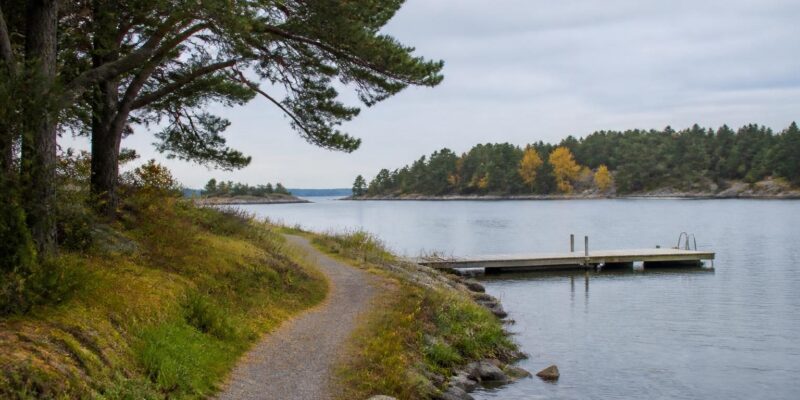
Sweden has launched a new tourism concept aimed at travellers who want meaningful holidays without tightly packed itineraries or constant social activity. Called The Introvert Travel Agency, the initiative combines online travel planning with temporary physical pop-ups and promotes a slower, more flexible way to experience the country.
The project was announced by Visit Sweden on September 29, 2026, making it one of the country’s most recent international tourism initiatives. It presents Sweden as a destination where visitors can decide how much interaction they want, how quickly they move and how much time they leave open for themselves. ([press.visitsweden.com](https://press.visitsweden.com/sweden-launches-the-introvert-travel-agency))
A tourism offer built around personal space
The concept is designed for travellers who may prefer calm accommodation, independent exploration and activities that do not require continuous group participation. Visit Sweden says the offer includes island stays, peaceful nature experiences, self-guided city visits and accommodation selected for a quieter travel style.
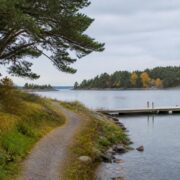
Rather than treating solitude as a limitation, the campaign presents it as part of the holiday experience. Visitors might spend time walking through a forest, exploring a neighbourhood independently, sitting in a café with a book or taking a short trip to the coast without having to follow a fixed group schedule.
This positioning gives the initiative a broader relevance than its name might initially suggest. Many travellers who do not describe themselves as introverts may still prefer fewer transfers, more time outdoors and the ability to change plans during a trip. The agency’s central message is therefore less about personality labels than about control over pace and interaction.
Research points to demand for lower-pressure travel
Visit Sweden commissioned YouGov research among 9,212 adults in nine markets, including the United States, the United Kingdom, Sweden, Norway, Denmark, Finland, France, Germany and the Netherlands. According to the organisation, 44 per cent of respondents in the United States identified primarily as introverted, while 48 per cent did so in the United Kingdom.
The same research indicated that 57 per cent of American respondents often or always look for calm accommodation, while 48 per cent prioritise time to themselves when travelling. Visit Sweden also reported that 69 per cent of Americans would like help from a tour operator when planning and booking a holiday.
These figures come from research commissioned by Visit Sweden and should be read as campaign research rather than official tourism statistics. They nevertheless help explain the commercial logic behind the new service: travellers may value professional planning while still wanting a holiday that feels spacious and personally manageable. ([press.visitsweden.com](https://press.visitsweden.com/sweden-launches-the-introvert-travel-agency))
Three European pop-ups planned for October
The physical part of The Introvert Travel Agency will appear in three European cities later this month. Visit Sweden lists Berlin from October 14 to 17, Paris from October 21 to 24, and London from October 28 to 31. The London location is given as 3 Paddington Street in Marylebone.
The pop-ups are intended to offer travel inspiration and personalised consultations in settings designed to feel less demanding than a conventional promotional event. Visitors will be able to explore Swedish destinations and experiences and receive guidance on possible itineraries. Curated trips will also be available online for people outside the three host cities. ([press.visitsweden.com](https://press.visitsweden.com/sweden-launches-the-introvert-travel-agency))
The format reflects a shift in how destination marketing is being presented. Instead of promoting a single landmark or a standard sightseeing route, the initiative sells a travel mood: room to pause, fewer compulsory activities and the possibility of experiencing Sweden independently.
Sweden’s natural advantage
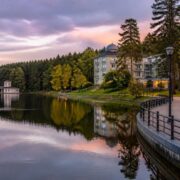
Sweden is well suited to this approach because many of its tourism assets can be enjoyed without large organised groups. Forests, lakes, archipelagos, small towns and extensive walking routes allow visitors to build trips around their own interests. Cities such as Stockholm and Gothenburg also combine museums, cafés, waterfront areas and accessible green spaces, making it possible to alternate between urban culture and quiet outdoor time.
Visit Sweden also links the concept to the country’s tradition of personal space and to allemansrätten, the right of public access that enables people to enjoy much of the countryside responsibly. The principle does not remove the need to follow local rules, protect nature and respect private land, but it helps explain why independent outdoor travel is such a natural part of Sweden’s tourism offer.
A wider Nordic travel context
The launch comes as Sweden participates in a broader Nordic tourism roadshow in North America from October 5 to 8. The joint initiative brings Denmark, the Faroe Islands, Finland, Greenland, Iceland, Norway and Sweden together for workshops in Boston, Los Angeles and Vancouver. Its organisers are presenting off-season travel, lesser-known regions and locally rooted experiences to travel professionals. ([travel-trade.visitfinland.com](https://travel-trade.visitfinland.com/en/zhanhui/the-nordics-north-america-roadshow/))
The two initiatives are separate, but they point in a similar direction. Nordic destinations are increasingly promoting travel that spreads demand beyond the best-known sights and encourages visitors to stay longer, travel more thoughtfully and explore at a calmer pace.
For Sweden, The Introvert Travel Agency offers a focused way to communicate that proposition. It does not ask visitors to avoid people or abandon city life. Instead, it suggests that a successful holiday can include both connection and retreat, with the traveller deciding when each is needed.














Comments