 By
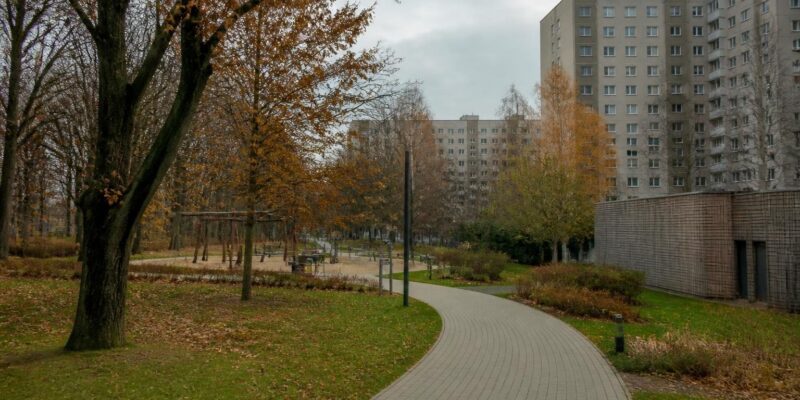
Vilnius residents will begin voting on Tuesday, November 3, in the 2026 round of the city’s participatory budgeting programme, “Dalyvauk! Vilnius”. The month-long vote will allow people who live in the capital to choose which proposed public-space and community projects should receive municipal funding.
The vote is scheduled to run from November 3 through November 30. According to the programme’s official information, residents will be able to select one small-scale project for their seniūnija, or neighbourhood administrative district, and one larger project intended for the city as a whole. The winning proposals are due to be announced between December 7 and December 11. ([dalyvauk.vilnius.lt](https://dalyvauk.vilnius.lt/pateikti-projekta/?utm_source=openai))
A direct route from local ideas to municipal investment
Participatory budgeting gives residents a formal role in deciding part of a public budget rather than limiting their involvement to consultation. In Vilnius, the programme is designed for practical improvements to the urban environment: recreational areas, small-scale architecture, green spaces, cultural features and facilities that can strengthen everyday life in neighbourhoods.
The 2026 programme plans to distribute approximately €1.6 million among residents’ ideas. The municipal platform divides the funding into two broad levels. Smaller projects are connected to individual seniūnijos, while larger proposals address needs or opportunities across the wider city. Residents do not have to prepare a technical design or find a contractor. Those tasks are handled by municipal departments if an idea is selected and approved for implementation. ([dalyvauk.vilnius.lt](https://dalyvauk.vilnius.lt/?utm_source=openai))
This structure is intended to make participation accessible. A resident can suggest a practical intervention without having the professional knowledge normally required for an urban-development project. The administration then examines whether the proposal complies with the programme’s rules, whether the proposed location is suitable and whether the idea can realistically be delivered.
From playful installations to everyday public space
The ideas submitted during the 2026 proposal stage illustrate the range of projects that can enter the city’s participatory process. Examples published by the municipality include a possible children’s zipline in Pilaitė, a movement and play installation in Grigiškės, and an open-air lighting concept connected with the history of Stiklių Street.
Other suggestions focus on ecology and neighbourhood identity. One proposal would transform concrete columns on Švitrigailos Street into a community-created “bird town” with nesting boxes. Another would turn seasonal tree-protection panels into a temporary or recurring outdoor gallery. These concepts are not automatically approved projects: they were examples of submitted ideas, and proposals had to pass expert evaluation before reaching the public vote. ([dalyvauk.vilnius.lt](https://dalyvauk.vilnius.lt/paskutine-proga-pasiulyti-ideja-vilniui/?utm_source=openai))
The range of suggestions reflects a broader urban-development question: how can a growing city improve not only its major infrastructure, but also the smaller places that shape daily routines? A playground near home, a shaded meeting point, a more recognisable street corner or an ecological installation may have a modest construction cost while still changing how residents use and value their surroundings.
Voting rules change the programme’s reach
From this year, Vilnius residents aged 16 and over can vote. The process is electronic and linked to declared residence in the capital. The system automatically identifies the voter’s seniūnija and presents the eligible small-scale proposals for that area. Voters may then choose a city-wide project as well.
The programme’s official guidance stresses that each person can vote only once. Voters are therefore encouraged to review the proposals before confirming their choices. A five-digit code sent by text message is used to confirm the ballot. People who do not find a suitable idea in one category may vote only in the other category. ([dalyvauk.vilnius.lt](https://dalyvauk.vilnius.lt/d-u-k/?utm_source=openai))
Allowing younger residents to participate is a notable civic feature. Teenagers aged 16 and 17 often experience the city through schools, public transport, sports areas and parks, but have few direct opportunities to influence municipal spending. Their participation could bring greater attention to facilities for youth, active mobility and informal public spaces, although the final outcome will depend on turnout and the proposals that pass technical review.
A test of practical local democracy
The vote will not decide the entire direction of Vilnius’s urban development. Major transport, housing and infrastructure projects require separate planning, financing and regulatory processes. Participatory budgeting operates at a smaller and more immediate scale.
Its value lies in connecting residents with visible changes. When a chosen idea is completed, the result can provide a clear link between a public vote and a new place or facility. The process also gives municipal departments information about what people notice in their surroundings and which improvements residents consider realistic and useful.
For Vilnius, the November ballot is therefore both a funding decision and a test of civic engagement. The city has set aside money for projects proposed from the bottom up; residents must now decide which ideas deserve priority. The voting window opens on November 3 and remains open until November 30.









Comments