

 By
By 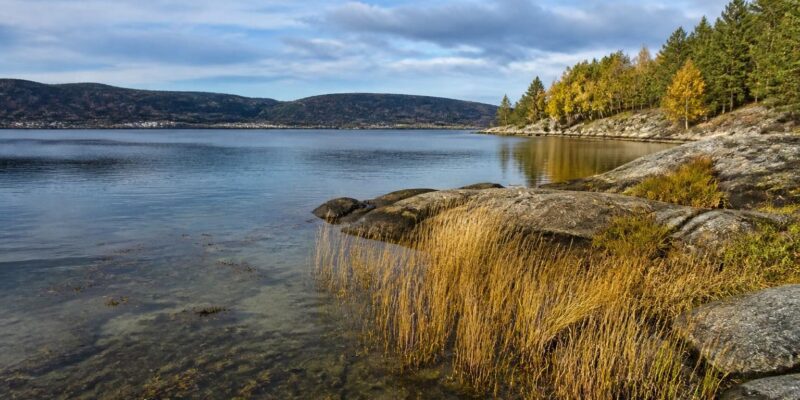
Norway has opened a new application round worth NOK 55 million for nature-restoration projects connected with the Oslofjord, giving municipalities, voluntary organisations and other eligible applicants an opportunity to support work in one of the country’s most closely watched coastal ecosystems.
The announcement was made on Monday, September 28, by Norway’s Ministry of Climate and Environment. Applications are being handled through the Norwegian Environment Agency, with a deadline of November 15, 2026. The funding is intended for practical restoration measures both in the fjord itself and across its wider drainage basin.
A wider catchment approach
The ministry describes the Oslofjord programme as broader than a single coastal clean-up effort. Eligible projects may take place in marine areas, rivers and streams, wetlands or other parts of the catchment whose condition affects the fjord. The drainage area stretches from Røros in central Norway to Agder in the south, linking inland water management with the health of the coastal environment.
That approach reflects the way water quality and biodiversity pressures move through a landscape. Runoff, altered river channels, damaged shoreline habitats and marine litter can all affect coastal waters, while measures taken upstream may improve conditions downstream over time.
NOK 172 million allocated during 2026
The new call is part of a larger 2026 allocation. According to the ministry, NOK 172 million has now been set aside this year for Oslofjord nature restoration. More than NOK 100 million has already been distributed to 73 projects.
Earlier awards have covered a range of activities, including river restoration, marine restoration, removal of marine litter, research, public information and educational work. The ministry has also recently announced a separate NOK 10 million grant opportunity for raising abandoned or wrecked boats from the Oslofjord.
The combination of larger restoration projects and smaller local initiatives is intended to widen participation. Local authorities can apply, but so can non-governmental organisations and other actors with relevant projects. The final selection will depend on the terms of the call and the quality and relevance of submitted proposals.
From guidance to practical measures
The Norwegian Environment Agency has published a dedicated guide for planning and carrying out restoration in the Oslofjord. It presents restoration as a toolbox rather than a rigid sequence of steps, reflecting the fact that coastal ecosystems differ from site to site and that results can take time to measure.
The guidance covers the identification of restoration potential, setting objectives, selecting measures, obtaining permits, carrying out work and evaluating results. It also cautions that marine restoration remains technically complex and less established than the protection of intact nature. Preventing further damage is therefore still presented as the safest and most cost-effective environmental measure.
Testing nature-based solutions
Research and demonstration projects are already adding to the practical knowledge base. The Norwegian Institute for Water Research, or NIVA, is coordinating a project that tests nature-based restoration measures designed to promote marine life and improve the condition of the fjord.
The work includes cooperation among organisations involved in smaller restoration initiatives. Its purpose is to compare what works in different locations and help connect individual projects to a more coherent, ecosystem-based approach. Areas of interest include marine biology, biodiversity, blue forests and environmental governance.
For applicants, that experience offers a useful framework: projects are not only expected to deliver a local intervention, but can also contribute to better knowledge, public engagement and future planning.
A funding round with a long-term horizon
The September announcement does not claim that the fjord’s environmental problems have been solved. Instead, it opens another opportunity to build a portfolio of measures across the region. The emphasis on rivers, coastal habitats, marine restoration, research and education suggests that the programme is designed to support both physical improvements and the knowledge needed to maintain them.
Applicants must submit their proposals by November 15. The outcome will indicate which local and regional projects Norway considers most ready to contribute to the long-term recovery of the Oslofjord and its connected waters.
















Comments