

 By
By 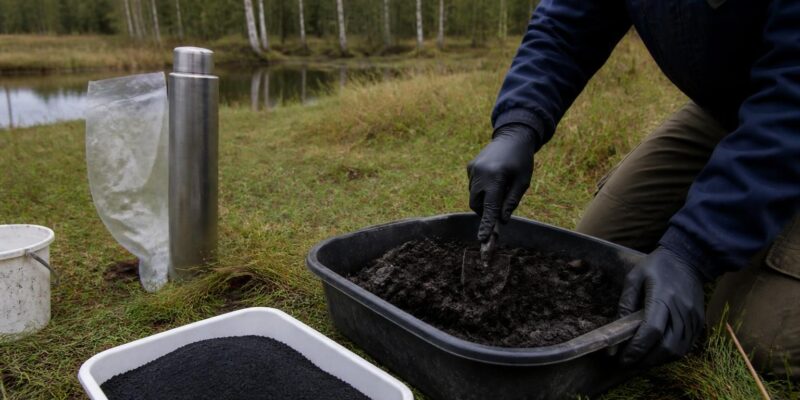
A practical step in Sweden’s PFAS clean-up work
Swedish environmental authorities have reported new pilot results showing that the movement of PFAS from contaminated soil into groundwater can be reduced by more than 99 per cent. The findings, published on 31 August 2026, come from a four-year government research assignment led by the Swedish Geotechnical Institute, or SGI, in cooperation with the Geological Survey of Sweden and the Swedish Environmental Protection Agency.
The work focused on contaminated fire-training sites near airports, where PFAS pollution has affected both soil and groundwater. The sites were used to test whether different treatment methods could limit the movement of these persistent substances from a contaminated source area before they spread further through the groundwater system.
PFAS is a broad group of synthetic chemicals used in products including firefighting foams, water-resistant materials and impregnation treatments. Many PFAS compounds break down very slowly. Once released into soil, they can migrate into groundwater and, in some circumstances, continue towards drinking-water sources, lakes and streams.
Activated carbon delivers the strongest pilot result
The research team examined several approaches: soil washing, stabilisation with activated carbon, thermal treatment and air injection. The authorities say more than one method produced useful effects, but the most striking result came from mixing activated carbon into PFAS-contaminated soil above the groundwater table.
In that trial, concentrations measured in soil water fell by more than 99.98 per cent. The effect was described as largely immediate, suggesting that treatment at the contaminated source can substantially reduce the amount of PFAS available to move downwards. The broader summary from the Environmental Protection Agency describes the reduction in PFAS movement to groundwater as exceeding 99 per cent.
Activated carbon works by binding many chemical compounds to its surface. In this application, the aim is not necessarily to destroy PFAS, but to immobilise it and reduce its mobility. That distinction is important: a successful containment measure can protect groundwater while authorities assess whether a later, more comprehensive remediation solution is needed.
No single method will fit every site
The agencies have stressed that the result should not be read as a universal recipe for PFAS remediation. Contaminated sites differ in their soil structure, hydrology, pollutant mixture and proximity to sensitive water resources. The appropriate intervention will therefore depend on local conditions, the types of PFAS present and the environmental risk that needs to be controlled.
That caution is also reflected in the trial design. The assignment compared multiple techniques rather than presenting one technology as suitable for every location. Soil washing can separate contaminants from excavated material, while thermal treatment uses heat and air injection can influence the movement of pollutants underground. Each approach brings different technical requirements and questions about handling residual material.
For municipalities and other land managers, the value of the research lies partly in this decision-making framework. Early containment may be particularly relevant where pollution is continuing to move from a defined source area towards groundwater, but the treatment still needs site-specific investigation, monitoring and follow-up.
From research to guidance
The Swedish Environmental Protection Agency said the findings would support the development of clearer supervisory guidance for PFAS-contaminated areas. Such guidance can help municipalities, regulators and site operators compare available measures and determine when a particular intervention is appropriate.
The Geological Survey of Sweden highlighted the role of cooperation between public agencies, researchers and contracted specialists. The project combined geological and remediation expertise with field testing, allowing the methods to be assessed under conditions closer to those encountered at real contaminated sites.
The government assignment is set to continue and develop during the period from 2026 to 2030. That next phase is expected to build on the pilot evidence, improve the knowledge base and help translate technical results into practical remediation work.
A constructive development, with limits
The new findings do not remove the wider challenge posed by PFAS contamination. They do, however, offer environmental authorities a potentially effective way to slow the spread from polluted soil, particularly where groundwater protection is an immediate priority.
The strongest result came from a controlled pilot, not from a claim that every contaminated site can be treated in the same way. Continued monitoring will be needed to establish how well immobilisation performs over time and how it should be combined with other measures. Even so, the Swedish research provides a concrete example of how public environmental science can turn a difficult contamination problem into a more manageable series of local decisions.





















Comments