

 By
By 
A meeting point for Lithuania’s photonics ecosystem
Lithuanian and Taiwanese researchers are meeting in Druskininkai this week for the third Taiwan–Lithuania Laser Conference, a timely showcase for one of Lithuania’s most internationally visible areas of advanced technology. The event is taking place from 8 to 10 October 2026, according to the Lithuanian-language announcement from the Center for Physical Sciences and Technology, or FTMC. Its English event page lists the main conference dates as 8–9 October. ([ftmc.lt](https://ftmc.lt/events-and-ads/n3rd-taiwan-lithuania-laser-conference/?utm_source=openai))
The conference brings together scientists, engineers and researchers working in laser physics, photonics, semiconductor technologies, materials science and metrology. Rather than presenting lasers as a single specialised field, the programme places them within a wider chain of technologies used in manufacturing, communications, medical research, measurement and advanced electronics.
Organisers describe the meeting as a place to present new research results, exchange technical knowledge, build professional contacts and explore further cooperation between Lithuania and Taiwan. The event is organised by FTMC together with the Research Council of Lithuania and Taiwan’s National Science and Technology Council. ([ftmc.lt](https://ftmc.lt/events-and-ads/n3rd-taiwan-lithuania-laser-conference/?utm_source=openai))
From research exchange to practical technology
The topics listed for the conference reflect the broadening role of photonics in the modern economy. They include semiconductor lasers, photonic integration, new materials, laser micromachining, surface engineering, nanophotonics, plasmonics, ultrafast optics, radiation sources and two- and three-dimensional optical metrology. These are research areas with potential applications across precision production and high-value technology development.
One example of the cooperation already taking place is the joint work on A3-B5-Bi semiconductor microlasers. FTMC’s participant information identifies research carried out with Taiwan’s National Sun Yat-sen University under a Lithuania–Taiwan cooperation project. The work focuses on semiconductor structures designed for near-infrared photonic systems and includes research into GaAsBi materials and related quantum-well structures. ([ftmc.lt](https://www.ftmc.lt/participants/?utm_source=openai))
Such projects help explain why a specialist conference can matter beyond academia. Photonics research often depends on long-term links between universities, public research centres and companies. Conferences provide a comparatively efficient way to compare results, identify complementary expertise and decide whether a laboratory idea is ready for a larger joint project or an industrial partnership.
A continuing bilateral research framework
The Druskininkai conference is also part of a broader Lithuania–Taiwan research framework. In April, the Research Council of Lithuania announced a call for continuation projects in laser and biomedical technologies. The programme allows up to €100,000 per project for Lithuanian participants and is intended to extend existing two-year research cooperation into the next phase. ([lmt.lrv.lt](https://lmt.lrv.lt/news/call-for-applications-lithuaniataiwan-continuation-projects-2026-zdt/?utm_source=openai))
FTMC separately reported in September that Lithuanian and Taiwanese organisations had agreed to expand cooperation in laser technologies linked to advanced semiconductor packaging. The two-year initiative was described as receiving €5.6 million in Taiwanese support and as including research and development, conferences, researcher exchanges and technology-partnership activities. ([ftmc.lt](https://ftmc.lt/news/lithuania-strengthens-cooperation-with-taiwan-in-the-semiconductor-sector-project-worth-nearly-6-million/?utm_source=openai))
Those figures should be understood as part of the wider cooperation around the photonics sector, not as funding announced specifically at the Druskininkai conference. The immediate event is primarily a scientific and networking meeting, but its value lies in helping existing projects mature and creating a pipeline for new ones.
Why photonics is important for Lithuania
Lithuania has built a strong international reputation in laser science and related technologies, supported by research institutions, specialist companies and a concentrated pool of engineering expertise. The sector’s development depends not only on successful laboratory results but also on access to international partners, specialised materials, manufacturing knowledge and markets.
That makes Taiwan a useful partner for Lithuanian researchers. Taiwan has extensive expertise in semiconductors and electronics manufacturing, while Lithuania has long-standing capabilities in lasers, optical systems and precision technologies. The combination can support research that neither side would necessarily be able to advance as quickly alone.
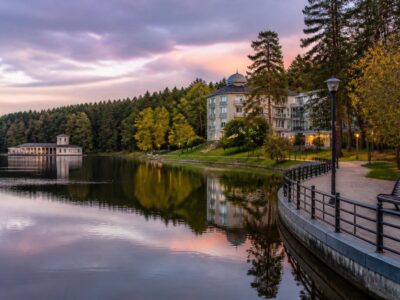
The conference’s location in Druskininkai also gives the meeting a setting outside Lithuania’s main academic and industrial centres. That can encourage a more focused exchange between researchers and create space for discussions that are difficult to fit into a formal laboratory or trade-fair schedule. The event’s importance, however, will ultimately be measured by what follows: joint proposals, researcher mobility, shared prototypes and links between research teams and companies.
A constructive signal for research-led growth
At a time when many European economies are seeking higher-value production and stronger technology capabilities, the Lithuania–Taiwan laser partnership illustrates a practical route to growth. It connects fundamental research with fields such as semiconductor manufacturing, advanced measurement and industrial processing without promising immediate commercial results that have not yet been demonstrated.
The Druskininkai meeting therefore offers a useful snapshot of innovation in progress. It is not a product launch or a single investment announcement. It is a platform where technical knowledge, public research funding and international partnerships can be aligned. For Lithuania, that steady accumulation of connections may be just as important as any individual breakthrough.




















Comments