

 By
By 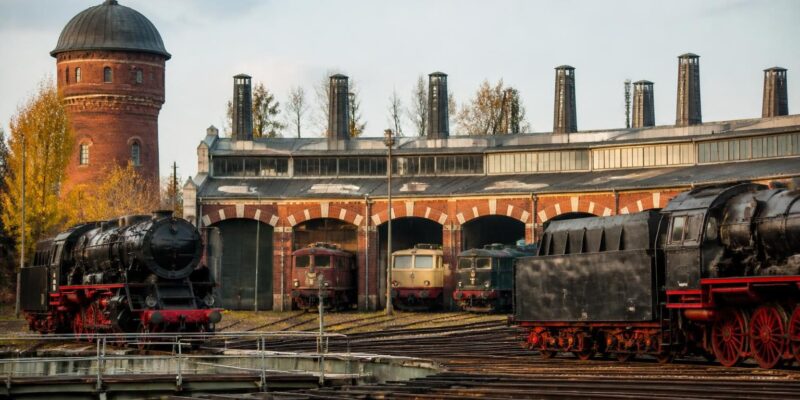
A railway site opens its doors
Berlin’s historic Schöneweide railway depot is becoming a public transport classroom this weekend as the 21st Berlin Railway Festival brings railway history, engineering and hands-on activities together on 26 and 27 September 2026.
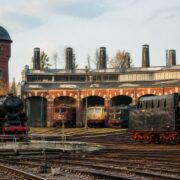
The event is taking place at the Bahnbetriebswerk Schöneweide in Treptow-Köpenick, a former railway maintenance site that has become one of the city’s most distinctive industrial-heritage locations. Organised around the depot’s surviving workshops, tracks and roundhouse, the festival offers visitors a direct view of how rail vehicles were maintained and operated before modern railway systems became largely inaccessible behind technical and security barriers.
Berlin’s official event listing describes the festival as an opportunity to experience around 120 years of railway history. The programme combines static displays with demonstrations, cab rides, a locomotive simulator and explanations of historical railway work. The setting is important: rather than presenting railway objects only in a museum hall, the organisers are using the depot itself as part of the exhibition.
More than a display of old locomotives
According to the event information published by Berlin and the city’s tourism organisation, more than 40 locomotives and carriages are being presented. The selection includes steam locomotives from the 03, 35, 52 and 74 series, as well as diesel and electric vehicles. Visitors can also see the ICE TD Advanced Lab, linking the historic collection with contemporary railway technology and research.
That combination gives the festival a wider relevance than a traditional nostalgia event. Railways are often discussed through timetables, infrastructure projects and performance statistics. At Schöneweide, visitors can instead see the physical systems behind the network: boilers, engines, wheels, workshop tools, signalling equipment and the practical skills needed to keep trains in service.
The festival also presents railway work as a possible career. Railway companies and technical specialists are expected to offer insights into apprenticeships, track construction, locomotive restoration and workshop operations. For younger visitors, the programme includes a small railway, practical activities and opportunities to sit in a driver’s cab. These elements turn industrial heritage into an accessible introduction to engineering and transport employment.
Preserving a working landscape
The Schöneweide depot is not simply a backdrop. Its buildings and infrastructure show how the railway shaped Berlin’s industrial districts and helped connect the city with the wider region. The restored water tower, dating from 1906, remains one of the site’s most visible landmarks. The roundhouse and rail yard provide the spatial context that makes the machinery understandable: locomotives were not isolated objects, but part of a system of repair, storage, refuelling and movement.
That approach is increasingly relevant to urban development. Former railway and industrial sites are under pressure from housing demand, infrastructure expansion and the search for new cultural spaces. Keeping selected technical sites accessible can preserve a sense of place while giving residents a clearer understanding of how neighbourhoods developed.
The festival’s organisers are also making use of the site’s links to public transport. The depot is close to S-Bahn station Johannisthal, served by lines including the S46, S8, S9, S42 and S85. Berlin’s event information advises visitors to arrive by public transport because parking capacity at the depot is very limited.
A public conversation about the future of rail
Although the festival looks back, its most constructive message is forward-looking. Railway systems depend on both advanced technology and skilled people. Modern trains may use digital control systems and efficient traction equipment, but they still require maintenance, inspection and a workforce able to understand complex machinery.
By putting historical vehicles beside newer technology, the Schöneweide festival makes that continuity visible. The event also shows how transport heritage can support public engagement without becoming disconnected from present-day mobility debates. Visitors encounter the railway as infrastructure, workplace, cultural memory and environmental alternative to private car travel.
The festival runs from 10:00 to 18:00 on Saturday, 26 September, and from 10:00 to 17:00 on Sunday, 27 September. Adult admission is listed at €12, with reduced prices for children. The location is the Bahnbetriebswerk Schöneweide at Wagner-Régeny-Allee in Berlin-Treptow.
















Comments