

 By
By 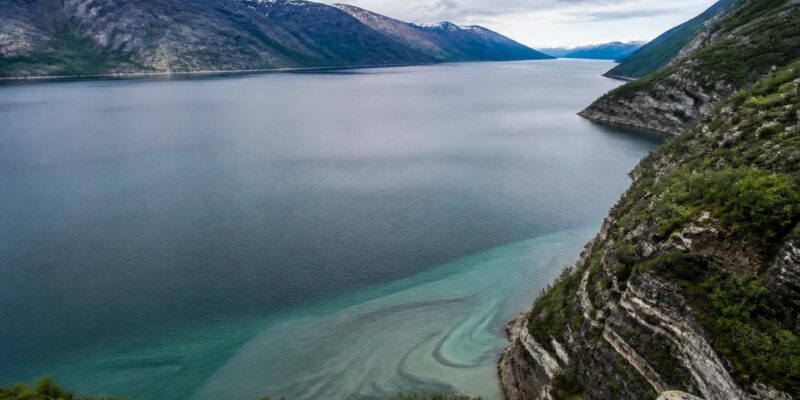
A closer look at the seabed
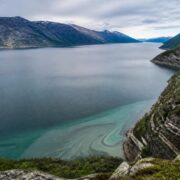
A new Norwegian study is encouraging scientists to take a more detailed approach when estimating how much organic carbon is stored in fjord sediments. Researchers examined approximately 500 square kilometres of seabed in fjords north of Stavanger, combining geological mapping, sediment samples, cores and geochemical analysis.
The work shows that a fjord is not a uniform carbon store. Fine-grained sediments, where organic material can accumulate, covered roughly half of the mapped seabed. The remaining area was dominated by coarser material associated with erosion and the movement of sediment. The contrast means that a measurement taken from one particularly rich depositional site may not accurately represent a much larger fjord system.
The findings were published in Biogeosciences in May and were highlighted by the iC3 Polar Research Hub at UiT The Arctic University of Norway on September 1, 2026. The study was led by Markus Diesing of the Geological Survey of Norway, with co-authors from the survey, UiT and the University of St Andrews. The peer-reviewed paper is openly available. ([ic3.uit.no](https://ic3.uit.no/news/global-assessment-carbon-cycle-fjords-sediments-method-jochen-knies))
Why sampling location matters
Fjords are widely regarded as important parts of the marine carbon cycle. Their deep basins can receive and preserve organic material from both land and the sea. Earlier global assessments have estimated that fjords bury about 18 million tonnes of organic carbon annually, despite occupying only a small fraction of the world’s ocean area.
The Stavanger-area research does not dismiss the importance of fjords. Instead, it questions how confidently local measurements can be scaled up to regional and global totals. In the study area, organic-carbon accumulation rates in depositional zones ranged from 18.7 to 82.6 grams per square metre per year. Carbon stocks also varied widely, from 0.1 to 1.37 kilograms per square metre.
Such differences appeared over short distances. In one part of the investigation, three sediment cores from Talgjefjorden captured almost the full range of accumulation rates observed by the team. That result illustrates why a small number of conveniently located cores can produce estimates that are difficult to apply across an entire fjord.
A more representative method
The researchers propose a practical sequence for future assessments. Scientists should first establish the actual area of the fjord being studied, then map the seabed to identify where fine sediment accumulates. Sampling should cover the range of environments present, while calculations should state the uncertainty created by gaps in coverage.
Using available information from Norwegian coastal areas and their own findings, the authors produced a tentative estimate of between 0.41 and 3.68 million tonnes of organic carbon accumulating each year in the surface sediments of fjords on mainland Norway. The range is deliberately broad: it reflects the difficulty of transferring measurements from a complex seabed to a national scale.
For climate and marine researchers, the value of the study lies as much in its method as in its estimate. Better maps and more representative sampling can help distinguish genuine carbon accumulation from places where sediment is being transported or removed. That distinction is essential when fjord data are used in wider calculations of the ocean carbon cycle.
Useful for future monitoring
The study also highlights that the carbon itself comes from different sources. Some areas contain material with a predominantly terrestrial signature, while others show stronger marine contributions. The proportion of more easily degradable organic matter also changes across the seabed.
These variations matter for long-term monitoring. A fjord’s capacity to retain carbon depends not only on how much organic material reaches the seabed, but also on sediment grain size, water movement, erosion, deposition and the chemical conditions that affect preservation. A more detailed baseline can therefore improve comparisons between fjords and help researchers identify how changing land use, runoff, ocean conditions or coastal processes influence carbon storage.
Jochen Knies, a UiT researcher and co-author, said the seabed should be understood as a landscape in which deposition and erosion may occur side by side. The iC3 research centre presents the work as a framework for building more realistic regional and global estimates rather than as a final answer about Norway’s fjords. ([ic3.uit.no](https://ic3.uit.no/news/global-assessment-carbon-cycle-fjords-sediments-method-jochen-knies))
That measured conclusion is one of the study’s strengths. By showing where uncertainty enters the calculation, the researchers provide a clearer route for improving the evidence. In a field where local observations are frequently used to describe large marine systems, the Norwegian case study makes a straightforward argument: more complete knowledge of the seabed should come before confident claims about its role in the global carbon cycle.
















Comments